3 steps to setting and managing realistic marketing goals for your clients


Table of Contents
7,000+ agencies have ditched manual reports. You can too.
Free 14-Day TrialA client kicks off the quarter ready to scale. They want more leads, higher ROI, and greater brand visibility. But when you ask how they’ll measure success, there’s a pause. The goal is vague, and your marketing team is suddenly left chasing a moving target.
Marketing goal setting is just as important for your clients as generating leads, creating solid content, and boosting brand engagement. After all, if you don’t know where you’re going, it’s near impossible to get there. Without clear marketing goals, agencies waste time on campaigns that don’t align with a real business strategy. Reports feel disconnected, customer engagement drops, and clients question the results.
Creating and managing clear, measurable goals for your clients encourages growth, focuses your agency’s efforts on what matters most, and makes success easy to track. When marketing objectives are clearly defined, everything else falls into place. Campaigns become sharper, content marketing efforts more effective, and reporting on goals becomes a tool for real client conversations instead of a box to check.
Still, setting realistic marketing goals is often easier said than done. Some clients may be too ambitious with their goal setting, while others could be wary of any change necessary to achieve these milestones. Top agencies go beyond tracking performance and set achievable goals that directly support client growth.
This guide walks through how to define, set, and manage your clients’ key marketing goals in three steps.
Key takeaways
Align with your client’s business objectives before any goal is written down, because a stated goal like “strengthen domain authority” often hides a different real objective.
The MASTER framework (Measurable, Achievable, Specific, Transforming, Evolving, Relevant) keeps goals tied to business impact as priorities shift, where SMART goals often stop being useful.
A single North Star metric such as customer lifetime value or monthly recurring revenue stops reporting from becoming a numbers dump.
Review goals on a weekly, monthly, quarterly, and annual cadence so you know when to pivot instead of discovering the miss at year end.
Goal-based reporting, anomaly detection, and alerts turn tracking into action, so you adjust campaigns while there’s still budget and time to fix things.
Step 1: Get on the same page about your clients’ objectives
Before any marketing goals are set, your agency needs to align with your clients’ ambitions and priorities. Agencies that are disconnected from their clients run the risk of setting short-sighted goals that don’t take long-term growth into account.
The stated goal is rarely the real one. A client asks for more social media followers one month and higher search rankings the next, and neither request explains what success actually means to their business.
A client may say they want their domain authority strengthened, but what they really want is higher rankings for the right keywords that bring them new customers.
Daniel Noakes, Founder, UClimb
For another example, if you’re working with a startup looking to increase brand loyalty in the long-term, an aggressive ad campaign to boost website traffic may not be the best focus point. Instead, it would make sense to invest in solid content marketing for the website that connects with the customer’s audience first.
When both sides agree on the objective, it sets the foundation for marketing strategy, execution, reporting, and client satisfaction. Clients stop making last-minute pivots, and your agency builds data-driven campaigns with a clear purpose.
That means defined goals with specific timeframes and measurable results. Instead of asking for more Facebook followers, the client aims to grow their target audience by 10% in three months. Instead of wanting to boost brand engagement, they track customer loyalty, social shares, and website conversions.

Empower your clients with clear, visual insights into their goals, progress, and challenges. Set up a custom dashboard using AgencyAnalytics and show them the value you bring. Start your free 14-day trial today to transform your client relationships!
Aligning through trust-building
In order to properly align with your clients’ expectations, you first need to build trust through transparent communication.
Like all of us, clients want to be heard and understood. Agencies that push their own interests will struggle to address customer pain points, leading to a lack of client retention efforts and a subpar customer experience.
In order to properly build trust, show your clients that you’re listening. Some effective ways of getting feedback include:
Customer surveys. These can be used to determine customer satisfaction as well as which areas the client cares about most.
One-on-one check-ups. This is an effective way of connecting with each company’s key decision makers to ensure you’re going in the right direction.
Team-wide feedback sessions. This is a great way to encourage collaboration, and discussion about specific campaign goals.
The onboarding process always begins with a comprehensive client consultation to thoroughly understand their business objectives and priorities. We immerse ourselves in their vision and challenges.
Ruben Roel, President, Investigator Marketing
The point of that consultation is to help your clients choose KPIs that are relevant and meaningful to their business, rather than the metrics that happen to be easiest to pull.
Understanding your clients’ priorities
During this phase of the marketing goal-setting process, it’s important to learn as much as possible about your client’s business. Some effective questions to ask include:
What’s your selling point? Why would a customer choose your business? This may be different for eCommerce goal setting versus B2B services.
What type of customer experience do you aim to provide?
What sets you apart from your competition?
What are your customer’s pain points and how does your product/service solve them?
Where do you see your business in the next five years? What type of growth is realistic for your company?
Set clear expectations from the outset, both inside your team and with the client. Assuming everyone is on the same page without expressly articulating goals, timelines, and deliverables creates a ripple effect of challenges later.
Step 2: Leverage a goal setting framework
Once you understand your clients’ growth perspective, you’ll be able to start creating solid marketing goals that support their long-term success.
While marketing agencies often turn to SMART marketing goals when looking for a goal-setting framework (a traditional option that focuses on Specific, Measurable, Attainable, Relevant, and Time-bound categories), the MASTER framework is often a better choice as companies evolve and goals become more complex.

An alternative to SMART goals, the MASTER framework (Measurable, Achievable, Specific, Transforming, Evolving, Relevant) keeps goals dynamic, results-driven, and tied directly to business impact.
Examples of clear goals and objectives
Here’s how the approach works across different industries:
Ecommerce Brand → Increase customer lifetime value (CLV) by 15% over the next six months by optimizing email retention campaigns and upsell strategies. (Measurable, Specific, Relevant)
SaaS Company → Grow monthly recurring revenue (MRR) by 20% in Q3 by optimizing the paid acquisition funnel and reducing churn from 5% to 3%. (Transforming, Evolving, Relevant)
Local Service Business → Generate 100 booked consultations monthly through organic search by optimizing local SEO and improving Google Business Profile engagement. (Measurable, Achievable, Specific)
Each of those goals names a number, a mechanism, and a deadline. That’s what lets you track lead conversion and customer engagement instead of vanity metrics like follower counts or raw search rankings.
Measurable
In this framework, it’s important to identify marketing goals that can be effectively measured through data and analytics.
To start, you’ll help your client break down exactly what they want to achieve. Together, you’ll pinpoint which key performance indicators (KPIs) are the best to track.
For example, let’s say you’re working with a startup looking to increase brand awareness for a new product that just launched.
A measurable marketing goal would be: increase brand awareness by 10% in the next 4 months. A key KPI to track could be social media engagement.
All marketing goals should be tied back to these KPIs. This way, your client will be able to track each benchmark as you work toward achieving their goal.
Tools like AgencyAnalytics’ custom marketing dashboards ensure your clients are able to easily track analytics specific to each goal. Measurement also means looking beyond vanity metrics and tying campaigns to real-world outcomes such as market share, customer loyalty, and increased sales. Benchmarking and forecasting in AgencyAnalytics help clients understand how today’s performance stacks up against competitors and where they’re likely headed.

AgencyAnalytics’ benchmarking and forecasting features show your clients how they stack up against competitors and predict future performance trends. Start your free AgencyAnalytics trial today!
With the right client reporting tools and data, your team spots areas for optimization immediately rather than waiting for the end-of-quarter review. If customer engagement is declining, you adjust the content marketing approach. If a paid lead generation campaign is underperforming, you tweak targeting before wasted spend piles up.
Achievable
Using this framework, you’ll be able to choose goals that are the perfect balance of realistic and ambitious. Marketing goals should be achievable within a specified period of time.
This step will ensure your client isn’t setting overly ambitious goals you won’t be able to meet. In our example above, an overly ambitious goal may be increasing brand awareness by 50% in two months or an unrealistic SEO expectation could be to get Top 10 rankings for 20 high-volume keywords within two weeks.
At this point, it’s your job to guide your client towards a more attainable benchmark.
Specific
At this stage, it’s time to pinpoint exactly what your client wants to attain.
This helps narrow down the marketing goals and ensure everyone involved understands what’s needed to meet the set targets. As the name suggests, be as specific and clear as possible.
Again, using our example, an ambiguous goal you’d want to avoid would be “increase website traffic to the new product’s landing page,” while a specific goal would be: “increase website traffic to the new product’s landing page through social media by 10% in 3 months”.
In the second marketing goal, you know exactly what needs to be achieved (increase web traffic), how it’ll be achieved (through social media campaigns), by how much (10%), and when (in 3 months).
The same principle applies to softer objectives. Instead of aiming to “increase brand engagement,” a stronger goal would be to “boost social media followers by 15% in the next three months while improving customer engagement by 20%.”
Refining marketing goals requires direct, strategic questioning:
What does success actually look like? 500 new leads per month? A 20% increase in conversion rates?
What’s the timeline? A 90-day sprint or a long-term initiative?
Which key results will determine success? Sales-qualified leads? Cost per acquisition? Customer retention?
Defined business and marketing goals align teams and ensure every tactic contributes to lead generation, increased market share, and ranking higher in search results. Without clarity on when clients should set goals, agencies risk wasting resources on strategies that don’t deliver desired outcomes.
Transforming
The transforming step is when you add an emotional component to the goal to create excitement and encourage business growth. Find an element that will inspire and motivate your clients to invest in this goal.
Going back to our example, let’s consider the pain points of selling a product with low brand awareness.
There’s nothing more frustrating than having a great product to sell, but no one to sell it to. Achieving the goal of increasing brand awareness by 10% would be transformative because it would immediately place your client’s products in the line of sight of consumers, and ideally lead to conversions.
Evolving
As the market changes, your client’s goals will inevitably change with it. This stage allows for flexibility and adaptation.
The goal must be able to evolve when the client’s needs change. For example, if your client’s startup suddenly loses several team members, you may need to change the time frame of the goal.
If the original goal was, “increase web traffic to the new product’s landing page through social media by 10% in 3 months”, you might change it to 6 months to allow the company to hire new employees.
Our job is to be the most responsive to our clients and their goal from a marketing perspective. Being proactive rather the reactive is the difference successful and unsuccessful campaigns.
Pierre Ajram, SEO Director, AiiMS
Relevant
Ensure all goals are relevant to your client’s values and growth philosophy. This is an important step that matches goal setting with each team’s direction.
No one wants to spend time and money on a goal that isn’t relevant to long-term growth.
In our example, the goal of brand awareness is relevant for the early stage of the business lifecycle that the startup client is currently experiencing. If the client was an established brand with an existing foothold in the market, brand awareness would not be a relevant goal.
Impress clients and save hours with custom, automated reporting.
Join 7,000+ agencies that create reports in under 30 minutes per client using AgencyAnalytics. Get started for free. No credit card required.

Already have an account?
Log inChoose a North Star metric
A single, overarching KPI keeps marketing campaigns focused. Without one, reporting turns into a numbers dump, and clients struggle to connect brand visibility and customer engagement to increased sales.
Not all metrics qualify. A North Star metric has to reflect long-term business impact rather than surface-level engagement.
For an ecommerce brand, that might be customer lifetime value (CLV).
For a SaaS company, it’s often monthly recurring revenue (MRR).
A local service business might focus on converting leads into booked appointments.
Choosing the right metric means developing a KPI that directly supports lead and revenue goals.
Broad targets like “get more leads” or “increase brand recognition” are starting points, not measurable objectives. It’s your job to refine them into specific, trackable key results that tie back to real growth.
We establish a set of lead and lag measures related to our efforts that directly support their business goals. If they are trying to increase the number of clients they have and we’re running a digital advertising campaign, we might track ‘request a consultation’ form fills as our lag measure and website traffic as our lead measure.
Kerrie Luginbill, Chief Strategy Officer and Partner, OTM
Instead of random spikes in social media followers or web traffic, clients see how each touchpoint contributes to converting leads into ideal customers.
Aligning goals to the SOW and deliverables
A strong marketing strategy sets the vision, but even the best goals fall apart without clear deliverables. Your agency has to bridge the gap between big-picture objectives and day-to-day execution, so every action aligns with the client’s goals. That’s where the Scope of Work (SOW) comes in.
Clients expect boosted sales, more qualified leads, and greater brand recognition, but they don’t always see the connection between strategy and execution. It’s your responsibility to set expectations early by outlining exactly what will be done, what success looks like, and how it will be measured.
Aligning marketing campaigns with a defined SOW does two things:
Prevents Miscommunication: Clients know exactly what to expect and why certain metrics matter.
Builds Accountability: Agencies prove their impact with reports reflecting agreed-upon key results.
A well-structured SOW turns marketing objectives into measurable results. For example, if the goal is to increase customer satisfaction, the SOW must specify the marketing tactics: improving customer engagement, refining content marketing, or enhancing quality customer service.
When goals and deliverables align, goal-based reporting shifts from a recap of marketing activities to a proof of progress. Clients see the search results, market share growth, and ranking improvements tied directly to their investment.

Keep clients focused on what matters with goals and annotations in AgencyAnalytics. Highlight key milestones and trends, and add meaningful context that turns client reports into actionable insights. Try it free for 14 days.
Creating an effective review process
Once marketing goals are set, it’s essential to review the goals at specific intervals.
This way, your marketing agency will know when you’ll need to pivot and adjust each goal to better align with your client’s needs.
In general, it’s a good idea to hold:
Weekly meetings with your client to track short-term measures and ensure you’re staying on track.
Monthly meetings where the marketing goals are analyzed in depth. At this point, you’ll be able to review if the goals are continuing to follow the MASTER framework. It’s also a good time to make minor changes to your marketing strategies if necessary.
Quarterly meetings, where you’ll hold comprehensive reviews to determine whether there were any changes in the market that would cause the goal to shift. This is also a good time to consider how client demands or agency direction may affect the goal.
Annual meetings. Think of this check point as both a look forward and look back. You’ll evaluate how successful your agency has been in meeting client goals and begin thinking of new MASTER goals for the year ahead.

Use AgencyAnalytics to track progress towards your client’s MASTER goals. Try it free today for 14 days!
The top 10 most common marketing client goals
While each client’s goals will be unique, the following are the most common marketing goal examples.
1. Raising brand awareness
As we looked at in our earlier example, this is one of the most popular goals for many companies. According to a Hubspot survey, brand awareness was cited as one of the top 3 marketing goals, with 20% of companies saying boosting brand awareness was their most important goal.
Tips for success
Ensure your client has a clear, identifiable brand voice used across all marketing platforms.
No one wants to be sold products day and night. Instead, focus your marketing strategies on creating content that engages with your client’s customers and creates a narrative that captures their pain points.
Figure out where your client’s customers spend the most time and focus campaigns on that channel.
Share of voice correlates more directly with brand awareness and affinity. Brand strength drives higher average ticket and higher conversion rates. Branded searches also typically have higher click through rates.
Vi Wickam, President, Wizard of Ads Online
How to measure it
Brand awareness is often best measured quantitatively. On social media, this includes brand mentions, reach (for example, on LinkedIn, reach can be measured by impressions per post), and follower count. For SEO tracking, track organic search traffic, keyword rankings, organic conversions, competitor analysis, and SEO site health.

Easily track a client’s social media presence with a customizable social media reporting dashboard.
2. Lead generation
According to another Hubspot survey, 61% of marketers admitted that bringing in more leads and traffic was their biggest challenge in 2023.
Tips for success
Ensure your client’s website is engaging and has a clear CTA that leads to a contact form.
Invest in lead generation strategies such as email marketing, social media campaigns, and content marketing.
Focus your digital marketing strategy on pay-per-click campaigns, such as Facebook or Google ads. This is a great way to attract potential customers.
How to measure it
Some important KPIs to measure include click-through rates, conversion rates, and cost per lead.
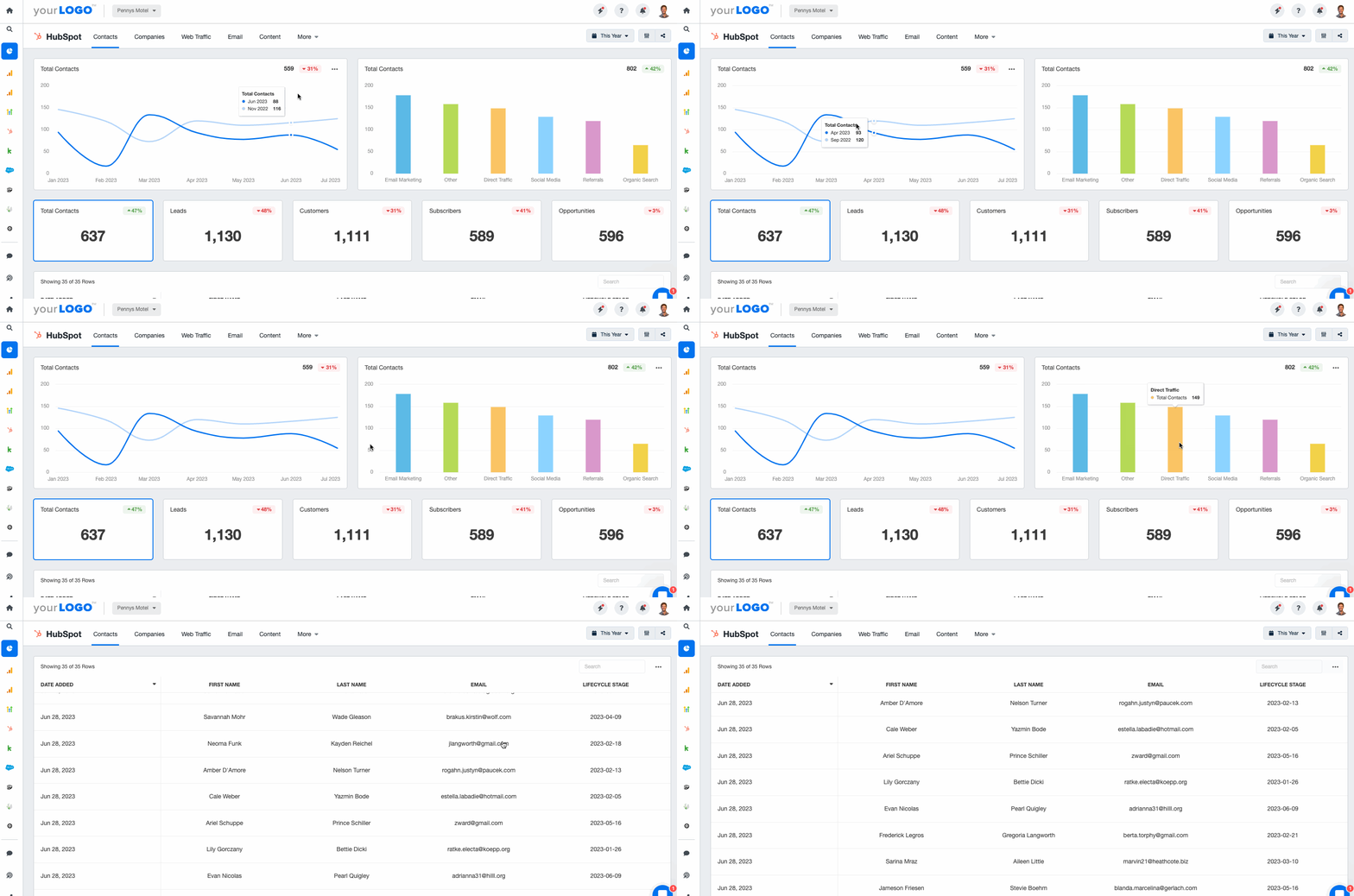
Use the HubSpot data integration to create lead reports in minutes.
3. Customer acquisition
Gaining new customers is another challenging goal for many clients, especially those who are still establishing themselves in their market and have just started working on their marketing strategy.
Tips for success
Before choosing a plan to improve customer acquisition, it’s helpful to create ideal customer personas. This will ensure your agency knows who you’re targeting and what matters most to that audience.
Customer value matters. Have a clear value proposition before launching any campaign or attracting potential customers.
Focus on creating a solid online presence for your client. Leveraging social media is key here, as is increasing social media followers.
How to measure it
Some KPIs to keep an eye on include churn rate, total new customers attained, product sign-ups, and customer acquisition cost.

The Shopify reporting integration helps agencies turn raw Ecommerce data into actionable client reports quickly and easily.
4. Increasing traffic
Driving traffic to the correct channels is a major marketing priority for many clients.
While the traffic will vary depending on your client (a retail store will want to increase foot traffic while an eCommerce company will be looking at their website traffic), this is a crucial goal for many businesses.
Tips for success: website traffic
Invest in blogs and other content writing strategies.
Focus your marketing strategy on paid ad campaigns and SEO efforts.
Make sure the messaging across all channels leads the target audience back to the website.
Tips for success: foot traffic
Introduce in-store promotions.
Like web traffic, paid ads are a great investment.
How to measure foot traffic
Foot traffic has its own unique KPIs, including:
Foot traffic count (telling you how many people entered in a specific time frame).
Conversion rate (in this case, you’re measuring how many people enter the store and purchase something).
Dwell time (how long people spend in a store).
How to measure web traffic
Keep an eye on the following KPIs:
Total sessions.
Number of conversions by traffic source.
How long, on average, people are spending on the website.
How many unique page views the site is getting.

Turn complex Google Analytics 4 data into easy-to-understand web analytics dashboards.
5. Brand engagement
This is another key goal, especially for clients working to scale their companies and establish a strong market presence. According to a Statista study, increasing brand engagement was the second most important goal for influencer marketing campaigns run in the U.S. in 2022.
Tips for success
Before you implement a successful marketing strategy, make sure you have a clear understanding of what matters most to your client’s audience in order to properly boost brand engagement.
Share valuable content consistently and ensure all communication is personalized.
Don’t just join the conversation, start it. Powerful social posts and online marketing efforts are super valuable here.
Giveaways and contests are a great way to incentivize engagement.
How to measure it
Which KPIs you track will depend on the channels you’re focused on. For social media, you’ll be tracking shares, likes, comments, and reposts. For customer engagement, you could track net promoter scores (NPS), customer satisfaction rates, how long web sessions last on average, referral rates, and email KPIs include opens and clicks..

Create a Mailchimp dashboard to automatically create stunning client reports.
6. Industry authority
Essentially this is thought leadership. By establishing your clients as an authority in their field, they’ll be more likely to be seen as a credible, solid company worth investing in.
Tips for success
Invest your agency’s marketing efforts in long-form, educational content, such as whitepapers and articles.
Use partner networks to reach more of your client’s audience faster.
Use social media posts to increase your client’s authority on the topics that matter most to their audience, increasing their thought leadership status.
How to measure it
While this is often difficult to measure, you can track brand mentions, search volumes, and backlinks.

Easily track new and lost backlinks using the Backlink Monitoring tool.
7. Customer retention
Although gaining new clients is a common client goal, customer retention is just as important for long-term success.
Tips for success
Focus on building strong relationships with your client’s existing customers to optimize customer lifetime value.
Ask for feedback through surveys and questionnaires (and make any necessary changes).
Implement loyalty programs.
How to measure it
Have your agency keep an eye on customer retention rates, churn rates and, where applicable, repeat purchase rates.

Keep track of customer acquisition and retention metrics using the Stripe reporting integration and a professional Stripe dashboard template.
8. Brand sentiment
All companies want to be perceived well in their markets. Brand sentiment measures how your clients’ customers view their brand. Ensuring positive brand sentiment is a key goal for many clients.
Tips for success
Create engaging content centered on your client’s audience.
Focus your marketing efforts on highlighting sustainability efforts.
Build an active social media presence and engage with your client’s audience.
How to measure it
When tracking customer sentiment rates, you’ll want to watch Net Promoter Scores (which shows how likely customers are to recommend your client to others), as well as customer satisfaction scores and customer feedback surveys.

Monitor customer sentiment by creating easy-to-understand ratings, reviews, and customer satisfaction reports.
9. Cost reduction
Depending on where your client’s company is in the scaling process, cost reduction could be an important goal to ensure long-term sustainability.
Tips for success
In order to optimize all marketing campaigns, conduct a marketing audit. This will help you pinpoint any inefficiencies and reallocate the marketing budget to maximize ROI.
Guide your client through vendor contract negotiations.
Implement automated technical solutions to reduce labor costs and streamline processes. For example, AgencyAnalytics’ automated reporting features quickly create customized reports for your clients, eliminating time and labor costs.
How to measure it
To properly measure cost reduction, track ROI rates, costs per acquisition rates, and customer acquisition costs.

Create a budget-pacing report to keep your fingers on the pulse of all your client’s ad spend.
10. Increasing revenue
This one shouldn’t be a surprise to any marketer. Revenue is a key motivator for businesses, making it top of mind for clients. When examining top marketing goals, HubSpot found that increasing revenue was number one at 27%.
Tips for success
To increase revenue through top of the funnel marketing objectives, it’s important to create a solid online presence, both through social media campaigns and web content.
For those focused on the middle of the funnel, increase revenue by finding qualified leads through automated lead nurturing emails and marketing campaigns targeted at your client’s customers’ immediate pain points.
Bottom of the funnel tips include sharing product demos, case studies, and tutorials to promote your clients’ authority.
How to measure it
It’s important to track average revenue per user, annual recurring revenue, quota attainment, and your client’s win rate.

Use a customizable eCommerce dashboard to automatically gather and visualize your clients top Ecommerce and revenue KPIs.

Automated Client Reports, Ready in Just a Few Clicks
Step 3: Track progress through data and analytics
Client reporting is an essential part of goal management. If the client doesn’t have a clear idea of where they stand and how well they’re progressing towards their marketing objectives, it’s difficult to create a transparent dialogue about their campaigns.

In many ways, this is preaching to the choir. Marketing agencies understand the importance of sharing campaign results. But relaying analytics is sometimes a complicated endeavor. Between deciding which metrics to share and compiling data from a variety of sources, you’re often left spending significant time and effort communicating results with clients.
Tracking early also creates the chance to scale winning strategies and catch issues before they cost budget. Top agencies collect data and _act _on that data, whether by refining ad spend, optimizing content, or focusing on high-performing channels.
We don’t just hand over reports; we put a spotlight on the KPIs that matter most to our clients. Each KPI gets its own stage, making it effortless for our clients to follow their journey.
But we don’t just leave them guessing. We provide context that makes those KPIs come alive. We show how shifts in these KPIs are stepping stones toward their goals. We use charts, graphs, and compelling narratives to paint a vivid picture of trends, uncover anomalies, and shine a light on opportunities hidden within the data.
Michelle van Blerck, Communications Manager, Digital Freak
A strong tracking system:
Ties Directly to Measurable Goals: Marketing agency reports highlight progress toward the client’s specific targets.
Goes Beyond Vanity Metrics: Tracking social media engagement means little unless it leads to new customers or stronger brand reputation.
Encourages Continuous Improvement: Performance data must drive strategy shifts, whether that’s refining target keywords, adjusting ad spend, or optimizing content to answer searchers’ questions more effectively.
Big shifts in performance need fast action. Anomaly detection and custom alerts in AgencyAnalytics catch sudden spikes or drops, so you jump on opportunities and fix issues before they derail results. A traffic spike? Scale what’s working. A drop in conversions? Adjust before it cuts into revenue.
Instead of just telling a client, “Conversion rates suddenly dropped 30%,” act on the alert and investigate for causes and solutions:
“Conversions dropped 30% in the last 24 hours. A technical issue may be blocking form submissions—let’s investigate and resolve it immediately to prevent lost leads.”
Custom alerts mean no surprises. You tweak strategies in real time and prove your value before clients even ask, and trust follows when clients see problems solved before they escalate.

Sudden spikes or drops in performance? AgencyAnalytics’ anomaly detection and alerts flag unexpected changes. React fast and keep clients informed. Try it free for 14 days!
Goal-based reporting for the win
Goal-based reporting allows agencies to successfully communicate analytical highlights that matter most to each client’s goals. These reports turn complicated data into easy-to-read spotlights featuring relevant achievements that your clients will actually care about. This type of communication helps validate your agency’s abilities and reassures clients about your agency’s ROI potential.
With AgencyAnalytics’ Annotations and Goals feature, marketing agencies quickly create personalized reports about trackable goals using client data. Easily track client goals using a progress bar in your marketing dashboards, saving time and increasing efficiency.

Setting goals, achieving success
Managing client goals is an essential part of successful agency operations. By building trust and aligning with your clients, you help them set realistic, trackable goals that support long-term growth, and a well-defined strategy turns one-time projects into long-term partnerships.
Goal-setting frameworks like MASTER turn vague ideas into measurable outcomes. When every metric tells a clear story, clients see the direct impact of every campaign, from increasing brand awareness to generating qualified leads.
Once these goals are set, monitoring analytics is what shows your progress towards each touchpoint. Whether you’re tracking lead gen, customer retention, brand engagement, or industry authority, AgencyAnalytics’ reporting dashboards allow marketing agencies to effectively track and share key data points with clients.
Create automated reports featuring data from more than 85 marketing platform integrations, our solution empowers agencies to effortlessly share impactful insights. Try it out for yourself with a free 14-day free trial.
FAQs About Marketing Goals for Clients
Still have questions about marketing goals for clients? Don’t worry—we’ve got you covered.
Client goals are specific outcomes that a marketing strategy aims to achieve on behalf of a client, such as increasing website traffic, generating qualified leads, improving brand awareness, or boosting customer retention. These goals must be clear, measurable, and tied directly to the client’s broader business objectives.
Agencies track progress by setting clear KPIs at the start, then using platforms like AgencyAnalytics to centralize and monitor real-time data. Custom dashboards, automated reporting, and goal-specific widgets help agencies visualize performance trends and identify where to focus efforts to stay aligned with client targets.
Agencies should avoid setting vague or unrealistic goals, ignoring baseline data, or focusing only on vanity metrics. Goals must be specific, data-driven, and achievable. Setting clear expectations with clients upfront and ensuring alignment between marketing activities and actual business outcomes is essential to avoid disappointment.
Agencies should analyze campaign data to identify underperforming areas, then pivot strategies based on those insights. This might include reallocating budget, refining audience targeting, updating messaging, or testing new channels. Transparent communication with clients about what’s changing and why helps maintain trust and momentum toward the ultimate goal.
Rita Poliakov is an experienced content writer with a knack for storytelling. As a former journalist, she’s a skilled researcher, interviewer, and grammar nerd.
Read more posts by Rita PoliakovWhat other agency experts are reading

What to include in a digital marketing report to wow clients
Discover the essentials of a top-notch digital marketing report. Understand the importance of setting goals, identifying KPIs, utilizing dashboards, and visualizing data for impactful storytelling.


The official marketing reporting guide: Best KPIs, templates, tools & strategies for 2026
Discover the best marketing reporting tools, templates, KPIs and strategies and learn how to master marketing reporting.