Pinterest analytics: Top 8 Pinterest metrics & KPIs to track


Table of Contents
- Key takeaways
- Why it’s important to track Pinterest analytics
- How to get started with Pinterest analytics
- How to view website traffic from Pinterest in GA4
- 8 Pinterest metrics your agency should track
- Turn the numbers into your clients’ next Pins
- Pinterest Ads: how they work and what to track
- Tools to streamline Pinterest management
- Go beyond tracking in-platform Pinterest analytics
- How to pull Pinterest data and create a customized report on AgencyAnalytics
- Go beyond the surface by tracking Pinterest analytics
7,000+ agencies have ditched manual reports. You can too.
Free 14-Day TrialTable of Contents
- Key takeaways
- Why it’s important to track Pinterest analytics
- How to get started with Pinterest analytics
- How to view website traffic from Pinterest in GA4
- 8 Pinterest metrics your agency should track
- Turn the numbers into your clients’ next Pins
- Pinterest Ads: how they work and what to track
- Tools to streamline Pinterest management
- Go beyond tracking in-platform Pinterest analytics
- How to pull Pinterest data and create a customized report on AgencyAnalytics
- Go beyond the surface by tracking Pinterest analytics
7,000+ agencies have ditched manual reports. You can too.
Free 14-Day TrialPinterest is highly effective for capturing attention and creating a memorable brand. Unlike other social media platforms such as Facebook, it functions more like an image search engine and discovery platform, which changes how your clients should be using it and how you should be measuring it.
Creativity and aesthetics are must-haves for every Pin, and from different Pin formats to easy-to-reference boards, your clients have countless opportunities to stand out. But posting Pins is one thing; proving they worked is another.
This guide covers how to set a client account up properly, the eight Pinterest metrics worth tracking, how to run and measure Pinterest Ads alongside organic Pins, and how to adopt a data storytelling approach to reporting all of it–so you’re better equipped to give informed recommendations and show what your agency is capable of.
Key takeaways
Pinterest behaves like a visual search engine, and 85% of users report using it to plan future projects, so Pins reach people in the consideration phase.
Eight metrics answer most client questions: Pin impressions, engagements, saves, followers, Pin clicks, video views, average video play time, and conversions.
Likes and comments aren’t a basis for strategy–define what success looks like for each client and set KPIs against it.
Conversion insights need a Pinterest tag and a Pinterest advertising account; GA4 shows the traffic and revenue Pinterest actually drives.
Pulling Pinterest into one dashboard alongside 85 other platforms removes the monthly scramble of logging into each account by hand.
Why it’s important to track Pinterest analytics
Anyone can click on a Pin and look at the number of likes and comments. Relying on those surface-level insights isn’t a solid basis for a Pinterest strategy, because they don’t paint the full performance picture.
Tracking in-depth Pinterest analytics means being able to answer questions like:
How many website link clicks do we get from Pinterest?
What are the top boards on our Pinterest profile?
How do we recreate our top Pins?
Do we have an active and engaged audience?
What has our follower growth rate been for the past four months?
How much revenue is the Pinterest marketing strategy generating?
Should we overhaul our Pinterest strategy or even do an overall social media audit?
By monitoring the right insights, you’ll eliminate the guessing game. A data-driven approach puts you in a better position to give recommendations, set Pinterest KPIs, and help your clients meet their business goals.
A Key Performance Indicator (KPI) is a quantifiable measure used to evaluate the success of an organization in meeting specific goals. It also keeps transparency on the table and ensures that you and your client are on the same page about what’s expected.
KPIs are just an extension of us living out our core values. Reporting on KPIs keeps us accountable. KPIs provide the client transparency into what work we deliver, and, most importantly, KPIs demonstrate that we are on track and achieving mutually agreed-upon goals. This is our agency’s true north: “results for clients.”
David Krauter, SEO Strategist, Websites That Sell
The numbers behind the platform
According to Pinterest Business:
There are roughly 463 million monthly users (and 84.6M are US-based, which accounts for almost 20% of all users)
Approximately 60% of users are women, which is especially important for clients that want to target this demographic
45% of users have a household income above $100K (to give you an idea of spending potential)
Pinterest advertising has 2X higher ROAS compared to other social media platforms
85% of users have reported using Pinterest for future project planning
On the paid side, the Hootsuite Digital 2022 October Global Statshot Report adds more data-driven context:
Pinterest Ads has a potential reach of 270.9M users
76.5% of Pinterest Ads reach was attributed to female users (which is important to note if this aligns with your client’s ideal customer profile)
The geographical location with the highest Pinterest usage was the USA, with approximately 91.25M users
There was a 16.2% year-on-year change in Pinterest ad reach
The future-project-planning stat matters most of all: it means Pinterest reaches users in the consideration phase of your client’s customer journey, well before they’re ready to buy.
Which clients get the best results
Practically any of your clients’ businesses can benefit from a successful Pinterest strategy. But since Pinterest is so visual, the best candidates are businesses with a strong aesthetic angle to their product or service. These categories often get great results:
Home and garden
Fashion
Food and drink
Beauty
Photography
Travel
Wedding
If a client would benefit from showcasing their product or doing more visual branding online, a Pinterest business account could be exactly what they need.
How to get started with Pinterest analytics
Before you hit the ground running, there are a few things to implement.
1. Use Pinterest Business (not a personal account)
To get access to Pinterest Analytics, you must first ensure your clients have business accounts. That means:
Creating a Pinterest Business account. That means simply going with the ‘Business’ option instead of ‘Personal’ during the initial account creation.

Alternatively, you may have to switch from a personal Pinterest account to a business account.
If you’re using a desktop browser, simply click on the client’s profile picture followed by ‘Convert to Business’ (as seen below).

If you’re using the Pinterest app, click on the client’s profile photo in the bottom-right corner. Then, go to Settings > Account Management > Convert to a business account.
From there, you’ll get access to Pinterest Analytics. To get the most out of this exercise, there are two additional steps to follow.
2. Claim your client’s website
Users browsing the internet may come across your client’s website, see reference-worthy content, and save it directly to their Pinterest boards. To track the most frequently pinned content on that site, claim your client’s website.
A claimed account takes you past reporting on in-platform Pins alone. That data helps you replicate top-performing website content and understand search intent beyond Pinterest itself, considering all parts of the marketing picture.
You have three options:
Adding an HTML tag to your client’s website,
Uploading an HTML file to your client’s website, or
Including a TXT record in your client’s domain DNS settings.
Though it’s a technical process, a claimed website will ensure you get the most valuable Pinterest insights moving forward.
While you’re there, add a Pinterest ‘Save’ button to your clients’ website content. Say a Pinterest user with a gardening board finds your client’s pot collection while browsing: navigating out of the browser to search for that product on Pinterest is tedious, and it could lead to a lost conversion opportunity. A Save button removes that step, and it increases brand visibility to Pinterest users who may not have even visited your clients’ websites.
3. Use Google Analytics to get additional Pinterest insights
Beyond Pinterest Analytics itself, you’ll need to understand just how much website traffic this social media network drives–that’s where Google Analytics comes in. It gives you a closer look at audience insights and more information to understand the full customer journey.
Using a data-blended approach will help you to understand the effectiveness of your client’s Pinterest efforts and whether they’re actively contributing to website goals (e.g., getting more page visits).
How to view website traffic from Pinterest in GA4
To access metrics like the number of visitors and engaged sessions from Pinterest, log into GA4 and head to Reports > Acquisition > Traffic Acquisition.
For a view of the future behavior of traffic first driven to a client’s website by Pinterest, use Reports > Acquisition > User Acquisition instead.
Under ‘Source,’ choose Pinterest to take a closer look at the numbers. If you’re not in the mood to follow this extensive process each time, use an automated GA4 reporting tool to do the data retrieval for you.

Use a Google Analytics dashboard to view referral traffic from Pinterest, analyze audience insights, and identify top-performing social media networks–start your free 14-day trial today.
8 Pinterest metrics your agency should track
Now that you know how to access Pinterest analytics, here are the eight metrics to keep on your radar.
1. Pin impressions
Pinterest impressions measure the total views of a Pin, which is the clearest read on content reach. After all, you don’t want to create Pins that aren’t seen by anyone.
Impressions on their own aren’t a full indicator of performance, especially if your client is interested in more than visibility. But they still tell you whether content is gaining traction or whether improvements are needed, such as more compelling images or user-relevant keywords.

Track historical trends and use them to inform your client’s content strategy. Use Pinterest analytics to its full potential–stream data into visual dashboards and reports on AgencyAnalytics, free for 14 days.
On the other hand, Pinterest impressions may actually be the end goal for some clients. For example, newly launched brands may initially rely on boosting Pin visibility to build brand awareness. That’s why it’s important to define what Pinterest success looks like for each individual client.
When looking at metrics, it’s important to prioritize them based on the KPIs that are relevant to your client. For example, an e-commerce brand will be hyper-focused on conversions. In contrast, a local restaurant in the midst of launching may be looking for impressions and reach for awareness purposes. Always look at the number one thing that will help move the needle forward.
JC Polonia, Founder, Digitality Marketing
2. Engagements
To get a more granular understanding of how users interact with your client’s Pins, keep an eye on the Engagements metric. Identifying top Pins will help you to recreate that success for any future Pinterest strategy.
This metric includes the number of times Pinterest users have:
Saved or clicked on Pins
Visited outbound links from a call to action button
Swiped through images on carousels

Content with a high Pin engagement rate will also be prioritized by Pinterest’s algorithm and shown to relevant users. If you notice a low number of engagements, it may mean improvements are needed, such as:
Incorporating different photo angles
Refining Pin designs (e.g., using a more appealing text-to-visual ratio)
Using the optimal image sizes to get the most impressions and engagements possible
Creating more compelling and relevant headlines and descriptions
Remember–you want to keep Pinterest user attention for as long as possible. Ultimately, this will increase the chances of brand recognition, improve Pin performance, and move users further along the sales funnel.
If we’re trying to sell a product, a good close-up of the product performs better. Also, if it’s a “Lifestyle” type of ad, showing the use of the product, the more of the image we can show, the better of a story it tells, and the more engagement we get.
Nathan Hawkes, President, Arcane Marketing
Sizing is an often overlooked but crucial part of this. The last thing you want is the most important parts of your clients’ Pins getting cropped, all because of incorrect dimensions.
Images are displayed differently across different devices. For your visuals to render correctly on mobile and desktop devices, it is necessary to stick to the specific size requirements. Sizing that doesn’t fit could cut off important messaging on your marketing material, affecting overall campaign performance.
Tyson Downs, Owner, Titan Web Agency
Pinterest Pins tend to be taller than other social media images–here’s a handy reference of dimension sizes:
Profile Photo: 165 x 165 px
Pin Size: 1000 x 1500 px
Board Display Thumbnail: 222 x 150 px
Video: 1200 x 1800 px
Idea Pin (Story): 1600 x 900 px
3. Saves
Wondering how many people are adding your client’s Pins to their boards? Refer to the ‘Saves’ metric. If this number is steadily climbing, it means your client’s Pins are gaining momentum, so much so that Pinners want to view content later.
It’s also worth noting that Pinterest’s algorithm prioritizes saved content and shows it to users with similar interests. Racking up Saves means higher visibility, a growing engaged audience, and more popular Pins across multiple boards.
Plus, a high number of saved Pins validates that your client’s content is providing value (or at least sparking interest in some way).
4. Number of followers
Use this metric to understand how many Pinterest users have followed your client’s brand or individual boards.
A steady increase in followers could:
Indicate that users find your client’s Pins, boards, or brand interesting
Serve as social proof that your client’s Pinterest account is reputable and worth following
Open the doors to partnerships (e.g., brand collaborations with influencers or industry-related peers)
Any dips in follower rate may mean a refresh is needed or perhaps creating Pins that are more relevant to your client’s audience.
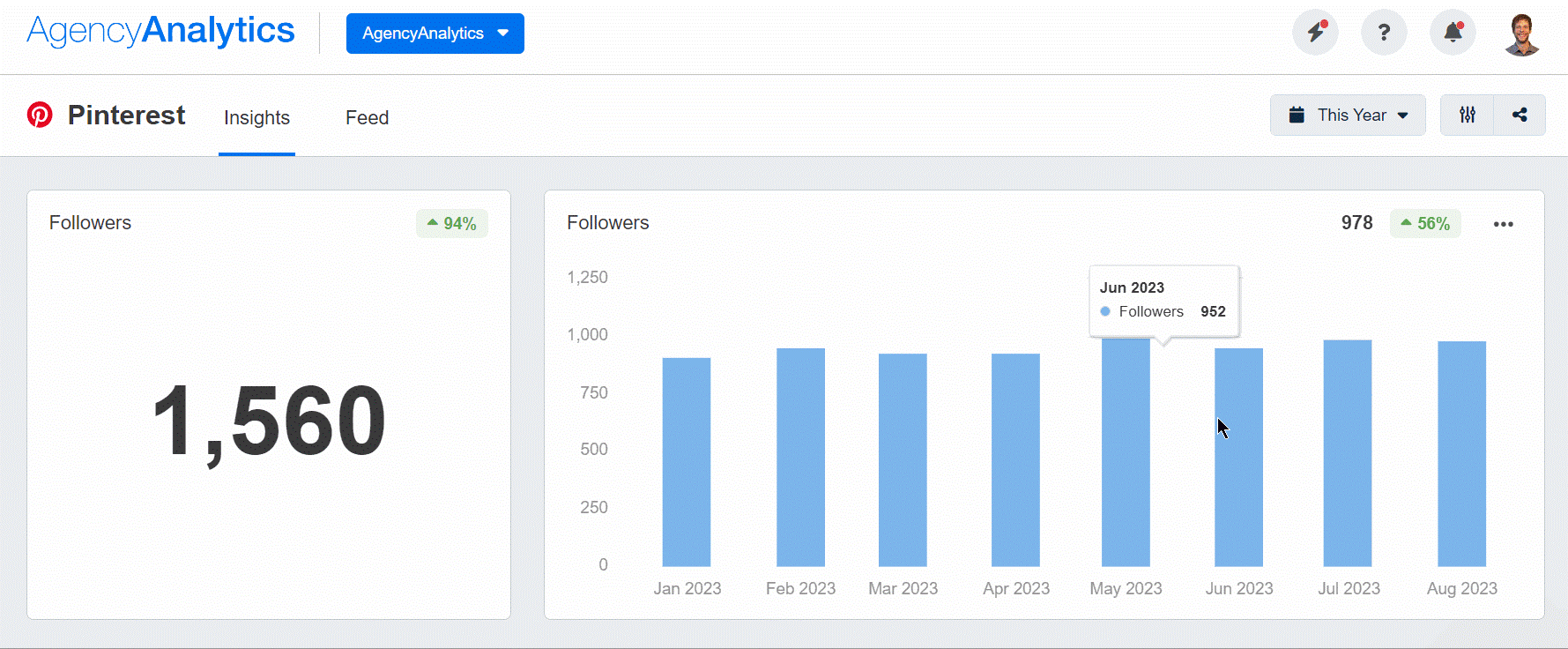
The numbers don’t lie. Keep tabs on follower growth rate to understand which Pins are making the most waves–monitor this insight and more on AgencyAnalytics, free for 14 days.
Two things move this number reliably. The first is publishing regularly: develop a variety of boards and add fresh content often, and you’ll give users the option to follow a single board if they’re only interested in one topic, build brand recognition over time, and boost the chances of conversions such as website clicks and online purchases.

The second is influencer marketing to bolster brand presence, which has the potential to increase Pinterest followers and revenue. It isn’t just about picking any influencer with 1M followers–strategy matters here:
Search for influencer accounts with significant reach and a similar target audience, and evaluate their overall engagement, values, and alignment with your clients’ brands
Analyze the quality of influencers’ followers. It’s much more effective to onboard an influencer with 8K engaged followers (and higher conversion potential) than a non-industry-related influencer with 100K followers
Send a personalized message to pitch collaboration and explain why your agency partnership is mutually beneficial
Provide a well-defined agency contract covering the length of the agreement, which Pins get promoted, and any brand assets needed (images, videos, product tutorials)
5. Pin clicks
As the name suggests, this metric indicates how many users have taken action by clicking on one of your client’s Pins.
It doesn’t only refer to website link clicks. For example, Pin clicks may also include:
Viewing a static Pin more closely (e.g., zooming in on a recipe)
Clicking on a CTA button that goes to an outbound link (such as the ‘Read it’ button that goes to a related blog post)
Making an in-platform purchase (which is a feature you should take advantage of since Pinterest is a great social commerce avenue)
Even if you’ve got excellent traction and organic reach on Pinterest, sometimes a little oomph is needed. In that case, use Pinterest Ads to drive conversion rates, get more outbound clicks, and increase social media ROI.

Need to understand the performance of promoted Pins? Monitor audience analytics, identify the top converting Pins, and ensure you’re reaching the right audience–try this exact Pinterest Ads dashboard on AgencyAnalytics, free for 14 days.
6. Video views
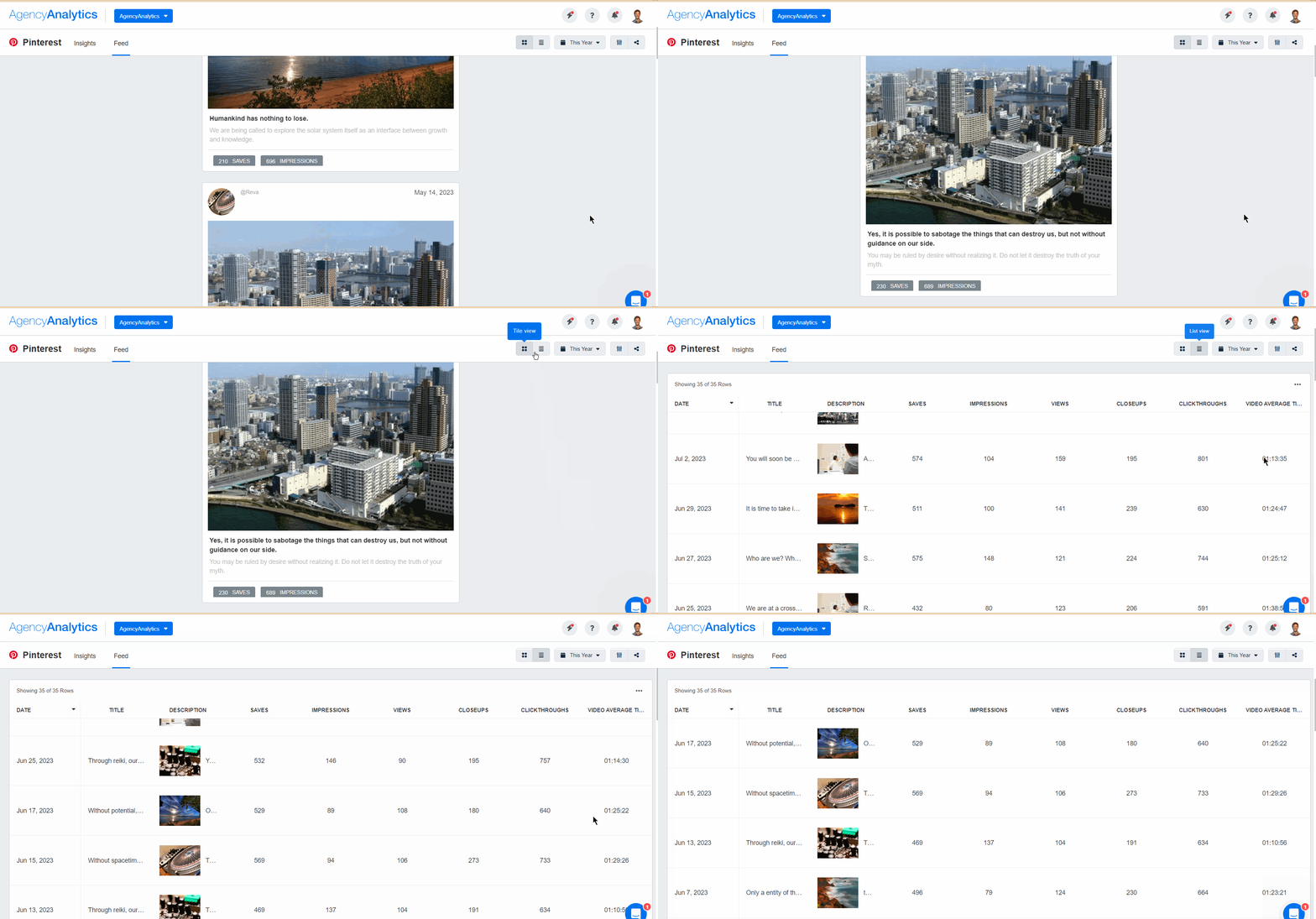
This Pinterest metric collates how many views a video Pin got after being watched for 2 seconds or more, with at least half of the video on screen.
If you haven’t already, use Pinterest videos to present your client’s brand in an impactful way (and in the shortest time possible). One billion videos are viewed on the platform daily, so these Pins are worth the investment.
Video is the ultimate first impression of a product, brand, or concept! You can share information creatively in one short video, driving more engagement than any text or static visual. We’re visual creatures–we absorb every element of a video in seconds to create a complete picture of a product, how it works, and whether it’s what we’re looking for.
Michelle van Blerck, Communications Manager, Digital Freak
7. Average video play time
Average video play time measures how long users typically view your client’s videos.
Longer video play times mean your client’s video content has captured user attention for a sustained period. If you notice a low number, keep in mind that:
Pinterest suggests video Pins between 6 - 15 seconds for maximum impact
Users may not always listen to audio, so include captions on these Pins where applicable
Storytelling and high-resolution imagery are a must
8. Conversions
If your clients are focused on generating user action from Pinterest, tracking conversion insights will be a top priority. That way, you’ll understand the effectiveness of your client’s Pinterest efforts and whether they’re resulting in significant ROI.
Keep in mind that this in-platform feature is currently in Beta, so there may be changes over time. To access conversion insights, you must have a Pinterest tag installed on your client’s website, in addition to a Pinterest Advertising account.
Want to view the number of website conversions across multiple social media sources (not just Pinterest)? Populate that data into a Google Analytics dashboard for a quick, easy-to-understand data visualization.
The types of conversion metrics on Pinterest
Once you’ve put all these steps in place, you’ll have access to conversion insights for organic and paid Pins. To get started, go to the drop-down menu under ‘Performance over time’ and review metrics like:
Revenue: How much revenue your client’s Pins generated
Page Visits: The number of times users visit your client’s website after interacting with their Pinterest content
Add to Cart: The number of times your client’s products were added to a shopping cart as a result of Pinterest
Checkouts: The number of times a checkout happened as a result of Pinterest interaction
Average Order Value: The average amount a customer spends on a Pinterest-influenced transaction
If you’re noticing a healthy number of clicks from Pinterest but marginal conversion metrics, it may mean that website optimization is needed (e.g., fixing a slow page loading time). It could also suggest that you should improve website copy or even make the checkout process faster.

Connect the Google Analytics 4 reporting integration to include traffic, engagement, and conversion metrics for all of your Pinterest clients. Try AgencyAnalytics free for 14 days!
Turn the numbers into your clients’ next Pins
Metrics only earn their keep when they change what your client publishes next. Look for Pins with high numbers of impressions, saves, and clicks, as these metrics are an indication of a Pin’s popularity. But don’t stop there. Look at the type of content these Pins contain. Is it a DIY guide, a product showcase, an infographic, or a motivational quote? Perhaps your client’s audience likes seasonal trends, like Halloween pumpkins or Christmas tree ideas.
Then replicate those elements. If infographics are performing well, create more of them. If your audience is engaging with how-to guides, expand on this content with more step-by-step instructions. If product images are getting the most saves, find new and creative ways to showcase your products. The goal isn’t to copy and paste the same content repeatedly–it’s to understand what characteristics make certain Pins successful and incorporate those elements into new, original content.
Boards are how that content stays findable–themed collections of Pins, categorized in one place.

To get the most from them:
Develop an ideal customer profile (ICP) covering target demographics (age, gender, occupation), what those customers are looking for, how your client’s offering applies to their Pinterest searches, and the messaging and imagery that will land
Evaluate your clients’ bank of products or services and come up with board categories. A large-scale retail client may have boards for “Fall Jackets,” “Summer Dresses,” and “Winter Boots.” These names should be relevant to the target customer, not just to the business owner or product manager.
Don’t be afraid to go beyond the obvious. Not every Pin has to be directly related to your clients’ products. A retail client with a maternity line could include Pins about pregnancy and new motherhood; a beachwear client could use inspiring images of tropical locations.
Use Pinterest Trends to plan ahead
Check out Pinterest Trends to gauge the pulse of upcoming trends, explore what’s popular for a particular season, or brainstorm new content ideas.

And if you want to take things a step further, you’ll also have the option to filter trends by month, keywords, popularity, and user demographics.

Take things up a notch by checking out Pinterest Predicts to discover emerging, simmering trends before they’re mainstream. Pinterest has even had 80% of their predictions come true, so it’s worth looking into.
By aligning your clients’ content with emerging industry trends, you’ll create relevant Pins that resonate with their target audiences.
Pinterest Ads: how they work and what to track
Even with a solid organic presence, sometimes an extra push is needed. Advertising isn’t about throwing around ad spend or applying a one-size-fits-all strategy to every client–to get the most from Pinterest Ads, your agency needs the correct parameters, the right ad format, and the metrics that prove it worked.
How Pinterest Ads are displayed
Pinterest Ads carry a small “Promoted by” tag. Because they fit in seamlessly with regular Pins, they’re not as disruptive as ads on other social media platforms.
Pinterest decides which ads to display in a user’s Home feed based on their historical activity, so a user’s ads align with the topics they’ve regularly searched for. Like other ad platforms, Pinterest Ads can be targeted on demographics including age, location, categories, and interests. See who your clients’ ads are reaching and keep tabs on untapped demographics with a Pinterest Ads dashboard.
A summary of Pinterest ad objectives
Your client’s campaign objective determines ad auction bidding and the different available ad formats.
Pinterest breaks down ad campaigns according to the following five campaign objectives:
Pinterest Ad Objective | Description |
|---|---|
Brand Awareness | Helps users discover your client’s brand. Based on a maximum cost per one thousand (CPM) bid, or the maximum your client is willing to pay per 1000 impressions. |
Video Views | Optimizes views based on users that are most likely to watch your client’s videos. Based on a maximum cost per view (CPV) bid, or the amount your client is willing to pay for a 2+ second view of their video. |
Consideration | Helps to increase the number of clicks on your client’s ad. Choose an automatic bidding strategy or set a customized maximum cost-per-click (CPC). |
Conversions | Works best to drive specific user actions (e.g., add to cart, checkout). Based on automated bidding or a customized average cost per action (CPA), i.e., how much your client is willing to pay when a user follows through on a website click. |
Catalog Sales | Shopping-oriented ads that include details such as price tags and availability. Helps users discover your client’s product offering or services when browsing Pinterest for inspiration. Similar to the ‘Conversions’ campaign objective, these ads are based on a set CPA or automated bid. |
To choose the right campaign objective, evaluate your clients’ goals beforehand and decide which one works best for their needs.
How to set up a Pinterest Ads campaign
Here’s a step-by-step walkthrough, using a simple brand awareness campaign as the example.
1. Describe your client’s brand. Choose the description that best summarizes its focus.

You’ll also have the option to choose up to three brand goals.

Finally, get personalized recommendations by filling in an additional business description.

2. Create the campaign. Click on ‘Business Hub’ in the top right corner and go to ‘Create a Campaign’.

3. Fill in the campaign details. Choose the objective: brand awareness, video views, consideration, conversions, or catalog sales.

After you’ve selected an option, choose an appropriate campaign name, budget, and schedule.

4. Choose a targeting strategy. Create an audience of new customers, users that have already interacted with your client’s brand on Pinterest, or customized lists (e.g., your client’s website visitors).

5. Select interests and keywords.
Interests: pick topics related to your client’s brand, so you reach users based on other Pins they engage with.
Keywords: choose relevant keywords to increase ad impressions in search results and Related Pins. Pinterest recommends a minimum of 25 keywords.
6. Choose demographics. Next up, choose your client’s audience demographic, which includes gender, age, location, languages, and devices.

You’ll also have the option to choose from two advanced targeting options:
Browse: Your client’s ads will appear as people browse their home feeds and related Pins
Search: This means that your client’s ads will appear in search results and related Pins
7. Decide on a budget and schedule. Budgeting works much like other ad platforms: choose a daily or lifetime budget for each ad group, plus a start and (optional) end date.
8. Select optimization and delivery. Choose the frequency of your client’s ads (monthly or weekly), and a monthly frequency cap if you don’t want to bombard users with too many ads. For optimization bidding, choose from:
Automatic bidding: Pinterest aims to get the most clicks for your client’s budget
Custom: Control how much is bidded at auction
9. Choose the Pins to advertise. Finally, choose the Pins you’d like to promote–perhaps ones that could use more visibility. And that’s it.

Agency Tip: Looking to save time on Pin creation? Use a platform like Canva that offers a range of Pin-ready graphics and video templates.

Use an automated dashboard to track Pinterest Ads metrics
Once the ads are live, you need a way to track all those metrics. An automated reporting tool like AgencyAnalytics does the work for you. Here’s what a Pinterest Ads dashboard covers:
Campaigns: campaign-level metrics such as the number of clicks, engagement rate, total ad spend, and impressions

Ad groups: the mid-level between campaigns and ads, with the same metrics as the campaign level above

Ads: more granular metrics, such as the top ads in your client’s campaign and how many clicks each has received
Keywords: which keywords are driving the most clicks and conversions

Demographics: the age groups, top cities, and genders of your client’s audience


No more sifting through all that Pinterest data to see the bigger picture. Let AgencyAnalytics do the work for you–it’s free for 14 days.
Tools to streamline Pinterest management
Managing a Pinterest account manually is tedious–much less for multiple client accounts. A few tools make the job faster.
Buffer is just as useful for scheduling Pinterest posts as it is for managing other social media platforms. Using a tool like Buffer also lets you visually space Pins out to avoid setting off any spam alarm bells.

Tailwind also helps to optimize and automate your clients’ Pinterest efforts. You’ll have the option to schedule Pins in advance, publish at optimal times, and increase the chances of Pinterest marketing success.

Canva is an excellent tool to help you create Pinterest-ready images, videos, and infographics. Choose from a range of customizable, ready-made Pinterest templates that are already visually appealing and optimally sized.

Go beyond tracking in-platform Pinterest analytics
In-platform Pinterest analytics isn’t the most time-efficient option when you’re juggling multiple clients with multiple social media analytics to track. When the end of the month rolls around, you don’t want to scramble or rely on outdated manual reporting methods like copying and pasting into an Excel spreadsheet.
Use Pinterest analytics tools to pull your clients’ data into a centralized reporting hub and monitor those insights in one place.
How to pull Pinterest data and create a customized report on AgencyAnalytics
Using an automated client reporting tool like AgencyAnalytics will help you to produce professional, white-labeled reports quickly. Because it includes marketing integrations from over 85 platforms, you’ll get a comprehensive reporting solution that covers all the bases (not just Pinterest).
If you’re ready to take that leap, here’s how to get started with creating a report.
1. Link Pinterest to your AgencyAnalytics account
After signing into your AgencyAnalytics account:
Head to ‘Integrations’ from the left-hand menu
Find Pinterest under ‘All Integrations’ or ‘Social’
Click on ‘Connect’

2. Populate data into a dashboard or report template
A dashboard is helpful for monitoring changes internally and making ongoing campaign adjustments, like improving the visual for a marginally performing Pin. You can also keep clients in the loop by granting 24/7 login access to their real-time dashboard data.
You’ve got a few options:
Choosing a pre-built Pinterest Analytics dashboard
Using a more general dashboard if you’re reporting on marketing campaigns from other platforms (e.g., an all-in-one social media dashboard)
Building your own custom dashboard that’s a blend of different metric types. It’s as simple as dragging and dropping widgets for greater visual clarity (e.g., sharing website analytics alongside Pinterest insights), adding annotations for more context (e.g., pointing out high-performing Pins that led to increased website traffic), and using custom metrics that reflect your clients’ goals (e.g., calculating total website views generated from Pinterest and other social media sources)

Use Pinterest data to fine-tune your clients’ marketing strategies and give informed recommendations–start your free 14-day trial of AgencyAnalytics today.
3. Flip a dashboard into a report in seconds
You don’t have to choose sides in the dashboard vs. report debate. With AgencyAnalytics, click the ‘Share’ icon at the top right-hand corner of your dashboard and you’ll be able to:
Download your dashboard as a PDF document,
Send your dashboard as a report via email, or
Create a shareable link with a report (which also comes with a customizable date range and an option to download)
A readymade marketing report template pulls all the data you need in a few clicks, in whatever format your clients prefer.
Go beyond the surface by tracking Pinterest analytics
Pinterest bolsters brand awareness, presents your client’s brand aesthetically, and enhances the overall brand discovery experience. To get the most out of it, your agency has to share tangible results with clients, from increasing outbound clicks to monitoring top boards.
Instead of wasting billable time logging into Pinterest Analytics each time you’re running a campaign, streamline your entire client reporting process and demonstrate your value by monitoring in-depth Pinterest analytics, streaming data into a professional format, and providing the context your clients need to make informed decisions.
Easily integrate data from over 85 marketing platforms into visual dashboards and reports. Invest in the client reporting tool made for agencies like you, free for 14 days.
Faryal Khan is a multidisciplinary creative with 10+ years of experience in marketing and communications. Drawing on her background in statistics and psychology, she fuses storytelling with data to craft narratives that both inform and inspire.
Read more posts by Faryal KhanWhat other agency experts are reading

How to create an automated KPI dashboard for clients
Focusing on the key performance indicators is how your agency demonstrates its value to clients–and tracks their goal progression. And an automated KPI dashboard streamlines your client reporting, keeping everyone informed with just the right amount of information.

18 Most Important Website KPIs to Track
Explore the 18 essential website KPIs every marketing agency should track. Learn how to improve key metrics like bounce rate, traffic by source, and goal completions.

The Comprehensive Guide to Digital Marketing KPIs
Learn how to track the most important digital marketing KPIs and make data-driven decisions. Discover essential metrics, why they matter, and how tools like AgencyAnalytics simplify reporting.