How to get customers to leave reviews for clients


Table of Contents
- Key takeaways
- Why you need online reviews
- Your agency’s role in managing online reviews
- What your agency can do to promote reviews
- 5 tips to get more customers to leave reviews
- Somebody left your client a one-star review. Now what?
- What not to do when it comes to reviews
- Review reporting tools for agencies
- How to streamline your review management
7,000+ agencies have ditched manual reports. You can too.
Free 14-Day TrialTable of Contents
- Key takeaways
- Why you need online reviews
- Your agency’s role in managing online reviews
- What your agency can do to promote reviews
- 5 tips to get more customers to leave reviews
- Somebody left your client a one-star review. Now what?
- What not to do when it comes to reviews
- Review reporting tools for agencies
- How to streamline your review management
7,000+ agencies have ditched manual reports. You can too.
Free 14-Day TrialIf you thought that price and free shipping were the strongest incentives to making a purchase over the competition, think again. Online reviews and ratings are now the determining factors when it comes to making purchase decisions.
For agencies and businesses, reviews are a low-hanging fruit that shouldn’t be left hanging in front of your competitor’s grasp. Especially when a 1-star increase in a rating can mean a 5-9% increase in revenue.
You may have already done all the right things for your local SEO clients, from optimizing their website to setting up their Google Business Profile (GBP) and Bing listings, and they’re still not getting enough reviews. That’s not something you or your client should ignore. Your clients’ online reviews affect their search engine rankings. With more buzz surrounding their business, Google is more likely to show their GBP listing to their prospective customers. If you want to keep them competitive in their local market, then reviews aren’t optional.
This guide will show you how to get more people to leave online reviews and how to stay on top of them to drive more business for your clients in a scalable way.
Key takeaways
99.9% of consumers read online reviews at least sometimes, and a 1-star increase in rating can mean a 5-9% increase in revenue.
Reviews account for about 7% of organic rank and about 13% of Google’s Local Pack rank, which puts them inside your SEO work rather than beside it.
Most people will leave a review when asked, so a proactive campaign of prompts, well-timed requests, and reminders beats waiting for reviews to arrive on their own.
Every platform sets its own rules: Yelp doesn’t allow soliciting reviews, Trustpilot doesn’t allow incentives, and a batch of reviews from one IP address can get an account suspended.
Connecting your clients’ review platforms to one dashboard lets you track ratings over time, spot sentiment shifts, and respond quickly without logging in and out of multiple tools.
Why you need online reviews
Today, 99.9% of consumers read online reviews “at least sometimes” when shopping online, and half read product reviews while shopping in a brick-and-mortar store.
Reviews steer more leads toward your clients. But while 53% of consumers expect a response to the reviews they leave, companies still aren’t responding fast enough to them, if at all.
Online reputation matters. In fact, it’s everything these days. And ignoring customer feedback will leave the competition leaving you out to dry.

Supporting review statistics
Explain to your local business clients how their online presence has the potential to determine if their customers do business with them or not. Here are some helpful statistics to highlight the importance of their online reputations:
More than half of consumers search for local businesses at least once a month (Source).
91% of consumers are influenced by online reviews of businesses (Source).
Your clients’ Google reviews don’t just matter for their reputation, either. Google uses them as a ranking factor.
Recent research from Moz on local search ranking factors found that, when it comes to organic search, reviews account for about 7% of rank.
When it comes to Google’s top three Local Pack results, reviews are even more important, accounting for about 13% of rank.

Why local reviews matter for your local clients
In a world where consumers trust influencer recommendations more than those from family and friends, your clients’ business reputation largely depends on what people say about them online.
While traditional SEO strategies help get your clients to the top of the SERPs, reviews play a part in the larger picture and have an enormous impact on how potential customers see your clients’ local businesses. Glowing reviews make someone eager to visit their business, while negative reviews, gone unattended, are a big deterrent.
So, in order to get your clients in the Local Pack, they’ll need local reviews, which are one of the top three factors for higher rankings.

But more importantly, when someone types in “best sushi” on Google Maps, they will see customer reviews that mention “best sushi”. So, no matter how much SEO you put into the actual website, user-generated reviews tend to show up for relevancy. This is because Google trusts the power of word-of-mouth information. Reviews are kind of like crowd-sourced recommendations, so a large number of positive reviews (that are authentic) result in higher rankings on SERPs.

1. Attracting new customers
Social proof is one of the best kinds of proof. People look to others before making purchase decisions. If they are on the fence, some really positive reviews can help tip the scale in your client’s favor.
2. Higher NPS (Net Promoter Score) for businesses
Identify top promoters from your clients’ NPS scores. They’re unofficial brand ambassadors, so amplify their voices and reward them. It’s a great way to boost brand awareness, build a community, and gain trust in an authentic way.
3. Boost credibility and trust for first-time buyers
A business or product with very few (or no) reviews can come across as new and unproven. You’ll need to rely on online reputation to help drive more conversions and sales.
Your agency’s role in managing online reviews
Customers don’t trust companies with lower than 4-star ratings. It’s actually the most common filter that’s applied. So while review management may or may not fall under your agency’s umbrella, it certainly has an impact on the performance of your campaigns.
All of your hard work could go out the door if you’ve nearly converted a lead who then reads a bad review and abandons the page, or if your client’s page never even makes it to the search results in the first place.
And it’s not just about getting a handful of glowing reviews. Consumers are increasingly seeking out negative reviews to help make informed buying decisions.

Unsurprisingly, Millennials and Gen Z shoppers are more likely to seek out negative reviews compared to Gen X and Boomers. So your clients need to pay attention to what their customers are saying about them, and respond.
Once your client gets a steady stream of reviews coming in, responding to them (positive or negative) helps them build trust with their customers. No business likes getting a negative review. But, even more important, no customer likes seeing a negative review that has not been addressed by the business in some way. How your client handles reviews can be just as important as the reviews themselves.
Reputation management goes beyond a handful of 4 or 5-star reviews. It’s important to combine your client’s review strategy with more local SEO strategies to build a complete picture of an established and trustworthy brand. This includes activities such as:
Optimizing their GBP listing and website
Creating consistent citations
Publishing high-quality content
Gathering better reviews (detail, photos, etc.)
Over time, your client will eventually catch up or even surpass the local competition in the SERPs. After your agency puts in all of this effort, your client will gain more exposure, more loyal customers, and ultimately increase their revenues.
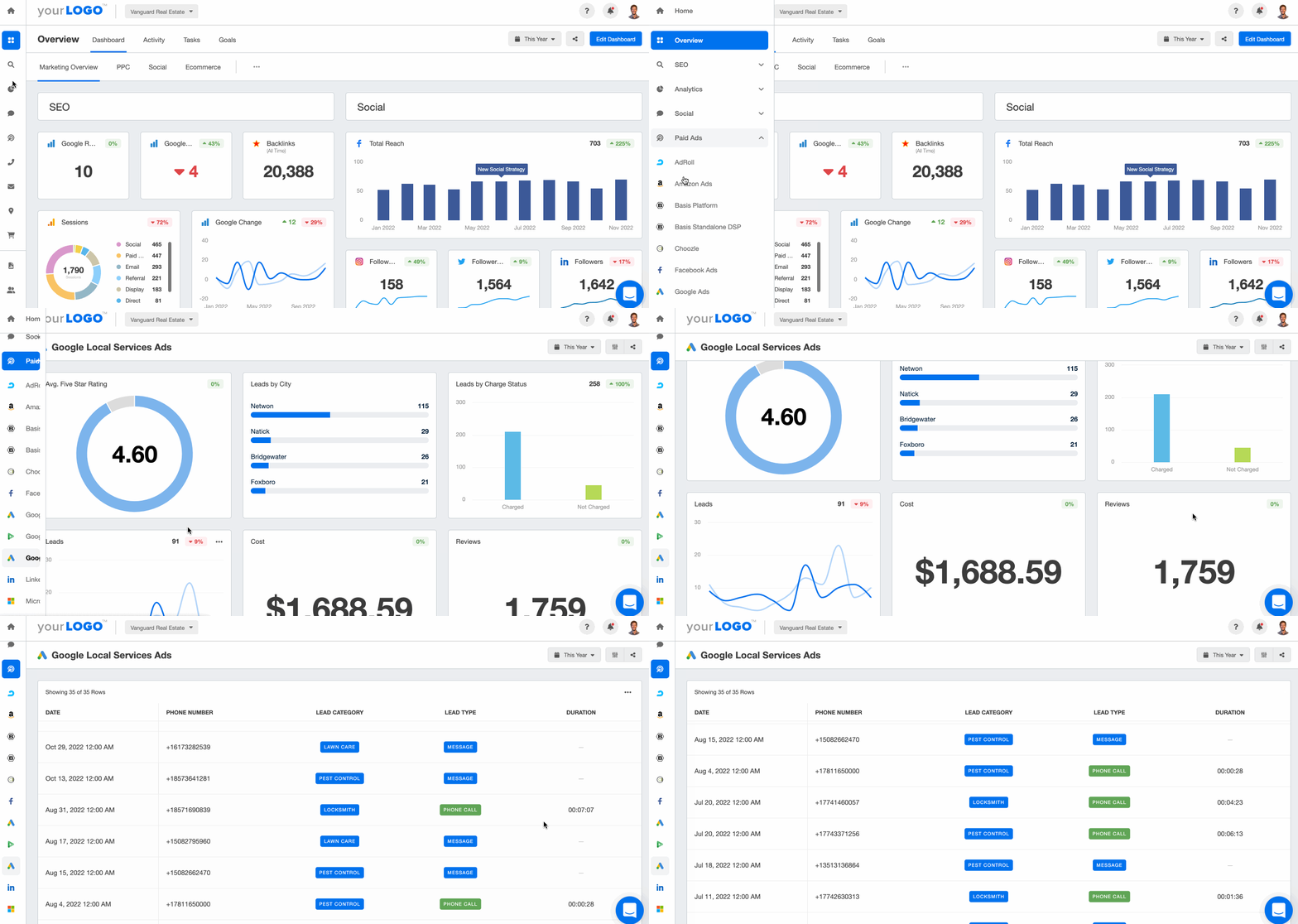
Google Local Services Ads (GLSA) are another way to get your local business clients to appear on the SERPs. For example, when people search “oil change near me,” they may see local search ads that feature your client’s business. They have the potential to get your clients more store visits and calls, and to help searchers learn more about their business overall. They’re a great option because they highlight business information such as store hours, address, customer reviews, and photos.
The AgencyAnalytics Google Local Services Ads reporting tool provides full visibility into your client’s ad spend and marketing performance.
So, how does review management fit into your agency-client relationship?
Agency and client goals and responsibilities
Goals | Agency’s Role | Brand’s Role |
|---|---|---|
Boost Reach & Brand Recognition | Create the brand image, manage ad placements, and social media profiles. | Provide excellent quality products/services and personalize their customer services to encourage rave reviews. |
Manage Reviews | Create profiles on review sites, collect data, and set up prompts within the online customer journey. | Respond/follow up with reviews, ask for reviews at the source (i.e. in-store or when a box is delivered). |
Protect Reputation | Flag any negative reviews and bring them to the brand’s attention, respond to social media comments, and create campaigns to capitalize on positive reviews. | Create a culture for positive feedback, and learn from reviews to improve the customer experience. |
Why you need a Google reviews strategy
A comprehensive review strategy includes more than just hitting a certain number of stars.
Yes, review quantity has its value in establishing credibility. After all, a majority of shoppers need to see at least 11 reviews before they will trust their validity.
But there are other considerations as well, such as the depth of reviews and recency.
It won’t look very good to your client’s potential new customers when they search their business online and find reviews from 2015. How much faith would you put into a restaurant review from nearly a decade ago?
In fact, it could even give the impression that they’re no longer in business. Your client’s online reputation should constantly be up-to-date, from reviews to hours of operation. It may be a good idea to run a GBP audit to show customers that their online customers are a priority as well.
Because Google reviews build online credibility, you’ll want to continually build them. Your clients should have an active strategy in place to encourage more reviews rather than waiting for them to trickle in naturally. If they haven’t even thought about this, it’s a great opportunity to show your agency’s value.
Set up a strategy for their existing customers and their new customers. Whichever category they fit into, instant communication should be made to make it as easy as possible for them to submit a review.
Give some of these tips a try to get better (and more) reviews:
Update email signatures to include links to their GBP listing
Add a Google review button to their website
Highlight reviews on social media or in their GLSA
Whether you send an email out immediately after their interaction or maybe on a monthly basis, it’s an important conversation to have with your clients to figure out the right time to ask for a review.
How to communicate the value of reputation management
It’s your job as the agency to communicate to your local business clients just how important their local reviews are when it comes to building their credibility and online visibility. Check out local SEO reporting tools that blend reviews, GBP Insights, and rankings in one report.
For customers to choose your client’s business over another, it comes down to their online reputation. Do they have a presence online? Do they respond to positive and negative reviews? Does it look like they take care of their customers? All of this is a part of reputation management.
But how do you communicate the value of this service to your clients? A combination of three things:
a Google reviews strategy,
Review reports that communicate the value of your efforts, and
Supporting statistics and data about how consumers use the internet to interact with their business.
What your agency can do to promote reviews
Even if your agency isn’t necessarily in charge of customer service and follow-up of reviews, you can still set your clients up for success by doing these four things.
1. Create accounts on popular review platforms
Look where their customers are likely to look for reviews, such as their Google Business Profile and Trustpilot.
2. Integrate a prompt to leave a review
Include leaving reviews as part of the customer journey, even putting it in the script after an interaction with a customer service rep or sending an automated email two weeks after an online purchase.
Put a note somewhere visible on their site encouraging people to leave feedback, with links to Google, Facebook, and other review sites. If you can add a feature that lets people write reviews directly on their site, do so. Integrate it into their customer journey by adding a popup right after purchase, or a follow-up automated email after.
3. Find ways to put these testimonials to work
Include customer reviews on landing pages and within your clients’ remarketing campaigns.
4. Put all your client’s reviews into one report
Since faster response times are closely related to positive reputations, your agency can help give clients greater control over their online reputation with a streamlined review management process. Sending out regular reports will give them clarity and help them manage their responses better. You can even use this as an upsell opportunity if you see an increased demand to respond to reviews in a timely manner.
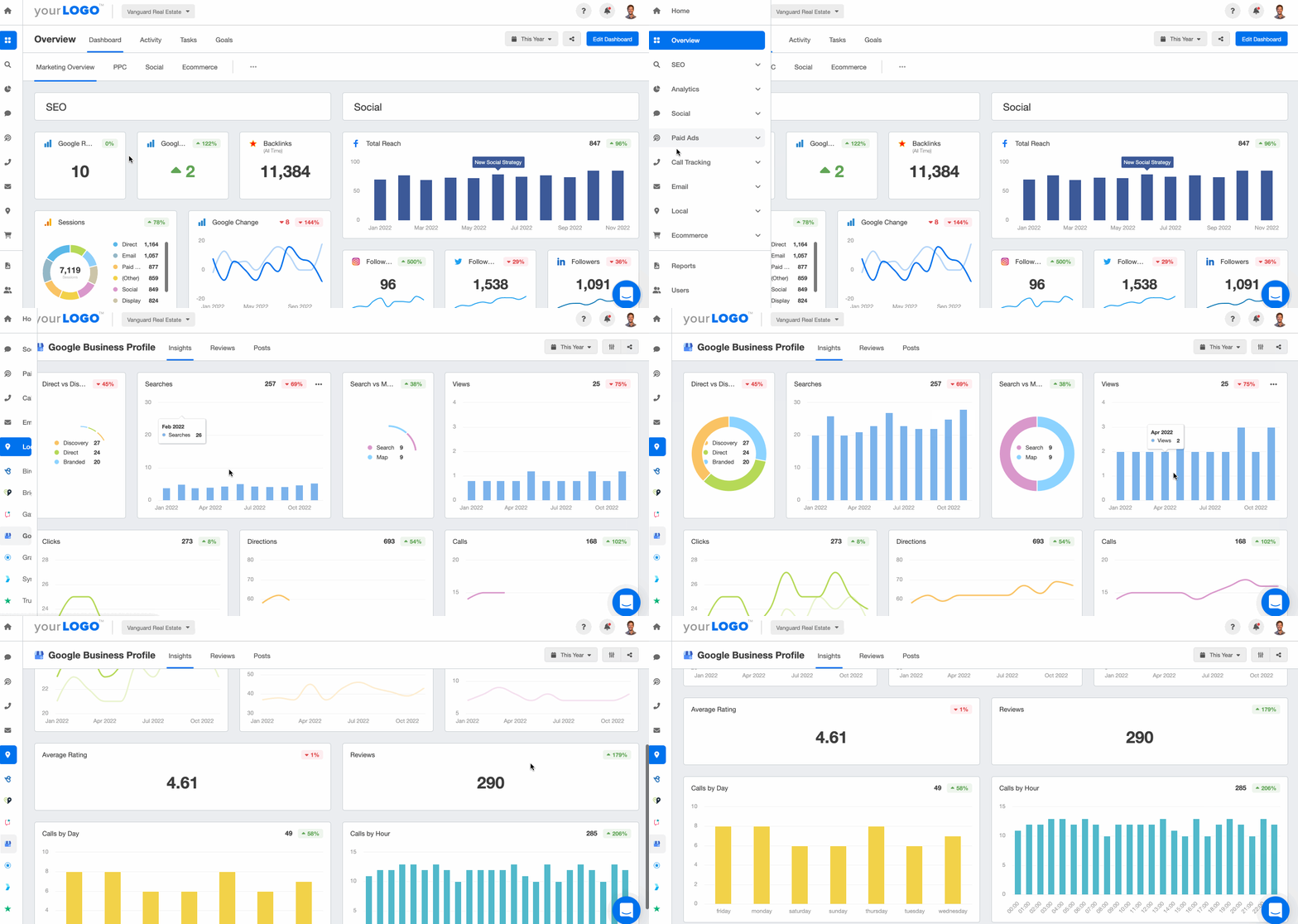
Give your clients the full picture of their GBP listing in an easy-to-understand report. Start your free 14-day trial today to streamline your agency's reporting process.
5 tips to get more customers to leave reviews
You’ll need to be proactive to get more reviews. Most customers don’t go out of their way to write reviews unless they’re prompted to. Ironically, sometimes dissatisfied customers are the most motivated to write reviews. So, if your clients want people to say good things about them online, they’ll probably have to ask.
This isn’t as daunting as it might seem. In fact, this could be a great opportunity to upsell additional services to your clients like setting up email or social media campaigns prompting for customer reviews.

Here are five things to keep in mind as you test out your review strategies for your clients.
1. Ask, and you shall receive
The best thing you can do is encourage more people to be proactive in providing their reviews. Most people are willing to leave a review if asked, and it’s the best way to guarantee more reviews from new customers.
✅ Make it feel like a personal interaction
Sign the email with a real person’s name and email, and use informal language as if it’s an ongoing conversation.
✅ No cherry-picking
Ask every customer for feedback. If someone had a terrible experience and wasn’t asked about it, chances are they will leave a bad review for the same thing. Your clients need the opportunity to take feedback and make improvements.
✅ Provide super-clear instructions
Not everyone is an internet whiz. Some people might want to leave your client a review, but give up trying because they find it difficult or confusing. Create a set of detailed instructions, including screenshots, and include it in their email campaigns, or create a physical copy for your client to hand out.
✅ Optimize your review invitation emails
Test out messaging, subject lines, channels, and placements.
✅ Use better prompts
When crafting your customer survey, be sure to ask the right questions to get valuable feedback. Prompting them with the right motivators to leave a review can already get them thinking about how they can help others make better decisions and let the business know about their experience.
2. Choose the right time and place
Reviews are an emotional process and should be done at the right moment. Pick the best time, and it’ll be a rave review bringing in more customers. Pick the wrong one, and it can be a flop.
If the business is performing a service, ask right away for a higher chance of completion. Your client’s customer service rep can do this as soon as the service has been delivered. Request a review while the customer’s experience is still fresh in their mind. If you ask days or weeks after someone makes a purchase, they will probably have forgotten the details of the interaction, and they’ll be much less likely to do it.
This also applies to the method of collection.
Did you know? Text messages generate an impressive 98% open rate (and 45% response rate) compared to just 20% from email marketing.
Make sure the process is as streamlined as possible and uses the device preference. This includes options such as in-app review requests, chat or SMS text requests, as well as in-person, on-the-phone, or email requests for a review.

For example, if your clients have a storefront that generates foot traffic, ask for feedback in person or via tablet when their customers complete their in-store purchases. You can help clients personalize their experience by setting up the review questionnaire. Specifying what product the customer purchased and using their name will make them more likely to leave a review, and a positive one at that.
Customers will also be more likely to review your client’s business if they’ve got a physical reminder to do so. Suggest printing something like, “Review us on Facebook!” on their business cards or receipts. Have your clients put a sign next to their cash register, or have them ask customers directly to give them a review on Google Maps while they wait for their appointment. Your agency should communicate to your clients that their offline behavior affects their online results.
Other common practices include automatically adding a review request to the sales receipt. Having that called out by the person who assisted them makes that request much more personal, increasing the chance of a successful review.
In contrast, eCommerce companies typically wait a set period of time, typically one or two weeks after the item has been delivered, so that the customer has had a chance to use it before sending out an email. But feel free to include a little sticker on the box or a package insert asking for feedback as a reminder.
After a customer makes a purchase, be sure to let them know that your client would appreciate a review. Add links to their review sites of choice to make it easy for customers to oblige. Then, don’t forget to track email opens to test what offers the best results and highlight your findings in their review reports.
You can also automate your client’s review requests with services like BirdEye and Yext. BirdEye, for example, sends review requests right to customers’ phones, ensuring no time is wasted after they’ve made a purchase.
3. Send a reminder
According to Trustpilot, businesses can expect response rates of up to 50% after sending a reminder to leave a review. And remember, those reviews need to keep coming in. Consumers expect fresh reviews that are no more than 3 months old.
How many reviews do you need to be credible?
A recent survey found that 57% felt more comfortable making a purchase with 11+ reviews, while 41% of consumers polled were fine with 1-10 reviews.
How recent do reviews need to be?
Half of the consumers surveyed above said they need reviews that are no more than 3 months old to feel comfortable making a purchase.
So always send a reminder to customers who didn’t leave a review after your first try. Add a quick, simple explanation like: “We would love it if you could take a minute to share your experience with us.” After all, reviews are shorter than ever, about the length of an expanded tweet like the one below:

If a customer doesn’t respond after they receive your reminder, don’t insist again. Wait until they make another purchase, or consider making it part of an alternate marketing effort, like offering a coupon to encourage them to come back to their website for another experience.
4. Put your reviews front and center
Once you’ve received a rave review, show it off. Amplify the voice of your greatest supporters by sharing them on social media and featuring reviews on the homepage of your client’s website.

Social proof is a great way to convince people who are on the fence. Collect testimonials and put them around your client’s site where they’re relevant for top, middle, or bottom-of-funnel conversions.
For instance, you can squeeze out more conversions with testimonials about a specific product at checkout.
5. Use dashboards that integrate with third-party review platforms
Staying on top of reviews can be a tasking job, and your clients don’t want to be continually logging in and out of multiple review management platforms to see if they have positive or negative reviews to respond to.
By automating your client’s review management processes, you can easily do the following.
🚀 Track ratings and reviews over time
This helps your clients pinpoint areas of need in their products or services at any point in the customer journey. It’s especially helpful to watch for sudden declines in a specific time period that can be attributed to an event.
🚀 Monitor new reviews
Include all the reviews (stars and comments) right into your monthly reports so your clients are always up to date and have the opportunity to respond quickly and make amendments if necessary.
🚀 Identify review sources
See which platforms drive the most reviews. Is it Facebook, Instagram, or Google? This will help you prepare for your next review campaign and identify the best channels to seek out reviews.
🚀 Measure sentiment
You don’t need to read each review to get a grasp of your audience’s sentiment. See it in visual graphs.
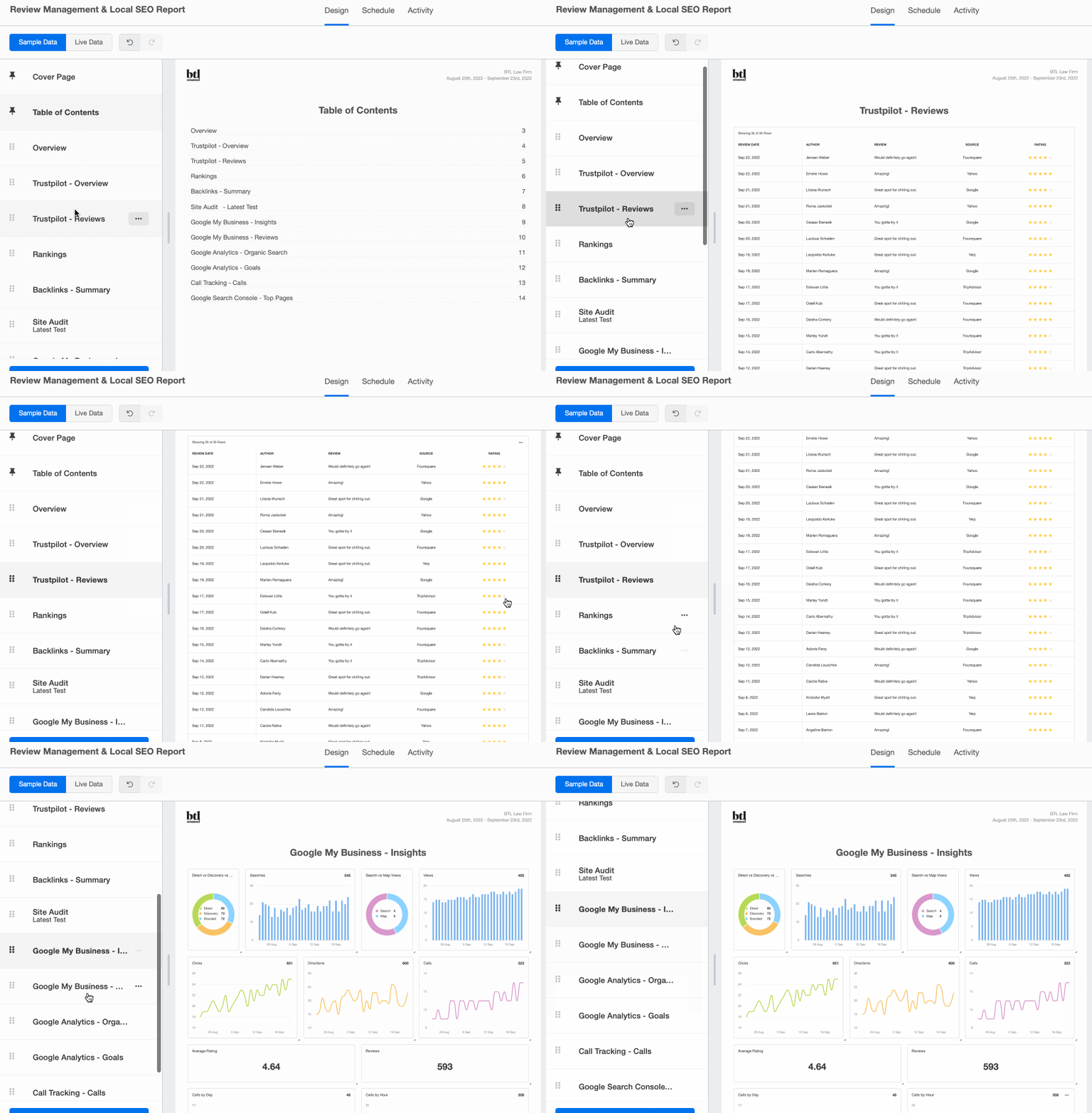
Save time and put all your clients’ review metrics under one roof. Try AgencyAnalytics free for 14 days!
Impress clients with a clear snapshot of their online reputation and keep them coming back to you for more insights. Set up a reporting tool like AgencyAnalytics that integrates with your Google Business Profile, Trustpilot, and other review accounts.
Can you automate getting more reviews?
Absolutely. Depending on the review management tool you choose, there could be an option to create and automate the process of asking for reviews. Asking for reviews manually becomes a burden quickly and won’t be very scalable in the long run, so automating the process based on specific actions or criteria makes it easier to scale and keeps a constant flow of review requests coming in.
There are a few different ways to do this, so your agency may need to test out a few options. Try creating a popup form on their website that asks for a review after a purchase is made, then a follow-up process that sends an email reminder to write a more thorough review on another platform. You could also try a survey about the customer’s experience, with the last question asking for a review and taking them to your client’s GBP. It’s a matter of tweaking the process and finding out what is bringing in the most reviews.
Just remember to adhere to the policies of the review platform. For example, many platforms discourage (and some outright disallow) compensating customers in exchange for leaving a review.
Somebody left your client a one-star review. Now what?
Negative reviews happen to even the most competent and professional businesses. As long as negative feedback doesn’t become a pattern, your client’s business will be okay. Taking quick action will also help your clients do damage control, and might turn negative reviews into positive for the person who experienced it or anyone seeking more information about your client’s business.
A negative review that has been handled correctly can be as much of a positive spotlight on the brand as a glowing review. Here are 3 easy steps to follow any time a client receives a less-than-stellar review.
Acknowledge the review and, if appropriate, apologize for any problems the reviewer experienced.
Address the reviewer’s concerns.
Offer to help the reviewer rectify any issues they may have had.
It’s important for them to respond quickly, so giving them access to a live dashboard with their reviews will help them view all their recent reviews at a glance without having to log in and out of multiple review platforms to seek them out.
For more information about how to manage reviews for a company with multiple locations, read here.
What not to do when it comes to reviews
There are a couple of things you shouldn’t do in your quest to generate more reviews for your local business clients.
For one, ensure all of your clients’ reviews are NOT coming from the same IP address. This can happen, for example, if your client’s staff was trained to ask customers to leave a review while using the business WiFi.
Review sites might think you’re writing all of them yourself, and your client’s account could get suspended or deleted. Be sure to inform your clients of this as well so they can discourage their staff from making this mistake.
When it comes to different review platforms, there are different rules that apply. For example, you should avoid directly asking their customers to review them on Yelp, as that platform doesn’t like it when business owners request customers to leave a review, and if they find out you’re doing it, they will penalize you.
You’re allowed to promote the fact that your client is on Yelp, but cannot solicit reviews. Platforms like Trustpilot also don’t allow incentivizing for leaving reviews in exchange for coupons.
On the other hand, it’s okay to ask for Google or Facebook reviews as long as you don’t pressure people to leave positive reviews.
Review reporting tools for agencies
Simply put, using a review management tool for your clients helps save your agency’s time, improves your client’s online reputation, and boosts their local SEO.
Using a tool like Birdeye, for example, keeps your client’s communication consistent and professional throughout every interaction with their customers. It also helps your agency keep track of everything: answering questions, following up on positive and negative reviews, asking for customer feedback, and more.
Using review software is also imperative when it comes to your client’s local SEO. If you want your clients to show up more in Google Maps or in search queries like ‘coffee shops near me,’ getting more reviews will help. This is because Google will see them as a real business and a quality resource for their local community.
Connect review services to monitor reviews in an AgencyAnalytics dashboard and add your client’s data to your agency’s automated marketing reports. On top of this, track reviews and insights from your client’s Google Business Profile page in the dashboards and reports. A few of the integrations include the following.
Google Business Profile (GBP)
Monitor your client’s customer engagement from their GBP listing by using the AgencyAnalytics integration. You’ll want to show clients exactly how their audience engages with their business by reporting on crucial customer actions such as website clicks, requests for directions, and phone calls.
Add the GBP metrics your clients want to see to your client reports and marketing dashboards.
Trustpilot
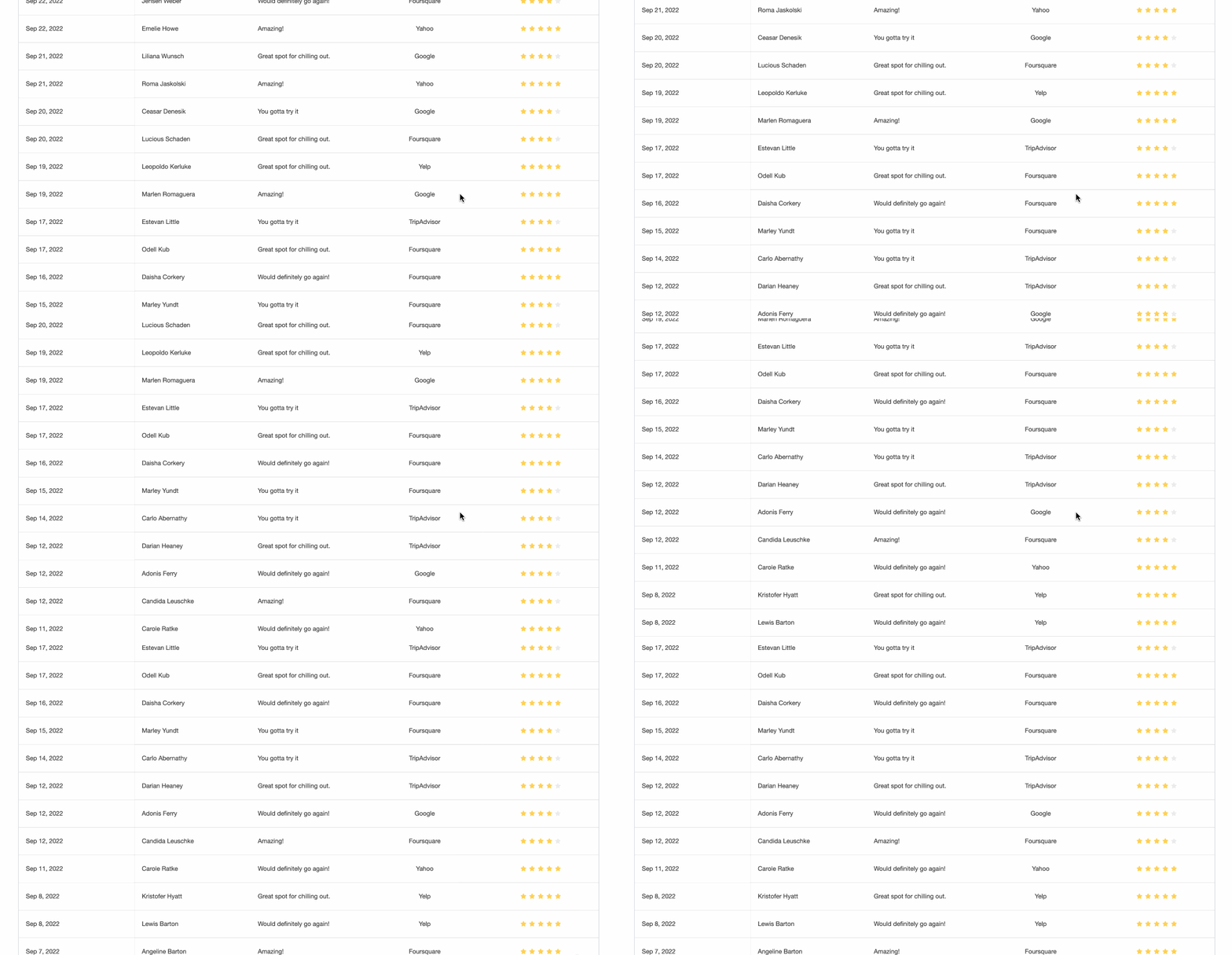
Your agency should be able to not only show clients what their business is doing right or what needs to be improved but also display their review data in an easy-to-understand format such as a table or feed-style list.
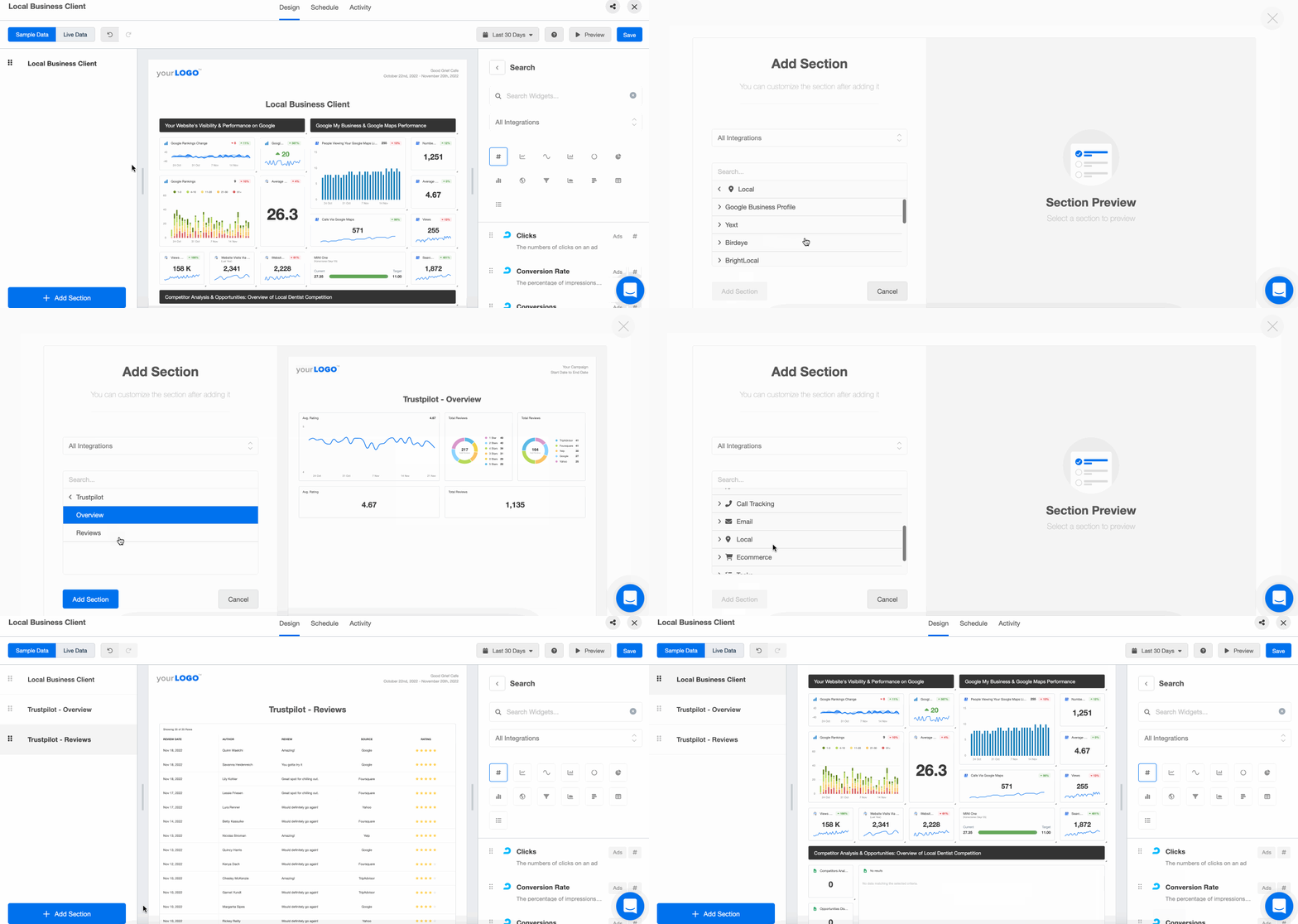
Create live Trustpilot dashboards to keep your clients informed of their online reputation as it’s happening.
Birdeye
Grow your local client’s businesses through happy customers. Birdeye helps your agency attract new leads with listings, reviews, and referrals and convert them into customers with tools like Webchat and Appointments. Their platform also offers surveys, ticket systems, and insights all in one place.
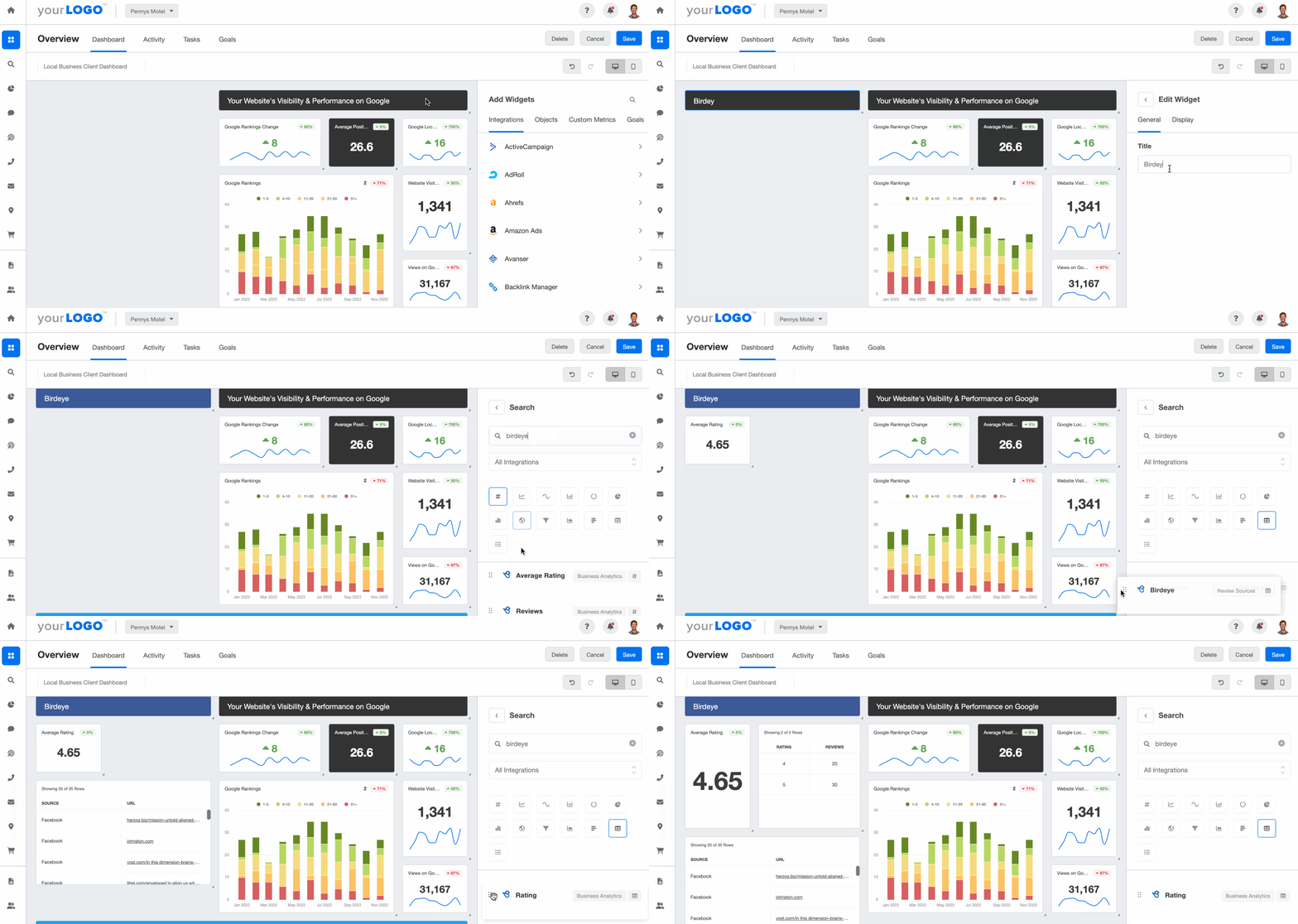
Use the Birdeye integration to create a dashboard that helps your agency stay on top of every review, for every client, and keep tabs on how their audience is feeling about their brand at any given time.
Yelp
Combine all of your clients’ review platforms in a single client report or SEO dashboard with AgencyAnalytics. Input their Yelp metrics alongside their social media data, GBP metrics, and more.
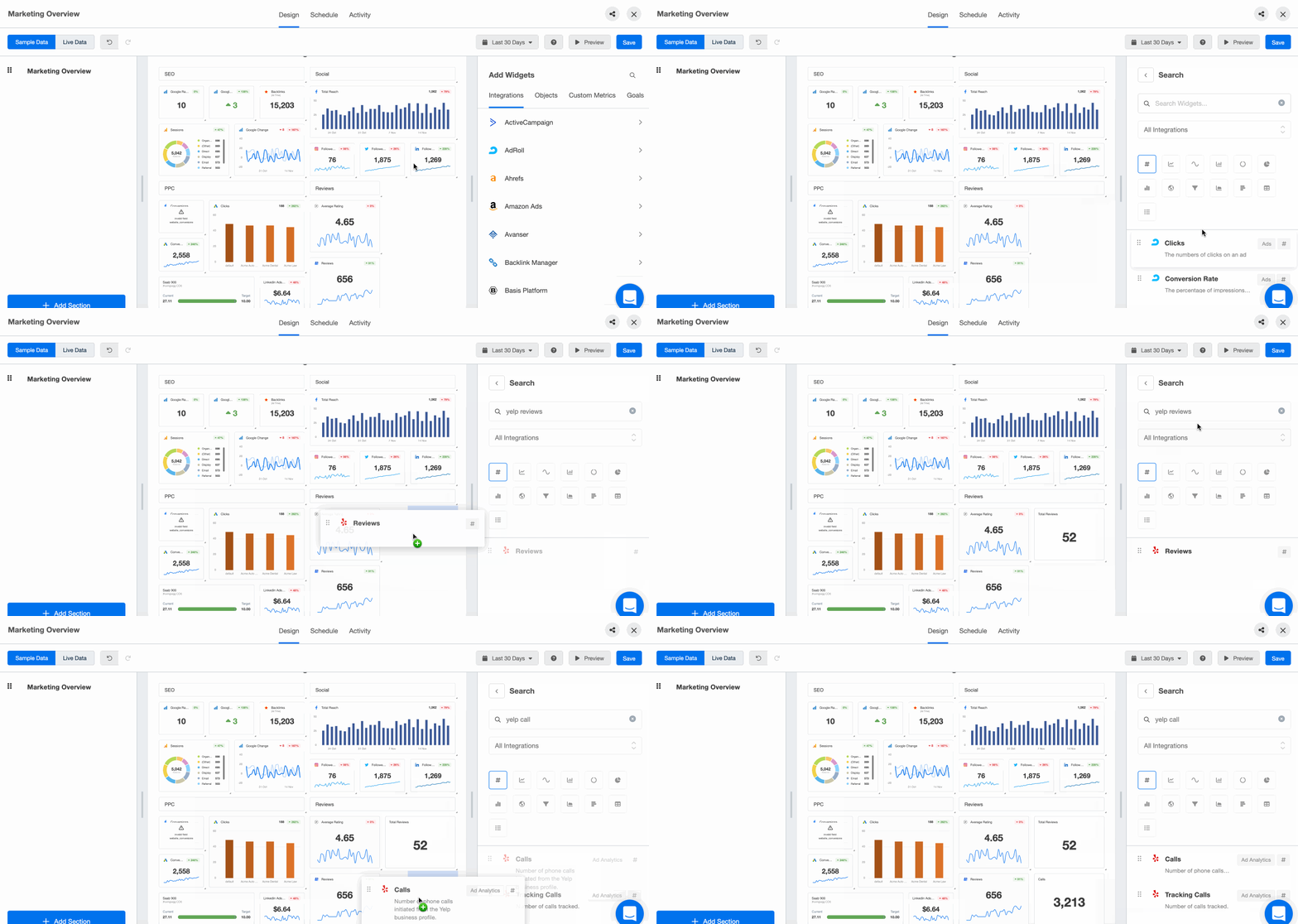
Monitor and share your client’s latest Yelp review count, average ratings, and review snippets to keep clients up-to-date on their online reputation.
Gatherup
Keep your clients up-to-date with their customer experience metrics in a single reputation management report. Show that your agency is monitoring their online reputation by sharing overall ratings, reviews, and Net Promoter Score (NPS) with easy-to-understand visual widgets.
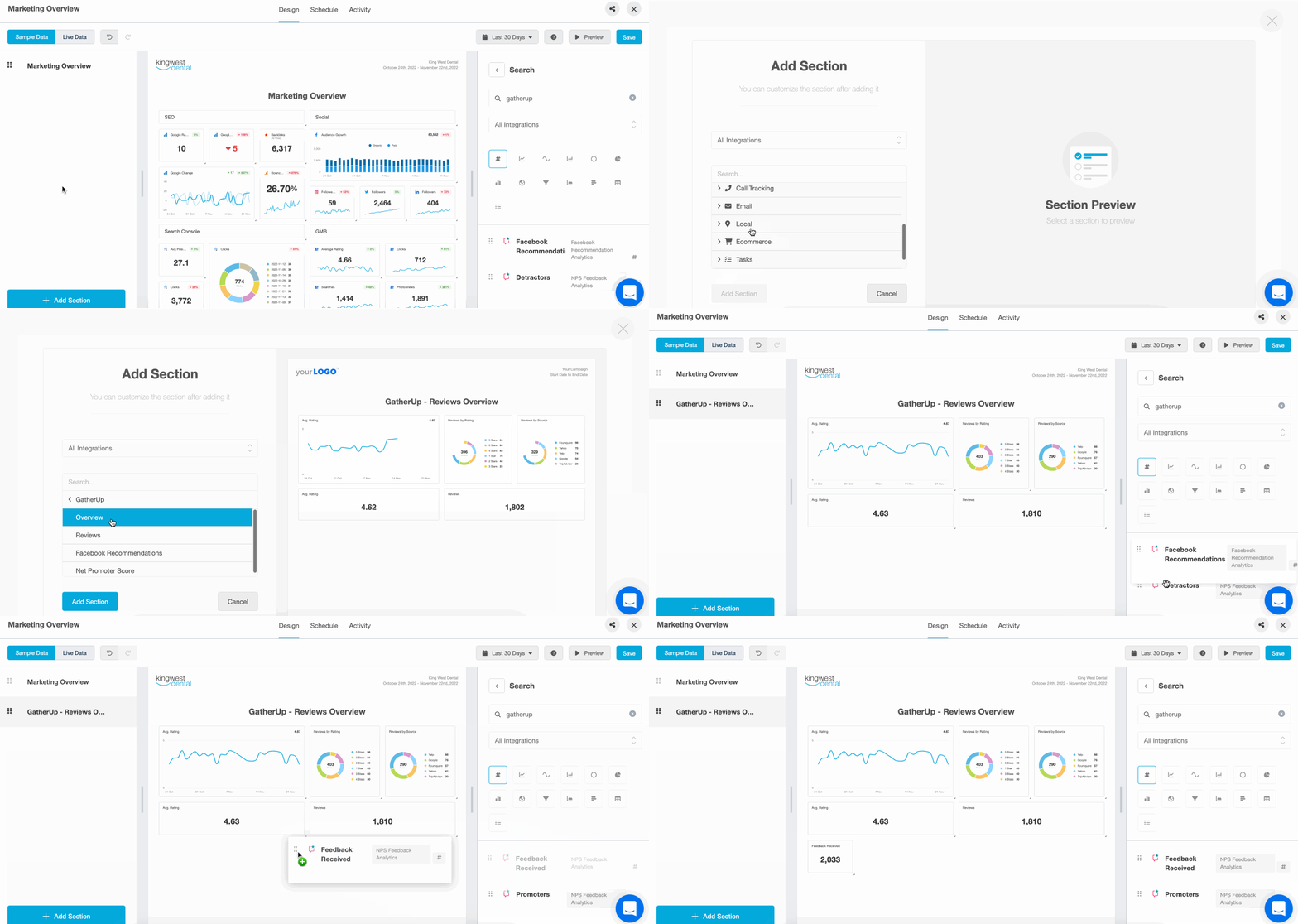
Have a client who wants constant updates on their online reputation? Give them access to their live dashboard.
BrightLocal
This dedicated local SEO platform allows agencies to improve local rankings, generate more traffic and leads from local search, plus manage reviews and reputation. This powerful tool gives the insights your agency needs to improve your client’s local search performance.
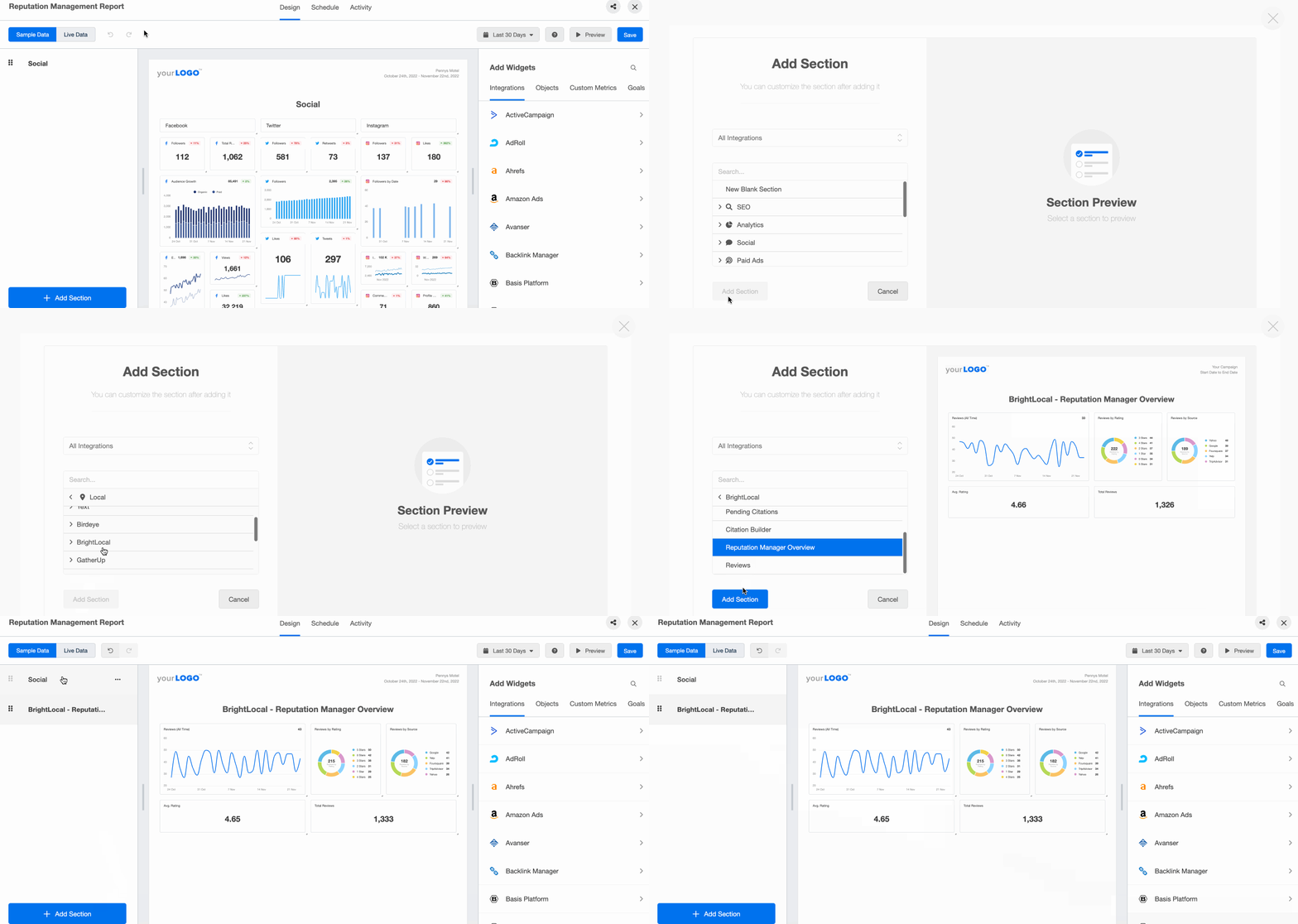
Keep your clients up-to-date with their BrightLocal data using fully customizable dashboards and client reports sent on an automated schedule.
Grade.us
Compile your clients’ average rating, customer sentiment, source analysis, and more by using the Grade.us integration in your client reports. Plus, monitor new reviews as they come in from a live dashboard that clients have access to, if you want them to.
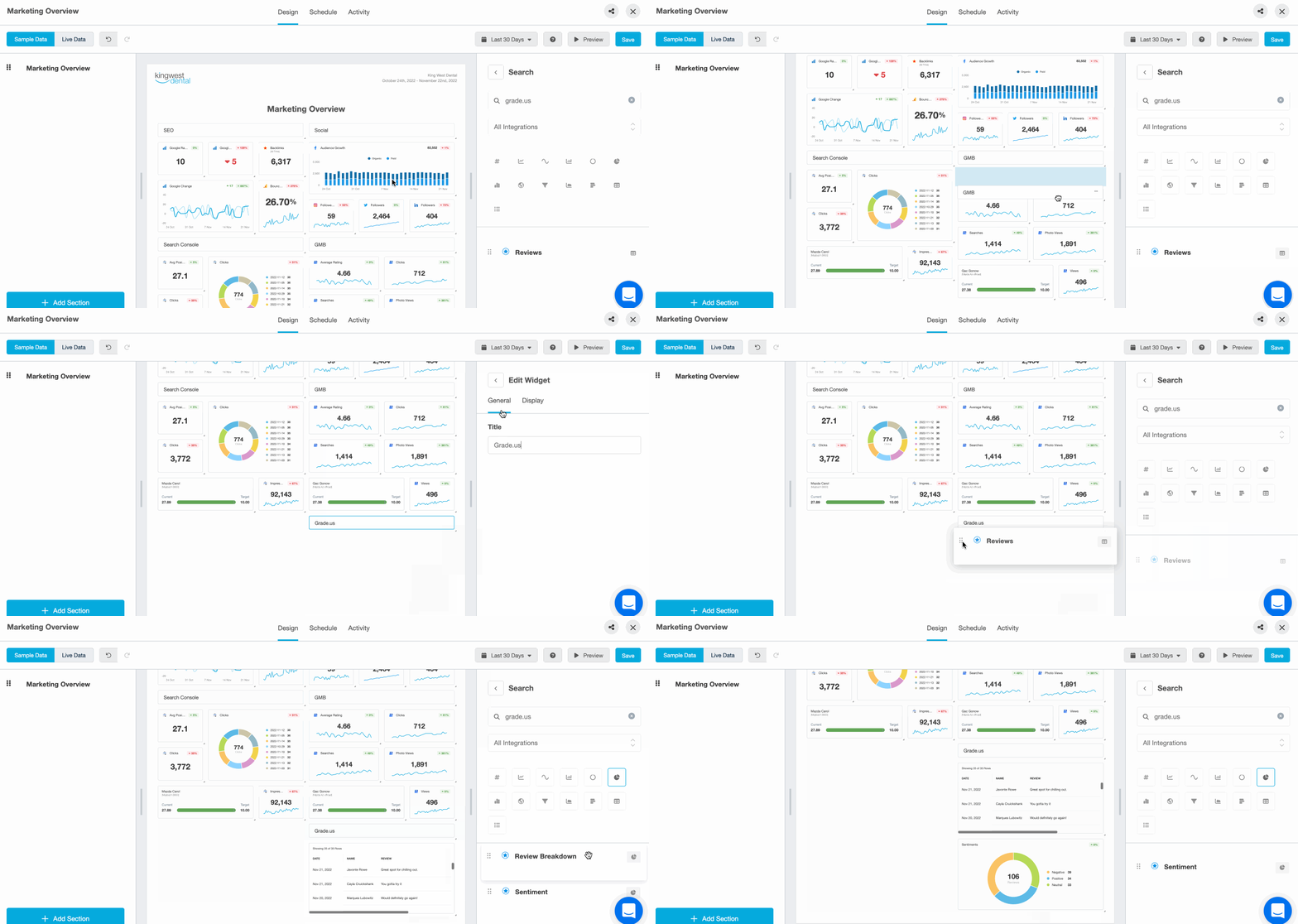
The Grade.us integration automatically pulls in reviews from hundreds of sites across the web.
Synup
Keep track of each client’s online reputation with the Synup integration. Monitor their important metrics like calls, direction requests, profile views and more in a single platform.
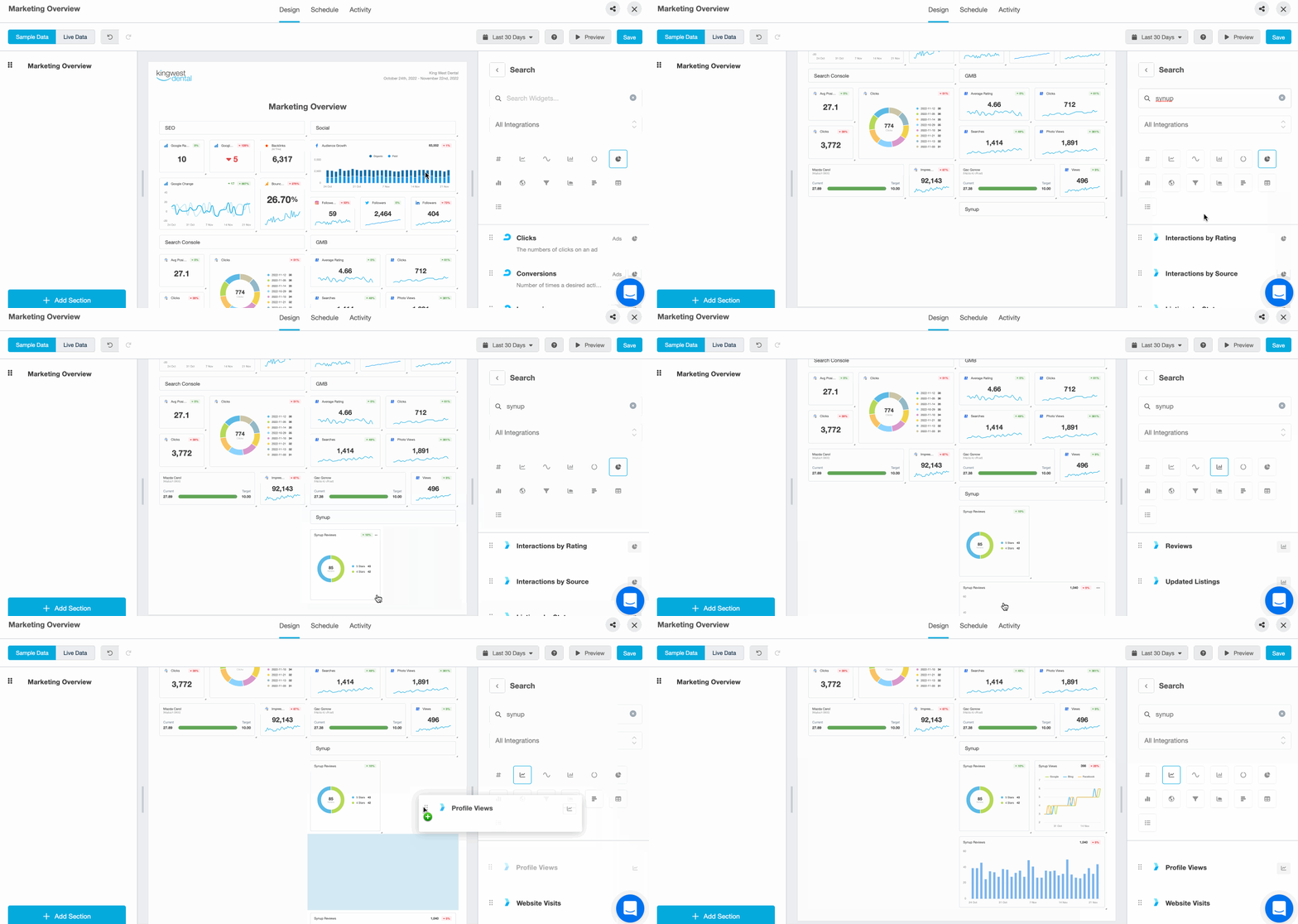
Track those metrics across all of their review platforms in one dashboard to make informed suggestions about their online reputation.
Yext
Stay on top of your clients’ reviews (positive or negative) and inform them of the value you’re bringing to their online reputation. Yext makes managing business listings easy, and AgencyAnalytics makes creating a Yext marketing dashboard even easier. Aggregate reviews from Facebook, Google, Yelp, and hundreds of other sites to ensure everyone is on the same page.
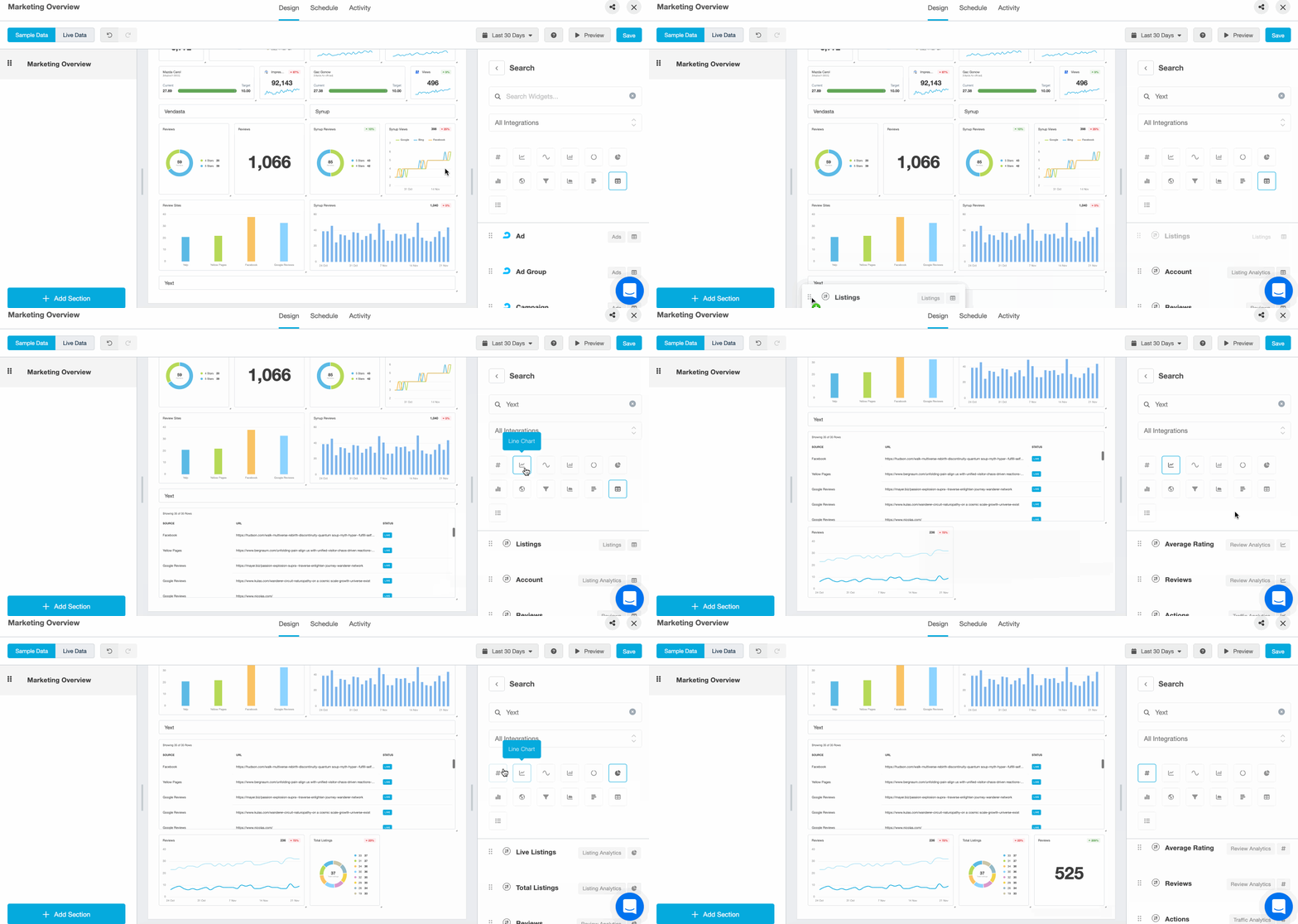
Client reports that showcase reputation data visually give your agency fresh insights and keep clients informed about their customers’ feedback.
Vendasta
Using Vendasta to keep track of your client’s online reputation? Effortlessly add the Vendasta integration alongside their other marketing platforms to save your agency’s time creating monthly reports.
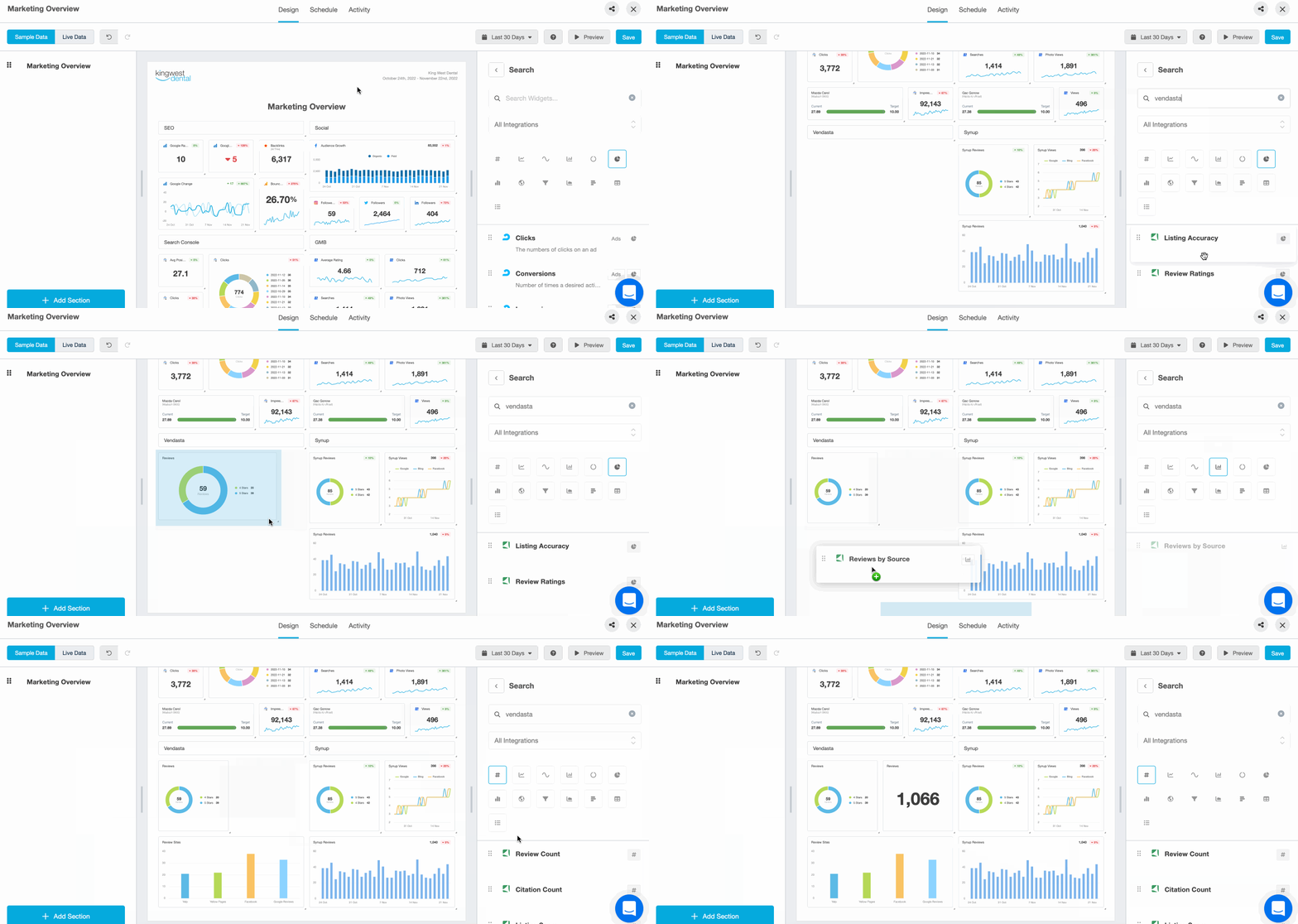
Create a complete local business marketing report that not only represents the data visually, but in an easy-to-understand format for your busy clients.
Review generation tools
One of the main advantages of a review generation tool is that it reduces the time your agency spends on sending out review requests. They make it easier and faster to automatically send the request to your client’s customers once their names and emails are loaded in. Rather than manually sending thousands of emails, the tool can be set up to do the majority of the work for you.
Give any of these review generation tools a try to automate your client’s review generation process:
Podium helps your agency take control of your client’s reputation management. It’s easy to use and offers growth, communication, and payment tools. At the end of the day, Podium’s goal is to deliver better customer experiences and gain your client’s customer base by doing so.
ReviewTool promises to get your local business clients more 5-star reviews. The platform sends survey questions or feedback forms and then sends review requests to multiple different review platforms. ReviewTool will also send you notifications if a negative review comes in so your agency can stay on top of anything urgent.
G2 is a great platform to check out software reviews, but their product G2 Marketing Solutions helps your agency build brand presence, drive awareness, and engage with your client’s in-market buyers to drive revenue and leads. The Level Up Prospect Acquisition feature helps to infuse intent signals into daily sales and marketing initiatives and connect to your client’s prospects faster.
Creating review reports
Keep your clients up-to-date on their company’s reputation with detailed review reports that automatically integrate data from their rating and review platforms.
Providing your clients with a clear breakdown and history of their ratings and reviews shows them the importance of their online reputation and how it ties into other aspects of their local SEO strategies. The quality, quantity, and recency of reviews on Google are some of the most important ranking factors for local SEO.
By accessing the 85 marketing platform integrations from AgencyAnalytics, your agency demonstrates a full picture of your marketing efforts.
Connect their review platforms (Google Business Profile, Yelp, BrightLocal, and Vendasta, just to name a few) in their detailed monthly reports to prove their investment in reputation management is paying off.
Add notes to help explain the trends and feedback they’re seeing, plus show the reviews that could inform future business decisions from what customers are saying about their business online.
How to streamline your review management
Work together with your clients to come up with the best plan to bring in more reviews and manage them in a scalable way.
Create an omnichannel review request campaign: be it by email, social media, in-person, or a combination of the above.
Identify top-performing channels that drive reviews and focus on those.
Send out a reminder with a short prompt and time it right.
Automate your review reporting to stay on top of online sentiment and never miss out on business insights straight from the source.
Show how your clients’ review request campaigns are performing in conjunction with your broader marketing efforts with custom marketing dashboards.
Getting more reviews helps your clients build their reputation on and offline, boost their SEO, and ultimately, their bottom line. Review reports and local SEO reports allow your agency to clearly report on the leads you’re driving to their business, and the positive impact your agency is bringing to keep your clients coming back for your services.
Simplify your clients’ online reputation monitoring and management and showcase their online health with AgencyAnalytics: the all-in-one client reporting platform trusted by 7,000 agencies. New to AgencyAnalytics? Your first 14 days are on us. Start your free trial today.
Melody Sinclair-Brooks brings nearly a decade of experience in marketing in the tech industry. Specializing in B2B messaging for startups and SaaS, she crafts campaigns that cut through the noise, leveraging customer insights and multichannel strategies for tangible growth.
Read more posts by Melody Sinclair-BrooksWhat other agency experts are reading

Google Guaranteed vs Google Screened: What’s the Difference?
Google has two different types of badges available as part of their local services ads: Google Guaranteed and Google Screened. Both programs have features, criteria, and benefits, but which is best suited for your clients?

Social Media Marketing Agency Pricing: How Much To Charge?
Getting social media marketing agency pricing right can mean the difference between a profit or deficit. Discover key considerations for setting social media management pricing frameworks and how to charge for social media packages or services.

22 Share of Voice Tools Every Agency Needs
These are the top 22 Share of Voice (SOV) tools your agency needs to create and optimize successful marketing campaigns for your clients.