20+ best competitor analysis tools to spy on competitors in 2026 (Free + paid options)


Table of Contents
- The shortlist
- Why is competitor analysis critical?
- How we chose the best competitor analysis tools
- Best competitor analysis tools: Summary
- Best SEO competitor analysis tools
- AI tools for competitor analysis
- PPC competitor analysis tools
- Social media competitor analysis tools
- Content & traffic analysis tools
- Competitor website & traffic analysis tools
- Other competitor analysis tools to consider
- Bonus: Benchmarking capabilities
- Finding the best competitor analysis tool is worth the effort for your agency
- Final Thoughts
7,000+ agencies have ditched manual reports. You can too.
Free 14-Day TrialTable of Contents
- The shortlist
- Why is competitor analysis critical?
- How we chose the best competitor analysis tools
- Best competitor analysis tools: Summary
- Best SEO competitor analysis tools
- AI tools for competitor analysis
- PPC competitor analysis tools
- Social media competitor analysis tools
- Content & traffic analysis tools
- Competitor website & traffic analysis tools
- Other competitor analysis tools to consider
- Bonus: Benchmarking capabilities
- Finding the best competitor analysis tool is worth the effort for your agency
- Final Thoughts
7,000+ agencies have ditched manual reports. You can too.
Free 14-Day TrialQUICK SUMMARY:
Competitor analysis tools are software solutions for evaluating and monitoring competitor strategies, performance, and market positioning. These tools offer insights into rivals’ marketing tactics, products, pricing, online presence, and customer engagement. This article provides details on some of the best competitor analysis tools for different needs, including SEO, PPC, social media, and display advertising.
Competitors are one of the best starting points for uncovering industry insights and campaign inspiration. By leveraging tools across SEO, PPC, and social channels, your agency can spot trends early and gain a true competitive edge.
The goal isn’t to copy what others are doing, though. It’s to understand what’s working (and what’s not), refine your client’s strategy, and make smarter, data-driven decisions. After all, the best marketing teams analyze patterns, identify gaps, and improve on existing ideas to better align with their clients’ business objectives.
In this guide, we’ll break down why competitive analysis tools are essential for agencies, the best free and paid options available, the insights they provide, and how to choose the right one for your client’s unique goals.
The shortlist
If you’re short on time (or you don’t want to evaluate 20+ platforms), start here. These competitor analysis tools cover the most important channels agencies manage—SEO, PPC, social, content, and market intelligence—and deliver the fastest path to actionable insights.
Best for SEO backlink research: Moz Link Explorer
Best all-in-one SEO competitor suite: Ahrefs
Best multi-site backlink analysis: Majestic
Best all-in-one SEO + PPC toolkit (with AI): Semrush
Best for all-in-one reporting, multiple SEO integrations + benchmarking competitors: AgencyAnalytics
Best AI-driven competitive tracking (product/pricing/messaging): Crayon
Best high-level traffic & market intelligence: Similarweb
Best PPC competitor keyword + ad history: SpyFu
Best PPC landing page + ad copy intelligence: iSpionage
Best social competitor tracking + listening (with AI sentiment): Sprout Social
Best content competitor research + alerts: BuzzSumo
Best AI content strategy & gap analysis: MarketMuse
Best AI content optimization: Clearscope
Use this shortlist if you want a strong tool from each category before diving into the full list below.
Why is competitor analysis critical?
Competitor analysis helps your agency identify unique advantages and potential barriers to strengthening a client’s marketing campaigns. Whenever your agency can position itself as the expert and clearly communicate that to your clients, do it. If you’re looking at their competitor’s strategies and demonstrating how their business could remain proactive instead of reactive, they’re likely to be your client for a long time. Everybody wins.
Doing competitor analysis helps us stay in touch with what platforms, ad formats, keyword targeting, and creative ideas the competition is using. We gain insights into our own campaign success or failure, set benchmarks, and stay ahead–if we’re doing the best. It also gives us ideas for new areas, platforms, or ad formats to use for our own marketing, that we may not have tried yet.
Stuart Pereira, Campaign Manager (Paid Marketing), WSI Comandix
And the best (and most efficient) way to do this is to use tools and software designed for these purposes. As you scale your agency, you won’t have time to manually look into each competitor on each platform they may be using. Better to combine SEO and PPC data in a SEM reporting tool to view your progress across two crucial channels.

Use the AgencyAnalytics Insights suite to compare your client’s key metrics against data from others in the same industry. Monitor current and historical data with this competitive intelligence tool–try it free for 14 days.
Competitor analysis without tools?
Technically, it is possible for agencies to conduct competitor analysis without tools. This would involve manually reviewing competitor websites, analyzing their content, monitoring their social media activity, and studying customer reviews.
To dig a bit deeper, there’s also the option to track competitor ads, look for SEO patterns in search results, and sign up for email newsletters to understand their marketing strategies.
While both methods provide valuable insights, they are extremely time-consuming and lack the depth that specialized tools offer.
For example, tools like Ahrefs or Sprout Social automate data collection, provide accurate competitor insights, and help agencies make informed decisions faster. So while manual competitive research and spreadsheets have their place, using competitor analysis tools promises a more comprehensive, efficient, and data-driven approach to staying ahead.
Competitor analysis is an essential part of our marketing campaigns. It helps us understand the competition and opportunities, and design strategies based on them.
Pranav Patil, Senior Paid Ads and Measurement Specialist, Ollo Metrics
In short, using the right tools sets your agency up for long-term success. They help you build a proven track record, keep clients on your roster by consistently demonstrating results, and stay ahead of the competition. It also positions your agency as the strategic partner new clients want to work with.
How we chose the best competitor analysis tools
With dozens of options available, we selected these tools based on what actually helps agencies deliver smarter strategy and measurable results.
We evaluated each platform based on:
Channel coverage: Support for SEO, PPC, social media, content, and website traffic analysis.
Depth of competitive insights: Keyword gaps, ad history, backlink analysis, audience overlap, messaging shifts, and more.
AI & automation capabilities: Change detection, predictive insights, content optimization, and workflow acceleration.
Agency usability: Ease of use, integrations, reporting flexibility, and scalability.
Pricing accessibility: A mix of enterprise, mid-tier, and free options for agencies at different growth stages.
Benchmarking potential: The ability to turn competitive data into clear, client-ready performance comparisons.
The result is a curated list of competitor analysis tools that help agencies move from raw data to strategic advantage.
Carry out competitor analysis regularly–even if it’s just checking in on your auction insights once a week. This way, you can anticipate any drops in performance and react to them before they have a negative impact on the account. For example, if you see sudden increases in average CPC or your impression share drops, you can get some strategies in place to combat these before they’ve even had a chance to take hold!
Claire Aldridge, Digital Marketing Specialist, Victory Digital
See for yourself on software review sites like G2 to find out what others have to say about a particular tool you want to try. We recommend developing a strategy that lets you tackle each of these tools one at a time to find what works best for your agency.
Best competitor analysis tools: Summary
Tool name | Best for | Cons | Pricing |
|---|---|---|---|
Moz Link Explorer | Backlink research and authority benchmarking | Limited beyond link-focused SEO | From $99/month |
Ahrefs | All-in-one SEO competitor research | Higher cost as usage scales | From $129/month |
Majestic | Multi-site backlink analysis | Fewer keyword/content features | From $49.99/month |
Semrush | SEO + PPC competitor intelligence with AI tools | Expensive for smaller teams | From $299/month |
AgencyAnalytics | Agency reporting, benchmarking, and SEO dashboards | Suited for multi-client agencies rather than one-off projects | From $25/month |
Crayon | Product, pricing, and messaging change tracking | Enterprise pricing | Custom pricing |
Similarweb | Market share and traffic intelligence | Traffic data is modelled | From $125/month |
ChatGPT | Strategic analysis and research acceleration | Not a native data source | Free; paid from ~$20/month |
SpyFu | PPC keywords and ad history | Less enterprise depth | From $39/month |
TapClicks | Consolidated PPC reporting + iSpionage data | Sales-led pricing | Custom pricing |
Kantar Media | Enterprise SEM and PLA intelligence | Enterprise-focused | Custom/demo pricing |
The Search Monitor | Brand protection and Shopping intelligence | Higher price point | Custom pricing |
Sprout Social | Social benchmarking and listening | Premium pricing | From $199/month |
Fanpage Karma | Multi-platform social competitor tracking | Limited deep analytics | From $69/month |
FollowerWonk | Twitter/X competitor analysis | Platform-specific | From $23/month |
Phlanx | Influencer authenticity and engagement benchmarking | Influencer-focused | From $39/month |
BuzzSumo | Top-performing content discovery | Not a full SEO suite | From $199/month |
Owler | Company-level competitor monitoring | Limited tactical marketing data | Free; Pro from $39/month |
MarketMuse | AI content strategy and gap analysis | Pricing not fully transparent | Free; paid on request |
Clearscope | AI content optimization and grading | Content-focused only | From $129/month |
Wappalyzer | Tech stack detection and lead generation | No traffic/performance data | From $250/month |
BuiltWith | Tech stack profiling and historical tracking | Higher starting price | From $295/month |
Best SEO competitor analysis tools
To kick things off, let’s look at the top SEO tools agencies use to analyze competitor rankings, backlink profiles, keyword strategies, and overall search visibility.
1. Link Explorer by Moz Pro: Best for backlink research and authority benchmarking
Moz’s Link Explorer is a long-time favorite among digital marketing agencies and remains one of the most widely used backlink analysis and competitor research tools available today.

Built to support data-driven SEO strategies, Link Explorer helps agencies analyze competitor backlink profiles, assess domain strength, and uncover high-value link-building opportunities. With one of the largest link databases in the industry—reportedly covering 45.5 trillion links, 1 billion domains, and 8.7 trillion URLs—it delivers deep competitive insights at scale.
Top features:
Domain Authority (DA) & Page Authority (PA): Evaluate the ranking strength of competitor websites and individual pages.
Comprehensive backlink analysis: View inbound links, linking domains, anchor text, and link quality.
Spam score detection: Identify potentially harmful or low-quality backlinks.
Lost & new link tracking: Monitor recently gained and lost backlinks to stay ahead of competitors.
Pricing:
The Moz Standard plan starts at $99/month.
2. Ahrefs: Best for all-in-one SEO competitor research (traffic, backlinks, and content)
Ahrefs is a powerful competitive intelligence and SEO toolset built on a massive database of 35 trillion external backlinks and 493B pages in index. It’s widely used by agencies to track competitor performance and uncover new growth opportunities across search.

The primary tool for competitor analysis, Site Explorer, provides an in-depth look at any website’s organic search traffic, paid traffic activity, and complete backlink profile. This makes it easy to identify where competitors are generating visibility and how they’re building authority online.
Beyond individual domain analysis, Ahrefs also helps agencies track keyword performance and discover high-performing competitor content.
Top features:
Site Explorer: Analyze competitor organic traffic, paid traffic, top pages, and backlink profiles.
Rank Tracker: Monitor keyword rankings over time and compare performance against competitors.
Content Explorer: Discover top-ranking competitor content by keyword or URL, sorted by social shares, organic traffic, referring domains, and Domain Rating.
Domain Rating (DR): Measure the strength and authority of a website’s backlink profile.
Pricing:
Ahrefs’ Lite plan starts from $129/month.
3. Majestic: Best for multi-site backlink analysis and link authority metrics
Similar to Ahrefs and Moz’s Link Explorer, Majestic began as a dedicated backlink checker and has gradually evolved into a broader marketing intelligence tool. While it may not offer as many all-in-one SEO features as some competitors, Majestic remains highly respected for its deep backlink data and specialized link analysis capabilities.

For competitor research, Majestic’s Top Backlinks and Anchor Text reports are particularly valuable. These reports provide clear insights into how competitors are earning links and how they’re being referenced online — all within a simple, intuitive interface.
One area where Majestic stands out is multi-site backlink analysis, allowing agencies to analyze multiple competitors at scale.
Top features:
Top backlinks report: Identify the strongest and most influential backlinks pointing to competitor websites.
Anchor text analysis: Understand how competitors are being referenced and optimized across the web.
Trust Flow & Citation Flow: Evaluate link quality and authority using Majestic’s proprietary metrics.
Multi-site comparison: Compare backlink data across multiple competitor domains simultaneously.
Pricing:
Their Lite plan starts at $49.99/month.
4. Semrush
Semrush is a comprehensive competitive intelligence and digital marketing platform that provides deep insights into SEO, PPC, content marketing, and competitor performance. It’s widely used by agencies to analyze competitor keyword strategies, search rankings, backlink profiles, and overall online visibility.

With advanced domain analysis tools, Semrush allows agencies to compare website traffic, authority scores, and user engagement metrics across competitors. Its platform now incorporates AI-powered capabilities to streamline keyword research, content creation, and SEO optimization workflows.
Top features:
Domain overview & competitive analysis: Compare traffic, authority scores, and engagement metrics across competing websites.
Keyword research & gap analysis: Identify high-value keywords and uncover missed ranking opportunities.
Site audit tool: Detect technical SEO issues that may impact rankings.
AI writing assistant & SEO content tools: Generate optimized content recommendations, improve readability, and align content with ranking factors.
Pricing:
The Semrush Pro plan costs $299/month.
Bonus–AgencyAnalytics: Best for all-in-one agency reporting, benchmarking, and customizable SEO dashboards
While AgencyAnalytics is best known as an all-in-one digital marketing reporting platform, it also includes a powerful suite of SEO tools designed to help agencies track performance across multiple clients — and benchmark that performance against competitors.
AgencyAnalytics consolidates data across 85+ platforms, including Ahrefs, Semrush, Majestic, Moz, Google Search Console, and more. It’s not limited to SEO tools either–combine data from PPC, social, call tracking, and other channels into one centralized reporting system.
Additionally, this marketing analytics platform helps agencies understand how their clients stack up against the competition. Quickly analyze SERPs, monitor keyword rankings, and surface close competitors appearing in the top 10 for priority terms.
Top features:
Dedicated benchmarking tool: Access reliable first-party data benchmarks across 150,000 campaigns and 7,000 agencies. Segment by industry and country for more granular analysis.
Trend forecasting: Project future performance based on historical trends, set realistic growth targets, and anticipate traffic or ranking changes.
Rank tracker: Monitor keyword rankings for multiple locations, track SERP position changes across major search engines (Google and Bing), and even generate AI insights from this data.
Anomaly detection: Automatically surface unusual spikes or drops in performance metrics.
Automated alerts: Get notified when rankings, traffic, or campaign metrics change significantly.
Ask AI: Instantly generate actionable insights about any client’s performance, including not-so-obvious wins, areas for improvement, and potential opportunities.
Pricing:
Starts at $25 per month, which includes data benchmarking, trend forecasting, full white-labeling, unlimited dashboards and reports, and much more.
Impress clients and save hours with custom, automated reporting.
Join 7,000+ agencies that create reports in under 30 minutes per client using AgencyAnalytics. Get started for free. No credit card required.

Already have an account?
Log inAI tools for competitor analysis
Artificial intelligence is transforming competitive intelligence by moving beyond raw data and into predictive insights, automated analysis, and real-time opportunity detection.
The following AI-powered software solutions help agencies uncover patterns, forecast trends, determine market positioning, and generate faster strategic insights.
5. Crayon: Best for agencies and marketing teams tracking product, pricing, and messaging shifts
Crayon is an AI-driven competitive intelligence platform built to track and analyze competitor activity across digital channels. It monitors websites, pricing pages, product updates, messaging changes, and more — then uses AI to surface meaningful insights.

Top features:
AI change detection: Automatically identifies significant competitor updates across websites and digital assets.
Competitive intelligence dashboard: Centralizes competitor activity in one real-time feed.
Messaging & positioning analysis: Tracks how competitors evolve their value propositions.
Battlecard automation: Generates dynamic sales battlecards based on competitor activity.
Pricing:
Custom pricing available upon request.
6. Similarweb: Best for high-level market and traffic intelligence
Similarweb uses advanced data modeling and AI to estimate competitor traffic sources, audience behavior, and market share across industries.

Top features:
Traffic & market share estimation: AI-driven modeling of website traffic and engagement.
Audience overlap analysis: Identify shared audiences between competitors.
Channel breakdown: Analyze how much traffic comes from various sources, including search, social, referral, and paid channels.
Trend forecasting: Detect seasonal and emerging traffic trends.
Pricing:
Their entrepreneur packages start from $125/month; custom enterprise pricing available.
7. ChatGPT: Best for accelerating market research and strategic analysis workflows.
While not a traditional competitive intelligence platform, ChatGPT can support competitor research by synthesizing data, summarizing reports, analyzing positioning, and identifying strategic gaps when paired with SEO and analytics tools.
Top features:
Competitor SWOT Generation: Turn raw data into structured strategic insights, assess customer journeys, and look for ways to stand out.
Content gap analysis support: Identify opportunities to generate more organic traffic and other results based on ranking comparisons.
Messaging & positioning breakdown: Analyze competitor copy and value propositions.
Report summarization: Convert dashboards and exports into client-ready insights.
Pricing:
Free plan available; paid plans (ChatGPT Plus/Team/Enterprise) start at approximately $20/month.
PPC competitor analysis tools
Paid search is one of the fastest ways to gain visibility, but it’s also one of the most competitive.
The following PPC competitor analysis tools help uncover profitable keywords, analyze ad copy, monitor bidding strategies, and identify opportunities to outperform the competition.
8. SpyFu: Best for uncovering competitor PPC keywords and long-term ad history
The difference between success and failure in pay-per-click marketing generally comes down to one thing: keyword selection. Choose the right keywords, and you’ll make a decent profit for your clients. Choose poorly, and you’ll be spinning your wheels, wasting time and money on keywords that don’t convert.
To identify profitable keywords, use SpyFu. It’s a competitive analytics tool specifically for PPC marketers that reveals brands’ most profitable keywords (both pay-per-click and organic).

By entering a competitor’s domain, agencies can see which organic and paid keywords are driving results, analyze historical ad copy, and review landing page strategies. This makes it easier to refine PPC targeting and replicate proven campaign approaches.
Spyfu and Semrush are the tools we use for competitor analysis. Combined, they provide a lot of insight and data into keywords and ad copy.
Brian Ferritto, Digital Marketing Strategist, 42connect, Inc.
Top features:
Competitor keyword research: Identify the most profitable paid and organic keywords competitors are targeting.
PPC ad copy analysis: View historical and current ad variations to understand messaging strategies.
7+ years of advertising history: Access long-term PPC data for domains and keywords (significantly longer than many competitors).
Budget & spend estimates: See how much competitors are likely investing in Google Ads.
Pricing:
The SpyFu Basic plan starts at $39/month.
9. TapClicks: Best for consolidating PPC reporting and using integrated iSpionage competitive data at scale
TapClicks is a marketing operations and reporting platform that helps agencies centralize performance data, automate reporting, and gain deeper competitive insights across channels. Through its acquisition and integration of iSpionage, TapClicks incorporates competitive PPC intelligence directly into its broader marketing analytics ecosystem.

With iSpionage data embedded into the platform, agencies can access competitor ad copy, keyword strategies, and landing page insights alongside their own campaign performance metrics.
Top features:
Integrated competitive data: Access competitor keyword tracking, ad copy history, and landing page analysis.
Data warehouse & ETL capabilities: Aggregate, transform, and normalize large datasets from multiple marketing sources for deeper analysis and enterprise-level reporting.
Workflow automation: Streamline campaign monitoring, alerts, and reporting processes.
Competitive trend monitoring: Track shifts in competitor keyword strategies and ad messaging over time to inform proactive campaign adjustments.
Pricing:
Custom pricing is available upon request.
10. Kantar Media: Best for enterprise SEM intelligence across Google Ads and PLA strategies
Kantar Media is a comprehensive marketing intelligence platform that includes powerful SEM and paid search insights. Its Paid Search Intelligence tool gives agencies visibility into competitors’ Google Ads and Product Listing Ad (PLA) strategies, helping refine PPC campaigns with data-backed insights.

Agencies can analyze how competitors allocate their PPC budgets, evaluate ad performance, review keyword targeting, and even examine exact ad copy and associated landing pages. This level of competitive transparency makes it easier to adjust bidding strategies and identify new growth opportunities.
Top features:
Paid search intelligence: Analyze competitors’ Google Ads and PLA strategies.
Competitor budget insights: Estimate how competitors allocate PPC spend.
Ad copy & creative monitoring: View exact ad variations and messaging strategies (which could also be useful for email marketers creating conversion-focused newsletters).
Cross-market insights: Compare competitor advertising strategies across regions and platforms to identify global campaign trends.
Pricing:
Contact Kanbar Media to request a demo and product details.
11. The Search Monitor: Best for brand protection, trademark monitoring, and Google Shopping intelligence
Search Monitor is a powerful tool for agencies looking to track brand visibility, monitor trademark usage, and analyze competitor activity across multiple traffic channels, including paid, organic, local, social, and mobile. It provides in-depth insights into Google Shopping performance, helping agencies see how their clients compare to competitors in ecommerce search results.

For agencies managing high-stakes PPC campaigns, Search Monitor offers detailed competitive intelligence to refine bidding strategies, optimize ad placements, and prevent budget waste. With a higher price point, it’s best suited for agencies handling multiple clients or large-scale campaigns that require ongoing monitoring and enforcement.
Top features:
Cross-channel competitive monitoring: Track competitor activity across paid, organic, social, mobile, and local search.
Google Shopping intelligence: Analyze PLA performance and ecommerce visibility against competitors.
Trademark & brand protection: Detect unauthorized PPC bidding and brand misuse.
Pricing:
The Search Monitor offers a custom pricing calculator based on the services required.
Social media competitor analysis tools
Social media moves fast — and so do your competitors. These tools help agencies monitor competitor engagement, track audience growth, analyze content performance, and uncover trends across platforms.
12. Sprout Social: Best for social competitor benchmarking, listening, and sentiment analysis
Most social media managers have enough on their plate between publishing content and interacting with their audience across all social networks. Who has time to keep track of the competition? Sprout Social does.

Sprout Social is a social analytics platform that aggregates data from all major social networks and organizes it in easy-to-understand reports. The platform includes tools for paid search analytics, engagement, publishing, and social listening. It also provides sentiment analysis, helping agencies understand how audiences feel about competing brands and adjust messaging accordingly.
Every agency benefits from knowing what their client’s competitors are doing on social media. Sprout Social helps you identify trends, tactics, and challenges as you plan your client’s marketing efforts.
Top features:
Competitive social reporting: Benchmark client performance against competitors across social platforms.
Social listening tools: Monitor brand mentions, competitor conversations, and industry trends.
AI-Powered sentiment analysis: Understand how audiences feel about competitors and adjust messaging accordingly.
Engagement & publishing tools: Schedule content and manage interactions from a centralized dashboard.
Pricing:
Sprout Social offers a Standard plan for $199/month.
13. Fanpage Karma: Best for multi-platform social competitor tracking and content inspiration
This tool gives your agency all sorts of useful information about a Facebook page, from audience engagement to page growth (usually stats only the page owner can see).

All you have to do is enter the URL of your client’s competing Facebook page, and Fanpage Karma spits out the metrics. The tool also has similar features for YouTube, X, Instagram, and Whatsapp, expanding your spy operations across the major social networks.
The tool includes social listening features, allowing users to monitor brand sentiment and real-time conversations. One standout feature that agencies love is its content inspiration tool, which helps discover top-performing posts in their industry. By analyzing what resonates with audiences, agencies develop their own content strategy without a hitch.
Top features:
Competitor page analysis: Access engagement metrics, audience growth data, and performance insights.
Multi-platform monitoring: Track competitor activity across Facebook, Instagram, YouTube, X, and WhatsApp.
Social listening & sentiment tracking: Monitor real-time brand conversations and audience sentiment.
Content inspiration tool: Discover top-performing posts within your industry.
Engagement benchmarking: Compare client performance directly against competitors.
Pricing:
This platform offers a free version with limited features. Their Bronze plan is available at $69/month.
14. FollowerWonk: Best for Twitter/X audience analysis, follower insights, and competitor tracking
FollowerWonk, now part of Fedica, remains a powerful competitor analysis tool focused specifically on Twitter/X. Since the acquisition, the platform has expanded its capabilities with AI-powered audience insights and deeper analytics.

Agencies use FollowerWonk to track competitor follower growth, analyze engagement trends, and uncover audience characteristics that influence campaign performance. Its detailed demographic data — including location, language, and time zone down to the city level — allows agencies to fine-tune posting schedules and ad targeting strategies.
With advanced segmentation and historical tracking features, FollowerWonk helps agencies identify new engagement opportunities while monitoring shifts in competitor performance over time.
Top features:
AI-Powered brand affinity analysis: Identify audience interests and brand alignment patterns.
Influence distribution metrics: Analyze the authority and reach of competitor followers.
Detailed follower demographics: Access data on language, location, time zone, and city-level insights.
X Bio Search: Discover users based on keywords in bios for targeted audience research.
Pricing:
FollowerWonk is available from $23/month.
15. Phlanx: Best for influencer authenticity checks and engagement benchmarking across platforms
Phlanx is an influencer marketing and social media engagement tool designed to help agencies connect with influencers, track competitor engagement, and verify audience authenticity. Its Influencer Auditor allows agencies to analyze an influencer’s follower quality, engagement rate, and overall credibility, helping brands avoid partnerships with fake or low-impact accounts.

Agencies use Phlanx’s Engagement Calculator to compare competitor engagement rates across Instagram, TikTok, YouTube, and other platforms. This feature helps gauge how well competitors’ content resonates with their audience and provides benchmarks for improving client performance.
Top features:
Auditor for influencer campaigns: Analyze follower authenticity, engagement quality, and credibility metrics.
Engagement calculator: Compare competitor engagement rates across Instagram, TikTok, YouTube, and more.
Audience authenticity verification: Detect suspicious follower activity and inflated metrics.
Influencer collaboration marketplace: Discover and connect with relevant content creators.
Pricing:
Phlanx starts at $39/month for a Basic Plan.

Track engagement, audience growth, and competitor activity without switching between accounts. Start optimizing your clients’ social presence with AgencyAnalytics–sign up for a free 14-day trial.
Content & traffic analysis tools
Understanding what content drives traffic—and where that traffic comes from—is key to staying competitive. These tools help agencies uncover traffic sources, identify audience trends, and spot content opportunities.
16. BuzzSumo: Best for discovering top-performing competitor content and setting alerts
BuzzSumo is a powerful content intelligence and competitor research tool designed to help agencies uncover top-performing content within their clients’ industries. It allows marketers to analyze what’s resonating most with audiences and use those insights to refine their content strategies.

By entering a keyword or competitor URL, agencies can instantly see which pieces of content generate the most shares, backlinks, and engagement. This makes it easier to identify high-performing headlines, formats, and topics.
Top features:
Top content analysis: Discover competitor content ranked by social shares and backlinks.
Backlink & sharer insights: Identify who linked to or shared competitor content for targeted outreach.
Content alerts: Receive notifications when competitors earn new shares or links.
AI-powered content insights: Surface trending topics and performance patterns across industries.
Pricing:
BuzzSumo is free to try, then starts from $199/month.
17. Owler: Best for company-level competitor monitoring (news, funding, leadership changes)

Owler is a competitive intelligence platform that helps agencies track and analyze competitors in real time. It provides detailed company profiles, customizable alerts, and ongoing updates on industry developments, including acquisitions, funding rounds, leadership changes, and product launches.
With its interactive Competitor Graph, agencies can uncover both direct and indirect competitors, giving them a broader understanding of the competitive landscape within a specific industry.
Owler also aggregates news coverage, press mentions, and social activity, helping agencies monitor public perception and stay informed about competitor positioning and reputation shifts.
Top features:
Real-time competitor alerts: Receive updates on funding, acquisitions, leadership changes, and major announcements.
Competitor graph: Discover direct and indirect competitors within a client’s industry.
Company profiles: Access detailed summaries of competitor performance and positioning.
News & press monitoring: Track media coverage and public mentions.
Pricing:
There’s a free Community plan available and a more comprehensive Pro plan from $39/month.
18. MarketMuse: Best for AI-driven content strategy, briefs, and content gap analysis

MarketMuse is an AI-powered content strategy and competitive analysis platform designed to help agencies plan, create, and optimize high-quality content that ranks. Using advanced machine learning, it analyzes large datasets to uncover topic opportunities, content gaps, and ranking potential within a client’s niche.
Agencies use MarketMuse to streamline content planning by automating research and prioritizing topics based on competitive difficulty and potential ROI. Its AI-driven optimization tools help improve content depth, structure, and alignment with search intent — increasing the likelihood of outperforming competitors.
One of MarketMuse’s strongest advantages is its ability to identify where competitors are winning — and where they’re weak — allowing agencies to build data-backed content strategies designed to close gaps and gain authority.
Top features:
AI-Powered content gap analysis: Identify topics competitors rank for that your client does not.
Topic modeling & authority scoring: Analyze how comprehensively a subject is covered compared to competitors.
Search intent optimization: Align content with user intent using AI-driven recommendations.
Automated content briefs: Generate detailed outlines including subtopics, related terms, and suggested structure.
Pricing:
There’s a free version with limited features, followed by a paid Optimize plan (pricing available upon request).
19. Clearscope: Best for AI-powered content optimization, grading, and team collaboration

Clearscope is an AI-powered content optimization platform that helps marketing teams improve content relevance and search rankings. This tool analyzes top-performing content for target keywords, giving agencies data-driven insights on topic coverage, keyword usage, and readability. Users receive real-time feedback to ensure their content aligns with search intent and ranks competitively.
A specific key feature agencies leverage is team collaboration. Clearscope allows multiple team members to work on the same content, ensuring consistency across writers, editors, and SEO specialists. With shared access to keyword insights and optimization suggestions, agencies streamline their workflow, maintain brand voice, and produce high-quality content in no time.
Top features:
AI-driven content optimization: Analyze top-ranking pages and receive keyword and topic recommendations.
Real-time content grading: Score content based on relevance, comprehensiveness, and competitive benchmarks.
Search intent alignment: Ensure content matches user intent and ranking patterns.
Keyword & topic suggestions: Identify related terms that strengthen topical authority.
Team collaboration tools: Enable multiple contributors to optimize content within a shared workspace.
Pricing:
Their Essentials plan costs $129/month.

Stop wasting hours on manual data collection. Use the AgencyAnalytics content marketing report template to easily connect client platforms and track the KPIs that matter most. Try it free for 14 days!
Competitor website & traffic analysis tools
Understanding what content drives traffic–and where that traffic comes from–is key to staying competitive. These tools help agencies analyze top-performing content, uncover traffic sources, identify audience trends, and spot growth opportunities.
20. Wappaylzer: Best for identifying competitor tech stacks and generating targeted lead lists

Wappalyzer is a website technology profiling tool that helps agencies identify the technologies competitors and potential clients are using — including CMS platforms, ecommerce software, analytics tools, ad networks, and web frameworks.
For agencies focused on competitive research and lead generation, Wappalyzer provides valuable insight into a company’s tech stack. This makes it easier to tailor outreach messaging, identify migration opportunities, and spot gaps in competitors’ digital infrastructure.
Wappalyzer also tracks changes in a website’s technology stack over time, helping agencies monitor industry trends and competitor upgrades.
Top features:
Technology stack detection: Identify CMS platforms, ecommerce systems, frameworks, analytics tools, and more.
Tech stack change monitoring: Track when competitors switch or add technologies.
Lead generation filters: Find companies based on the tools they use.
Company contact data: Access business emails and social profiles to support outreach.
Pricing:
Their Pro Plan starts at $250/month.
21. BuiltWith: Best for tech stack profiling, historical tracking, and lead generation filters

BuiltWith is a web technology profiling platform that helps agencies identify the software, platforms, and tools powering competitor websites. From CMS platforms and ecommerce systems to analytics tools and advertising technologies, BuiltWith provides detailed visibility into a site’s digital infrastructure.
For agencies, this data supports both competitive analysis and lead generation. Understanding which technologies competitors use helps inform strategic recommendations, while filtering websites by tech stack makes it easier to build highly targeted prospect lists.
Top features:
Technology stack detection: Identify CMS platforms, ecommerce systems, hosting providers, analytics tools, and more.
Lead generation filters: Build targeted prospect lists based on specific technologies used.
Historical technology tracking: Monitor how websites change platforms and tools over time.
Market trend insights: Analyze adoption patterns across industries.
Exportable prospect lists: Download data for outreach and sales campaigns.
Pricing:
The Basic Plan starts at $295/month.
Other competitor analysis tools to consider
While the tools above cover key areas of competitor analysis, there are a few more worth considering. These tools focus on ad intelligence and brand monitoring, helping agencies track competitor ad strategies and online mentions.
Whether you’re analyzing paid media performance or monitoring brand sentiment, these platforms provide additional insights to refine your marketing approach. Here are some extra competitor analysis tools that might be useful for your agency.
Free tools
Tool | Description | Pricing |
|---|---|---|
Freemium SEO and competitor analysis tool that helps agencies uncover keyword opportunities, analyze competitor domains, and review backlink profiles. Users can enter a keyword or competitor URL to see estimated traffic, top-performing pages, keyword gaps, and basic backlink data. | Free limited version available; paid plans start at $20/month. | |
Free website audit and SEO analysis tool that evaluates competitor websites for on-page SEO, technical health, usability, and performance issues. Generates detailed optimization reports to benchmark site quality and identify improvement opportunities. | Free audit available; paid plans start at $29/month. | |
Trend discovery platform that identifies emerging topics before they go mainstream. Highlights rapidly growing search trends across industries to support proactive content strategies and first-mover advantage. | Free limited access available; paid plans start at $39/month. | |
Free browser extension that identifies the technologies powering any website, including frameworks, analytics tools, CMS platforms, plugins, and more. Useful for quick competitive tech stack insights. | Free |
Ad intelligence tools
Tool | Description | Pricing |
|---|---|---|
Enterprise ad analytics tool that reveals the exact ads used by advertisers. Includes split-testing features to identify winning ad copy. Ideal for agencies wanting to understand which ads perform best before investing in media buys. | Starts at $249/month. | |
Ad intelligence platform that helps agencies track and analyze competitors’ digital advertising strategies across display, video, and social channels. Provides insights into ad placements, creatives, budgets, and SEM performance metrics. | Demo available upon request. | |
Digital advertising intelligence tool (by Sensor Tower) that analyzes competitor ad strategies across social, display, video, mobile, and OTT platforms. Offers insights into ad spend, impressions, creatives, and placements to benchmark campaigns. | Pricing available upon request. |
Brand monitoring tools
Tool | Description | Pricing |
|---|---|---|
Social media and brand monitoring platform that tracks brand mentions, industry keywords, and competitor activity across social networks, news sites, blogs, and forums. Monitors over 1 billion sources daily and provides real-time alerts to keep agencies informed of relevant conversations. | Pro Plan starts at $83/month | |
Consumer intelligence and social media management platform that tracks brand mentions, analyzes competitors, and monitors audience sentiment in real time. Covers over 100 million online sources to provide insights into trends, perception, and market opportunities. | Custom pricing available upon request | |
Marketing intelligence tool that tracks competitor website updates, social media activity, email campaigns, SEO performance, keyword rankings, advertising strategies, and customer reviews. Sends alerts and reports on competitor changes. | Business Plan starts at $9.95/month |

Ditch the manual data collection and simplify your reporting with AgencyAnalytics’ web analytics report template. Generate professional reports in minutes–start your free 14-day trial today!
Bonus: Benchmarking capabilities
Competitive intelligence is only valuable if you can turn it into measurable benchmarks.
While many tools show you what competitors are doing, AgencyAnalytics helps agencies quantify how their clients stack up — and prove progress over time. Instead of relying solely on third-party estimates, agencies can leverage first-party performance data pulled directly from connected accounts (Google Analytics, Google Ads, Search Console, Meta, LinkedIn, and more) to create reliable, client-specific benchmarks.
With centralized reporting, agencies can establish:
SEO benchmarks: Keyword ranking distribution, share of voice, organic traffic growth, and backlink authority comparisons.
PPC benchmarks: Cost-per-click (CPC), click-through rate (CTR), impression share, and conversion rate comparisons against competitors.
Social media benchmarks: Engagement rate, audience growth, posting frequency, and sentiment trends.
Website performance benchmarks: Traffic trends, referral sources, and channel contribution analysis.
Because these benchmarks are powered by real client account data (first-party data) rather than scraped or estimated numbers alone, agencies gain a more defensible competitive advantage when presenting insights to clients.
The result? Agencies don’t just monitor competitors — they measure, benchmark, and continuously outperform them.
Finding the best competitor analysis tool is worth the effort for your agency
Finding the best competitor analysis tool is worth the effort for your agency.
Although there are many marketing analysis tools out there, it’s challenging to determine which one will work best for your agency and the clients you work with. If your agency specializes in a specific service like social media management, testing out a tool like Sprout Social is an obvious choice. However, many agencies offer more than just a single service.
The best plan of action would be to try one tool for each purpose, for example:
Adbeat for ad intelligence
Ahrefs for SEO competitor research
BuzzSumo for content insights
Semrush for SEO + PPC analysis
Sprout Social for social media monitoring
AgencyAnalytics for reporting, benchmarking, and dashboards
At first glance, that may seem like a lot of platforms to manage (and pay for).
By using a platform like AgencyAnalytics, your team can consolidate data from many of these tools into one place—saving time, reducing manual work, and creating clear, client-ready reports.
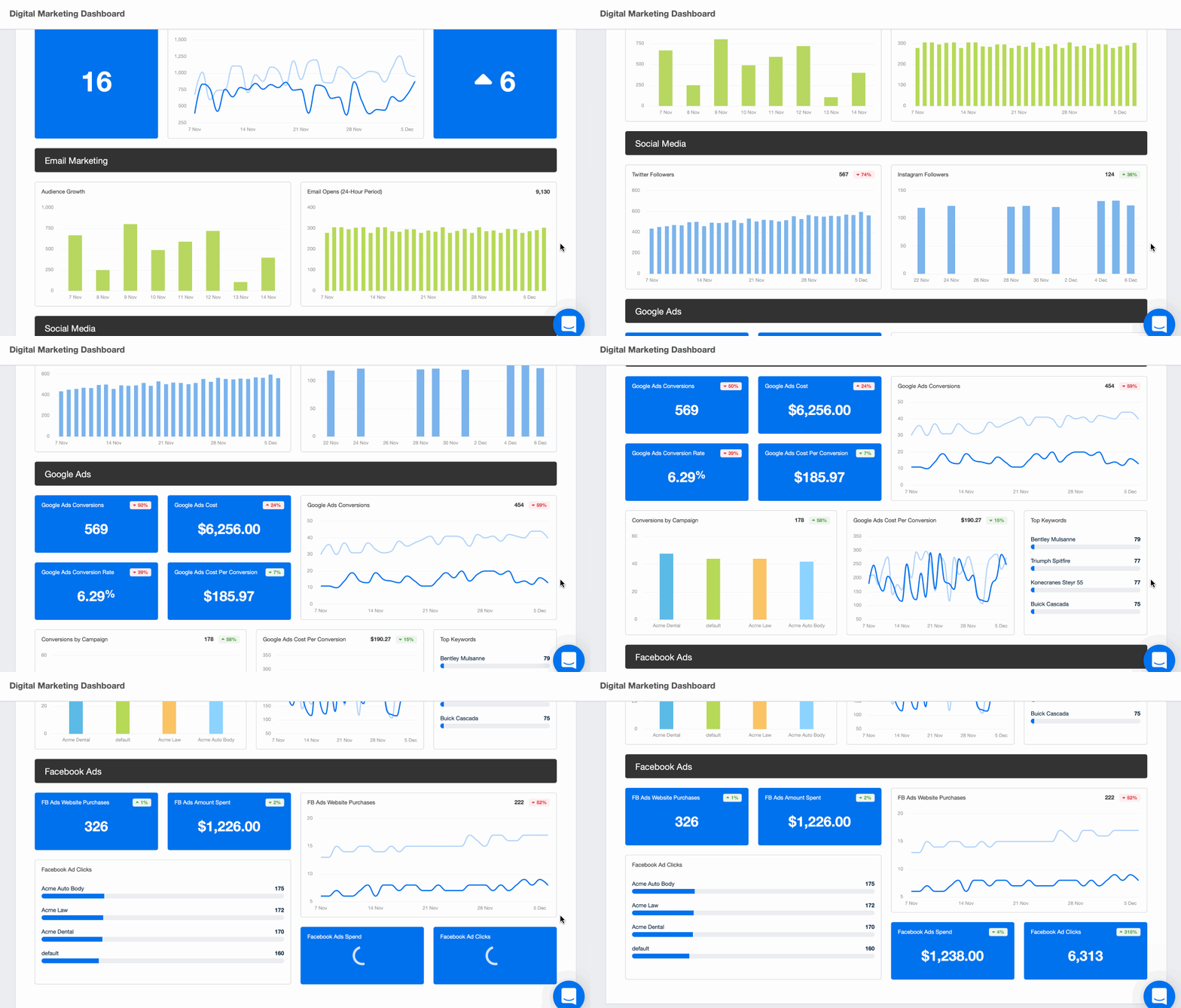
Use AgencyAnalytics to create fully customizable client dashboards and reports, all with complete flexibility and control. Start your 14-day free trial today.
Final Thoughts
If you made it this far, give yourself a pat on the back. Well done.
While these tools are valuable, your agency doesn’t need all of them to start conducting competitor research. Some can reveal 90% of your client’s competitor strategies, and many integrate seamlessly with the AgencyAnalytics platform to keep everything in one place.
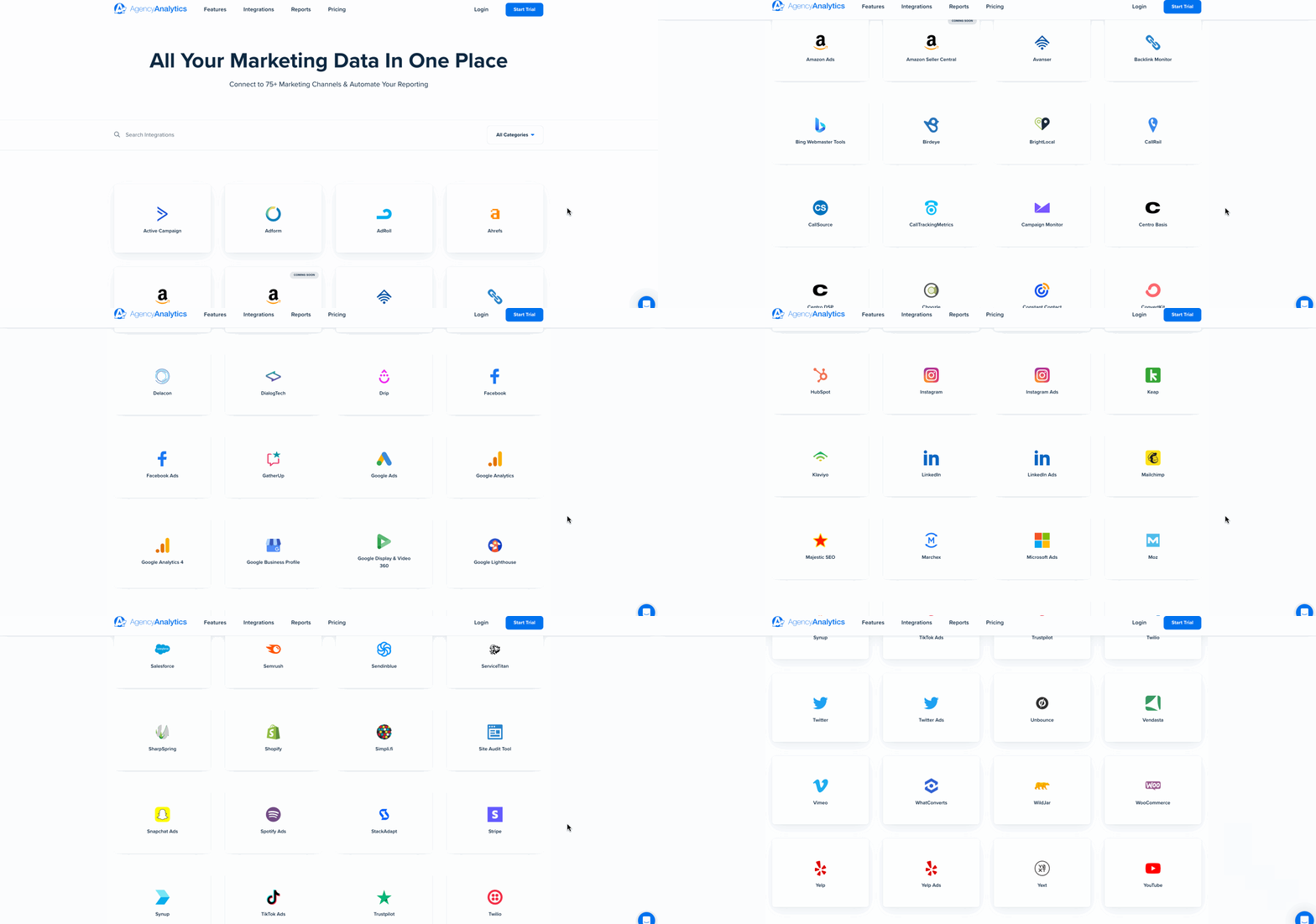
Connect over 85 marketing channels and automate your reporting with AgencyAnalytics. Start your 14-day free trial today to streamline your agency’s competitor analysis processes.
Our advice for other agencies: Learn how to use Semrush and Google Ads for initial PPC competitor analysis. Then connect both tools to AgencyAnalytics so that you can monitor competitors on an ongoing basis in your recurring reports. New competitors will come into the market quickly, and having visibility over that will help to bulletproof your digital marketing.
Warren Thompson, Co-Founder / Managing Director, Ollo Metrics
To get the most out of competitor research, choose one tool from each category and put it to work. That’s all you need to gather both quantitative and qualitative data for smarter decision-making.
That said, competitor insights are only part of the equation. It’s important to track what’s working for your client’s competitors—whether through Google Search, industry reports, or direct analysis. But the best brands lead by example. Focusing too much on competitors can result in me-too marketing, leaving little room for creativity and differentiation.
Bookmark this article as a resource to revisit when testing out the right competitor analysis tools for your agency.
Richelle Peace is a writer with a degree in Journalism who focuses on web content, blog posts, and social media. She enjoys learning about different topics and sharing that knowledge with others. When she isn’t writing, Richelle spends time teaching yoga, where she combines mindfulness, movement, and her passion for wellness.
Read more posts by Richelle PeaceWhat other agency experts are reading

PPC Agency Pricing: How Much To Charge for PPC Management in 2025 (+ Free Template)
Discover real benchmarks, agency insights, and a free PPC budget calculator to price your PPC services confidently in 2025.

8 Key Influencer Marketing Metrics to Track Performance
Influencer marketing is known to have a high return on ad spend, although it’s also notoriously challenging to track the ROI. In this guide, we discuss how to use a social media dashboard to track your influencer marketing analytics.

How To Conduct SEO Competitor Analysis: (Step-by-Step Guide + Free Checklist)
Dominate organic search with an expert SEO competitor analysis. Get step-by-step guidance and a Free Checklist to maximize your results.