SEO analytics: The official 2026 guide


Table of Contents
7,000+ agencies have ditched manual reports. You can too.
Free 14-Day TrialQUICK SUMMARY:
SEO analytics transforms raw search engine data into clear, actionable insights. It’s how agencies track organic traffic, monitor keyword rankings, and measure what’s really moving the needle for client campaigns. In this guide, you’ll learn how to collect, analyze, and report on SEO data—from search engine visibility to conversion performance—to improve rankings, prove ROI, and make better decisions.
SEO wins don’t always show up overnight. While your agency may be publishing new content, building backlinks, and optimizing technical aspects, organic search performance constantly fluctuates.
For instance, changes in performance may be due to a new Google algorithm update or simply seasonal trends. To top things off, it’s not just about traffic anymore; the way users interact with search engines has fundamentally changed.
From AI-generated answers to zero-click results, agencies need SEO analytics to track deeper metrics, such as search visibility, average session duration, and conversion behavior.
This is where SEO analytics come in handy.
SEO analytics and reporting help your agency go beyond top-level numbers. It turns complex search engine optimization efforts into understandable stories—highlighting what’s working, what needs adjusting, and where new opportunities are hiding.
This step-by-step guide helps your agency make the most of client data, achieve SEO success, and prove your agency’s long-term value.
What is SEO analytics?
SEO analytics refers to the process of collecting, interpreting, and using organic search data to improve a site’s performance. This includes analyzing keyword rankings, backlink quality, bounce rate, conversion paths, and other SEO data points. The goal? To connect insights to action, whether that’s fixing a slow-loading page, refining content, or doubling down on what’s working.
With SEO analytics, it’s easier for your team to identify which pages are ranking, which ones are slipping, and why certain content converts better than others. Essentially, this data helps your agency to make informed decisions and explain them to clients without relying on guesswork.
Why SEO analytics matter for business growth
Sustainable business growth depends on knowing which efforts generate revenue, and SEO analytics make that possible. Organic search is often a major acquisition channel, but without analytics, businesses can’t see which pages, keywords, or content actually contribute to leads and sales.
SEO analytics shift the focus from search engine rankings to return on investment (ROI). They reveal how organic visibility drives qualified visitors, whether they ultimately convert, and where revenue opportunities are being lost. This allows teams to prioritize initiatives that increase conversions, lower acquisition costs, and scale high-performing content.
Use SEO analytics to clearly identify:
Which organic pages and keywords generate leads or revenue.
Where users drop off in the conversion journey and why.
The SEO efforts that produce the highest ROI.
Early performance trends that signal future growth or risk.
In short, SEO analytics transform organic search into a predictable and measurable growth channel. This provides clients with the insights they need to invest confidently, optimize efficiently, and grow revenue over time.
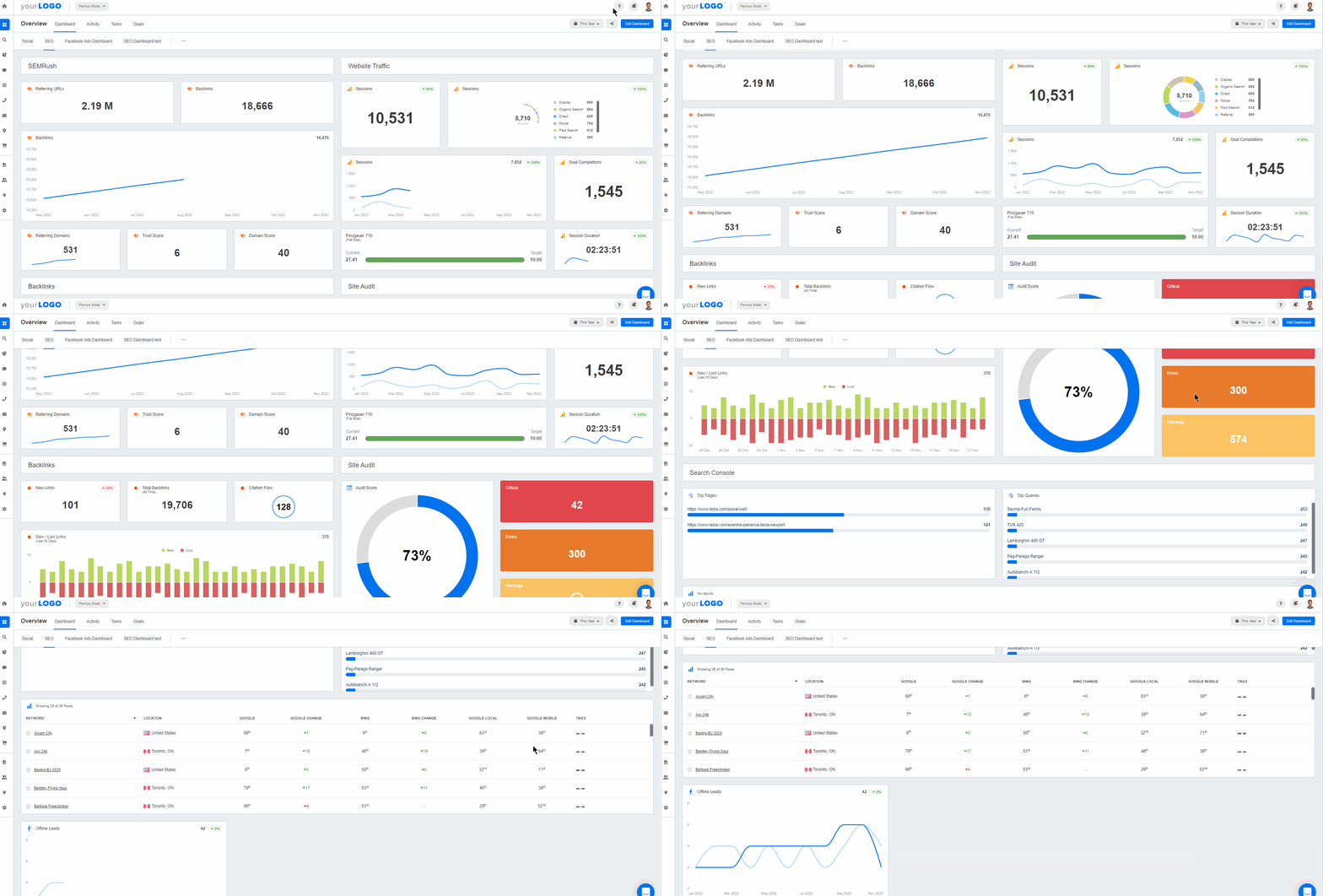
Save time by automating the data retrieval of your clients’ SEO metrics. Try this SEO dashboard in AgencyAnalytics, free for 14 days.
How to get the most from SEO analytics: 4 simple steps
SEO data stacks up fast. Without a clear process, it’s easy to waste time chasing numbers that don’t matter. The four-step process below will help your team focus on surfacing insights that clients actually need.
Step 1: Set up the right SEO analytics tools
To conduct a successful analysis, start by collecting the right data and monitoring SEO metrics that matter. Our more complete guide shows how to track SEO performance consistently so those metrics stay tied to client goals and reporting. For best results, set up your stack to pull in traffic, rankings, site health, and conversion data without hopping across multiple platforms.
In particular, the SEO analysis tools we’re going to set up and review in this section include:
Google Analytics
Google Search Console
Google Lighthouse
AgencyAnalytics
Popular 3rd Party tools (Ahrefs, Semrush, Moz, SE Ranking, Screaming Frog)
Of course, there are lots of other powerful platforms out there. For today, though, we’re going to focus on a few of the best SEO analytics tools commonly used by marketing agencies.
Read next: The best SEO software and tools for agencies
🟩 Google Analytics
There are many SEO analytics tools on the market, but Google Analytics (GA) remains a staple for understanding what happens after users arrive on a website from organic search. While it does not influence rankings directly, it plays a critical role in connecting SEO traffic to engagement and conversions. Simply put, it’s a must-have for any SEO toolbox.
Most agency teams use GA for SEO reporting, which provides insight into user behavior, how visitors navigate the site, which pages they engage with, and where they exit.
To get started with this platform:
Create a GA property.
Install the GA tracking code on the website.
Configure key conversion events (e.g., form submissions, calls, or purchases).
Need help finding your way around GA4? Here’s a detailed process to get started with Google Analytics.
Once connected, use GA to track:
User engagement and session behavior.
Landing pages that attract organic traffic.
Traffic sources contributing to conversions.
Regularly review top-performing pages to determine which pages to prioritize for each client’s unique SEO project.

Use the AgencyAnalytics dashboard builder to quickly create client dashboard templates and duplicate them with just a few clicks. Streamline your entire onboarding process; sign up for a free 14-day trial today.
🟩 Google Search Console
Google Search Console (GSC) is a core SEO analysis tool that provides insight into how a website performs in Google Search. While Google Analytics focuses on what happens after users arrive on a site, GSC reports on visibility and engagement within Google search results, before a click occurs.
A few use cases include:
Analyzing impressions, clicks, and position in Google Search.
Identifying which queries are bringing people to your client’s site.
Reviewing index coverage and crawl-related issues.
Monitoring page experience and mobile-related performance signals.
For quick reference, here’s a step-by-step process to get GSC set up and running:
First, log in to Google Search Console. Keep in mind that you should log in with the same account you used to set up Google Analytics. That way, it’s easier to sync the two.

2. Next, click on “Add a property” and choose between adding a Domain or a URL prefix (as shown below).

3. Finally, verify ownership of the property. Domain properties require DNS verification, while URL prefix properties support multiple setup options.

Once verification is complete, Google Search Console data begins populating performance, coverage, and experience insights that should be used for ongoing SEO analysis.
🟩 Google Lighthouse
Google Lighthouse is a powerful open-source tool that audits web pages for performance, accessibility, SEO, and more. It’s especially valuable for identifying technical issues that may impact organic rankings, such as slow loading times, unoptimized images, missing metadata, or poor mobile usability.
It’s one of those free SEO tools that’s a must-have for any agency, since it’s a straightforward way to monitor how a client’s site performs.
Here’s how to use Lighthouse to analyze data, uncover actionable insights, and streamline your workflow:
Run regular audits on core landing pages and priority content.
Track performance improvements over time by comparing Lighthouse scores.
Surface SEO, accessibility, and UX issues that affect rankings and conversions.
Prioritize fixes based on user impact and organic growth potential.
Getting started with this website SEO checker is simple. In Google Chrome, open the page you want to analyze, right-click anywhere on the page, and select Inspect. From there, open the Lighthouse tab and run an audit in just a few clicks.

Discover where site improvements are needed and justify technical work during client meetings. Try the Google Lighthouse integration in AgencyAnalytics, free for 14 days.
🟩 AgencyAnalytics
AgencyAnalytics is an all-in-one reporting and analytics platform built specifically for marketing agencies managing SEO across multiple clients. It centralizes SEO data from 85+ marketing platforms—including Google Analytics, Google Search Console, Google Lighthouse, Bing Webmaster Tools, and PageSpeed—so teams can analyze performance and report on results without switching between tools.
No more manually compiling spreadsheets; use AgencyAnalytics to turn SEO data into clear, client-ready insights at scale.
Key SEO analytics capabilities include:
White-labeled dashboards and reports that clearly show keyword rankings, search traffic trends, and SEO progress.
Automated keyword rank tracking across multiple search engines and locations.
Backlink monitoring with visibility into referring domains, link quality, and authority metrics.
Site health audits using Google Lighthouse data to surface search engine performance, SEO, and UX issues.
Client-friendly dashboards with login profiles, customizable permissions, and secure access.
Whether you’re tracking organic traffic growth, monitoring technical SEO issues, or measuring campaign progress, AgencyAnalytics reduces manual work, improves consistency, and helps agencies deliver professional, data-driven SEO insights.
Impress clients and save hours with custom, automated reporting.
Join 7,000+ agencies that create reports in minutes instead of hours using AgencyAnalytics. Get started for free. No credit card required.

🟩 Popular third-party SEO tools (Ahrefs, Semrush, Moz, SE Ranking, Screaming Frog)
In addition to Google’s native tools and an all-in-one reporting platform like AgencyAnalytics, most SEO teams rely on at least one specialized third-party tool to go deeper into analysis. These tools provide competitive data, local SEO, technical insights, and research capabilities that Google tools alone don’t offer.
Here’s a quick overview of some of the most widely used options:
Ahrefs: Best known for backlink analysis, Ahrefs provides detailed insights into link profiles, keyword search rankings, content optimization gaps, and competitor strategies. It’s widely used for off-page SEO and competitive research.
Semrush: A comprehensive SEO and marketing toolkit offering keyword research, site audits, rank tracking, and advertising data. It’s especially useful for agencies managing SEO alongside PPC and other digital channels.
Moz Pro: Known for its Domain Authority metric, Moz also includes tools for keyword tracking, on-page optimization, link analysis, and technical SEO audits.
SE Ranking: A cost-effective, all-in-one SEO platform suited for small to mid-sized agencies. It includes rank tracking, website audits, backlink monitoring, competitor analysis, and marketing planning features.
Screaming Frog: A desktop-based website crawler used primarily for technical SEO. It’s used to fix broken links, uncover duplicate content, identify missing metadata, and improve internal linking structure. This gives teams visibility into site architecture and crawl efficiency at scale.
These tools don’t replace Google Analytics or Google Search Console. Instead, they complement them by adding competitive intelligence, deeper technical insights, and advanced research capabilities. There are also local SEO reporting tools that pull GBP, GSC, and GA4 into one place.
Step 2: Extract SEO data
After choosing the right SEO analysis tools, ensure you’re pulling data consistently across the same timeframes. Focus on organic search segments only, and extract metrics that directly support campaign goals, such as traffic trends, visibility, and conversions. If you’re also evaluating AI-powered SEO tools our comparison highlights where they fit in modern stacks.
To give you an idea of what types of SEO data are worth extracting, the sections below break down the most important categories to focus on.
Organic traffic data
Organic traffic data shows how search visibility translates into actual site visits and engagement. At this stage, the goal is simply to capture clean, segmented traffic data that reflects how users arrive on the site from organic search.
This typically includes organic sessions, users, landing pages, engagement metrics, and conversion events attributed to organic traffic. Having this data ready creates the foundation for understanding how SEO activity connects to on-site behavior and outcomes later in the process.
Rank tracking data
Rank tracking data captures how targeted keywords and search queries perform over time across search engines and locations. When extracting this data, prioritize keyword groups that align directly with business goals—such as high-intent queries, product or service keywords, and branded terms tied to demand capture.
The goal isn’t simply to monitor ranking gains or losses. Collecting rank data at this stage makes it possible to connect changes in online visibility to downstream performance, including organic traffic quality, conversions, and MQL generation. When ranking data is organized by intent and business relevance, it becomes easier to assess which SEO activities contribute to pipeline impact, not just traffic fluctuations.
Agency Tip: To successfully analyze SEO data from various sources, it’s generally recommended to use a rank tracker tool that helps you quickly perform tasks such as keyword rank tracking, data visualization, data storytelling, and efficient reporting. That way, you’ll spend your time on the marketing itself instead of inside a manual spreadsheet. Combine all of that into SEO reporting dashboards to make analysis and reporting fast and easy!

Website health and technical SEO
Website health and technical SEO data highlights issues that limit search visibility or negatively impact user experience. This includes metrics related to page speed, crawlability, mobile usability, indexing status, and on-page SEO elements.
Regularly extracting technical data creates a historical record of site health. This makes it easier to understand whether recent performance changes are related to technical regressions, unresolved issues, or improvements following site updates.
We conduct comprehensive technical SEO audits to identify and address any issues that could hinder performance. This includes optimizing website speed, improving site architecture, and enhancing mobile responsiveness.
Omar Muñoz, Co-Founder, REInvestor SEO
Backlink data
Backlink data provides visibility into the external signals that influence authority and search performance. At this stage, focus on collecting high-level link metrics such as referring domains, total backlinks, link velocity, and authority indicators.
Tracking backlink data ensures your agency has the necessary context to explain shifts in rankings, particularly in competitive industries where off-page factors play a significant role.
CRM data
Including CRM data bridges the gap between SEO performance and tangible outcomes. Pull in lead, MQL, or conversion data that may be attributed—directly or indirectly—to organic traffic.
This data is essential for understanding how changes in organic traffic align with pipeline movement and revenue activity. It also sets the stage for tying SEO performance to real business impact later on.
Competitor data
Competitor data provides external context for your client’s SEO performance. Extract visibility metrics, keyword overlap, ranking comparisons, and backlink benchmarks for key competitors.
Having this data available allows your agency to later assess whether performance changes are driven by internal factors or shifts in the competitive landscape.
Step 3: Analyze the data
With clean, well-structured SEO data in place, the next step is analysis.
Rather than reviewing each dataset in isolation, an effective SEO analysis looks for patterns across traffic, rankings, technical health, backlinks, and conversions. This will reveal why performance is changing and where growth opportunities exist.
Assess website and technical SEO health
To get started with evaluating technical SEO data:
Uncover issues that may be limiting search visibility or negatively affecting user experience. This includes evaluating site speed, crawlability, indexing, mobile usability, and on-page SEO signals.
Look for patterns that align with changes in organic performance, such as traffic drops following site updates, slow-loading pages tied to higher bounce rates, or improvements after technical fixes are implemented.
The goal here is to determine whether technical factors are supporting or constraining growth. It also helps explain performance trends before attributing them to content or backlinks.

Monitor indexing data, sitemap issues, crawl errors, and more. Explore the Google Search Console integration in AgencyAnalytics today by signing up for a free 14-day trial.
Analyze market content and keyword gaps
Next, assess keyword and content data to uncover gaps. To do this, compare your client’s existing content and keyword coverage against market demand and competitor visibility. At this stage, it’s also a good idea to use keyword research tools and uncover new relevant phrases or terms.
This analysis highlights where competitors rank for high-value queries, whether content depth or intent alignment is lacking, and which topics represent realistic opportunities for expansion. The outcome is a prioritized list of content initiatives tied to search demand, not just keyword search volume.
Audit competitor backlink gaps
A competitor backlink analysis provides insight into the external authority shaping search performance. Compare your client’s backlink profile against key competitors to identify gaps in referring domains, link quality, and authority signals. A link-building tool is also handy to discover new outreach opportunities and potential high-value placements.
This step helps determine whether ranking limitations stem from weaker off-page signals rather than on-site issues. By identifying the types of links supporting competitor rankings, you’ll gain clarity on which link-building efforts are most likely to influence visibility in competitive search engine results pages.
Determine “money factors”
Finally, bring SEO performance together with business data to identify the key elements that directly influence revenue and MQL generation.
Key “money factors” typically include:
Revenue and MQL-driving landing pages: Pages that consistently attract high-intent organic traffic and convert visitors into qualified leads or customers, often serving as the primary entry point for bottom-of-funnel search demand.
Bottom-of-funnel (BOFU) keywords tied to conversion outcomes: High-intent search terms that directly support revenue-generating pages. In these cases, changes in rankings have a clear and immediate impact on lead volume or sales.
High-performing BOFU content assets: Product pages, service pages, and decision-stage content that must remain visible in search results. For maximum impact, ensure they’re regularly refreshed to maintain relevance, trust, and conversion performance.
Links that protect revenue-driving rankings: Trusted websites linking to your client’s most important pages help keep those pages ranking. These are especially important when competitors are targeting the same relevant keywords.
By identifying and prioritizing these elements, SEO efforts shift from broad optimization to focused protection and growth. This ensures time and resources are concentrated on maintaining performance where revenue is most at risk.
Step 4: Create a usable SEO report
Once the analysis is complete, the focus shifts to communication. A usable SEO report brings clarity to performance and aligns stakeholders around what’s happening, why it matters, and what comes next. Here are a few general elements to include.
Executive summary
The executive summary sets the tone for the report and provides a high-level snapshot of SEO performance during the reporting period. This is where stakeholders get their first sense of momentum and impact.
By briefly summarizing what changed, why it matters, and how it affects growth, this section establishes context for the deeper insights that follow without overwhelming the reader.

Easily generate a summary of any client’s marketing performance with just one click. Try the Ask AI feature in AgencyAnalytics, free for 14 days.
Key findings
After setting the context, use key findings to explain the drivers behind performance changes. This section highlights the most important insights uncovered during SERP analysis and connects them directly to outcomes.
Focusing on a small number of meaningful findings—such as technical constraints, content opportunities, or competitive pressure—keeps the narrative clear and actionable.
KPI performance
With the key drivers identified, KPI performance shows how SEO is tracking against defined goals over time. This section grounds the narrative in measurable results, such as organic traffic, conversions, MQLs, and keyword visibility.
Using trends and period-over-period comparisons makes it easier to understand direction and progress at a glance. And as we previously mentioned, benchmarking performance will help clients understand how they compare to others in the market.

Roadmap of action items
Conclude the report by outlining the specific steps your team will take next, prioritizing them by impact and effort.
By clearly connecting each action to the findings above, this section ensures the report drives forward momentum and keeps SEO efforts focused on growth.
Agency spotlight: Consolidating SEO data across tools
An example of how to improve the efficiency of an SEO strategy comes from a digital marketing agency called Dilate Digital. Since they are full-service, one of their main challenges was pulling in actionable data from a variety of sources, including X, Facebook, Google Analytics, Search Console, and Google Ads.
This ended up taking up a lot of time each month, so they sought a digital marketing analytics solution. After trying AgencyAnalytics, the CEO realized that all he had to do was connect a client’s portfolio (social media, Search Console information, ad campaigns, etc.), and all their data was available in a single platform.
The result? With all tools connected into one dashboard, they increased reporting efficiency by 50%, saved hours per week, and delivered better insight across SEO, PPC, social, keyword performance, and more.
We use AgencyAnalytics mainly for SEO and Google Ads metrics. We track keyword rankings, backlinks, trust flow, citation flow, and website errors. We also track ad spend and cost per acquisition. Other things we measure include social metrics, Google My Business listings, and traffic flow from all sources—paid, organic, and referrals.
John Reserva, Head of Marketing, Dilate Digital
Read More: Putting people first: A recipe for success at Dilate Digital
Drive increased SEO campaign success with SEO analytics
As an SEO professional, the hard part usually isn’t learning how to use Google Analytics (or any other tool for that matter). Instead, it’s often figuring out how to efficiently analyze and present that data to your clients.
That’s where a KPI reporting tool like AgencyAnalytics makes all the difference. With this tool, it’s easy to consolidate data from 85+ marketing platforms and stream it into a centralized SEO dashboard or automated report. Tell a complete story: Compare paid and organic performance data, track SEO impact alongside conversions and MQLs, or even visualize performance trends across multiple channels.
Remove reporting friction, communicate value more effectively, and drive stronger SEO campaign outcomes with a single, intuitive platform.

From building a custom SEO dashboard for clients to white-labeling reports, it’s all possible with one tool. Simplify SEO reporting, make data-driven decisions, and scale faster with AgencyAnalytics–try it free for 14 days.
FAQs About SEO Analytics and Reporting
Still have questions about SEO analytics? Here’s a quick-reference breakdown of what your agency needs to know—from SEO data basics to reporting strategy.
SEO data refers to all the metrics and signals related to how a website performs in search engines. This includes search terms, ranking positions, click-through rates, bounce rates, and referral traffic—as well as backend data like crawl errors, internal links, and backlink counts.
Agencies use SEO data to identify performance trends, troubleshoot issues, and spot optimization opportunities. It’s also foundational to building custom SEO reports for clients and helping them understand how search engine visibility drives business results.
Here are just a few common examples of SEO data your agency might analyze:
Keyword rankings for specific keywords
Backlink quality and referring domains
Organic users and traffic source breakdowns
Landing page performance (CTR, bounce rate, goal completions)
Page speed and mobile usability scores
Anchor text analysis for backlink profiles
Search engine results position tracking over time
Each of these helps paint a picture of how well a site is performing—and what actions might improve SEO results.
Agencies use SEO analytics to measure the impact of their optimization efforts, identify what’s working, and guide next steps. This includes tracking visibility in search results, monitoring conversion rates from organic search, spotting duplicate content issues, and comparing performance against industry benchmarks.
It’s also essential for client reporting. SEO analytics helps you turn raw data into actionable insights, visual reports, and strategy recommendations that make sense to your audience—even if they aren’t technical.
The main types of SEO analytics include:
Technical analytics – Focuses on crawlability, mobile usability, page load time, and site architecture. Tools like Google Lighthouse help monitor website speed, performance scores, and mobile-friendliness.
On-page analytics – Measures keyword usage, metadata, content structure, and user engagement on individual pages.
Off-page analytics – Tracks backlinks, anchor text distribution, and domain authority. Tools like Ahrefs or SE Ranking offer off-site SEO insights.
Performance analytics – Includes organic traffic, keyword rankings, bounce rates, and conversion rates. This helps assess if your SEO strategy is driving valuable traffic.
Combining these areas provides a full picture of how a site performs in search engines and where optimization efforts are most needed.
Tracking SEO analytics begins with identifying the right data sources and then interpreting them effectively. First, connect tools such as Google Analytics, Google Search Console, and technical audit tools (for site speed, mobile-friendly metrics, and referrals, among others).
Then feed that data into a centralized platform (such as AgencyAnalytics) that consolidates traffic sources, keyword rankings, referral traffic, and backlink data into one view.
Utilize dashboards with visualizations and automated filters to track key metrics, including organic users, bounce rates, average time on site, and conversion rates. By analyzing this data regularly, you’ll identify under‑performing pages, discover opportunities to improve SEO, and make data‑driven decisions that drive results.
Reviewing your SEO analytics should be a regular practice—not a one‑off. For high-priority campaigns or new projects, a weekly review is recommended; for most ongoing engagements, a monthly cadence is sufficient if you’re using automation, anomaly detection, and metric alerts to spot issues before they become problems.
To optimize your review rhythm, set up alerts for sudden drops in organic traffic, site speed, or search engine results visibility. Schedule your GA account and dashboards to refresh automatically, maintain strong client relationships, and use consistent templates so clients and internal teams always know what to check next. This approach keeps your agency proactive and your client relationships strong.
Think of SEO analytics as the engine, and SEO reporting as the dashboard.
SEO analytics is the act of collecting, analyzing, and interpreting SEO data (from tools like GA4, GSC, and other SEO tools).
SEO reporting is how that data is communicated to stakeholders—often through dashboards, written summaries, and visual charts.
Both are essential. Without analytics, reporting has no depth. Without reporting, analytics has no impact.
The biggest benefits include:
Data-driven decisions – Know exactly what’s working and what’s not.
Content optimization – Identify high-performing or underperforming pages.
Improved rankings – Spot ranking drops before they impact traffic.
Client transparency – Build trust with visuals and real results.
Campaign scaling – Use analytics to prioritize where to invest time and budget.
Ultimately, analytics turn guesswork into growth. SEO analytics is how you track performance, report results, and uncover valuable traffic sources.
Absolutely—and they should. Automating your SEO reporting process reduces manual work and improves consistency. Tools like AgencyAnalytics allow agencies to schedule white-labeled reports, create custom SEO dashboards, and auto-sync data from different tools.
With automation, your agency easily tracks and delivers metrics like search visibility, keyword rankings, average time on site, internal links, new backlinks, and site performance—without having to export spreadsheets every week.
AI reporting tools make SEO analytics faster, smarter, and more scalable. Instead of manually interpreting data from different tools, AI-powered platforms like AgencyAnalytics’ AI reporting assistant help generate insights, summaries, and recommendations based on real-time performance.
Here’s how AI helps agencies with SEO analytics and reporting:
Automated summaries: Quickly turn raw SEO data into plain-language takeaways—like what’s improving, what’s slipping, and why it matters.
Faster report generation: AI tools analyze data sources (like Google Analytics, Search Console, and backlink data) to generate client-ready reports in a fraction of the time.
Content insights: Spot which landing pages or blog posts drive conversions and surface which keywords are underperforming.
Performance context: AI tools can highlight unusual ranking drops, load time issues, or changes in organic traffic patterns—before your client even notices.
This saves your team hours each month, improves accuracy, and enhances the client experience. Plus, pairing AI insights with benchmark data gives agencies a competitive edge—helping you explain performance with confidence and back your strategy with data.
Paul Stainton is a digital marketing leader with extensive experience creating brand value through digital transformation, eCommerce strategies, brand strategy, and go-to-market execution.
Read more posts by Paul StaintonWhat other agency experts are reading

The ultimate guide to SEO tracking: Best tools, metrics & tips for agencies in 2026
SEO tracking is an essential part of evaluating the ROI of organic search campaigns. Learn the process of tracking SEO performance with our ultimate guide.

Top Features of Google Search Console for SEO
A deep dive into Google Search Console (GSC) from an agency perspective to make sure you have all the insight and analytics you need to keep delivering the best results for your clients.

SEO analysis: How to do the 5 key types of analyses (2026 guide)
Discover the importance of on-page, off-page, website, content, and technical SEO analysis, and how to optimize each one in this 2026 guide.