What is the best call tracking app and the KPIs to follow?


Table of Contents
7,000+ agencies have ditched manual reports. You can too.
Free 14-Day TrialEvery phone call your client receives is a data point about your marketing. Call tracking is how you capture it — connecting the ad, the keyword, or the landing page that made the phone ring to the lead on the other end of the line. For agencies whose clients live and die by inbound calls, that connection is the whole relationship.
For our clients, it’s almost 100% focused on the number of calls we’re able to generate. Our clients stick with us as long as we’re able to generate leads via phone calls, so we pay close attention to that.
Ryan Burch, Managing Partner, Tobie Group
Call tracking isn’t about recording calls or storing call data for its own sake. It’s about closed-loop attribution: assigning unique phone numbers to different campaigns so you can trace which marketing efforts drove which calls. That turns every dollar your client spends on channels like Google Ads into something you can account for, and it turns a busy call center into a data collection point that tells you where high-intent leads come from.
For your agency, those call metrics are the raw material for better client reports. They let you go beyond basic traffic numbers, optimize paid campaigns, and map the end-to-end customer journey — and a PPC ad that includes a phone number typically lifts ROI. The catch is scale: as you take on more clients, reporting call data by hand becomes slow and hard to sustain. This guide covers what call tracking is, why it belongs in every client engagement, the best call tracking apps to use, the KPIs worth following, and how to put the whole reporting process on autopilot.
Key takeaways
Call tracking assigns unique phone numbers to campaigns so you can attribute offline calls back to the specific channel, keyword, or ad that drove them.
For service-based clients, phone calls usually outnumber form fills, which makes call data the clearest proof of the leads and ROI your agency generates.
AgencyAnalytics integrates with 11 call tracking apps — including CallRail, WhatConverts, and CallTrackingMetrics — so you can pull every client’s call data into one report.
The metrics that matter most are total and missed calls, call source, duration, cost per call, and conversion rate — not vanity numbers like bounce rate or time on site.
Automated, white-label call tracking reports and live dashboards let you show clients where their leads come from without manual data pulls.
What is call tracking and how does it work?
Call tracking is a technology that connects marketing efforts to customer actions. In its simplest form, it assigns unique telephone numbers to different marketing campaigns. That lets you trace the origins of calls and pinpoint which campaigns encourage potential customers to reach out — whether it’s a Google Ad, a social media post, or a landing page.
The most important thing for our clients is to have the phone ringing and qualified leads coming in. That’s why we focus on SEO strategies that drive bottom-of-the-sales-funnel, high-intent search traffic. We don’t just aim for increased traffic, but instead, we measure our success by the number of leads and ROI generated for our clients.
Kurt Schell, President, Lithium Marketing
But call tracking goes beyond identification. It paints a picture of the full customer journey by collecting first-party data. From the moment a potential customer views an ad to when they dial a number, every touchpoint is recorded — a goldmine that helps you understand the audience, dig into campaign performance, and refine your strategy.
This matters most for local businesses, where conversions happen offline and attribution is harder to pin down. Call tracking lets you tie those offline calls to your online advertising, connecting your work to a client’s appointment bookings, quote requests, and service inquiries. And it shouldn’t stop at PPC. You should be tracking calls across every channel — email marketing, SEO, review sites, and social — including the numbers on a client’s home page and social profiles. By identifying where each call comes from, you can allocate the client’s budget more precisely, save them money, and prove the value of your services.
Call tracking also lets you filter for quality, not just volume. Some channels always produce better leads than others, and by reviewing call times and recordings you can see where a client’s ideal customers are coming from. Knowing which metrics to analyze ahead of time makes it easier to attribute each conversion to the right source. Ultimately, call tracking answers one of the most important questions in marketing: is our ad spend driving revenue? With it, every dollar is accountable, showing a clear line between investment and return.
Why your agency needs to start call tracking
Picture a familiar scenario. You’ve been running a well-planned PPC campaign for a client for the past quarter. You’ve managed costs carefully, and you’re producing tons of traffic — online traffic, that is.

Your client is one of the best clinicians in town, and all he asks is that you bring more customers through his door. But if you’re running a local business, website visitors don’t always mean real-world foot traffic. You can count clicks until the cows come home; it doesn’t mean the people behind them are getting up off the couch. So what are you doing to track offline conversions? Google Analytics is an excellent web analytics tool, but it won’t tell you what a target customer does offline unless you’re feeding offline conversions back into Google Ads.
And what do people do before they visit the doctor’s office? They call and schedule an appointment. For local businesses, appointments are one of the most important marketing metrics to track — the last step before a customer shows up and pays. So when you sit down for that quarterly meeting and show the client all those clicks, he may be mildly impressed, but the conversation always comes back to one question: *how many of these people came into my clinic?*

It’s estimated that 162 billion calls will be placed from digital ads directly to businesses. If you aren’t tracking those calls, you’re not getting a clear picture of a client’s sales and marketing funnel. Whether it’s a chiropractor booking an appointment or a tow-truck company answering an emergency, inbound calls drive growth — yet too many agencies overlook the phone and the analytics behind it.
Andrew Doyle, SEO & AdWords Specialist at Doyle Digital, laid out the case for call tracking — and how to make it to a client — better than most.
I pitched call tracking not too long ago to a bathroom renovation client.
While he understood that call tracking could be useful… he thought it would be something to think about when we start running the SEO and Facebook Ads later down the track.
At least he’ll understand that any leads he gets for the time being are from AdWords – right?
So I call him up a few days into the campaign
Andrew: ‘Just wanted to see if you have seen an increase in calls?’
Client: ‘Yeah, there’s definitely been an increase in calls and they’re all coming from the right areas we talked about but I don’t know if that’s really from the AdWords, or people just looking for me directly or maybe even my SEO?’
(…he didn’t rank for anything)
Andrew: ‘Are you asking your customers how they found you?’
Client: ‘Yeah I ask ‘em, they tell me the website, but I don’t really want to pester my customers askin’ them like what they searched for and which thingy they clicked’
So here I am clearly producing a decent campaign and because all I have is contact form tracking, this is all I can prove.
1. It proves your value
The campaigns Andrew has call tracking installed on are the easiest to justify. The call tracking reports show chunky conversion rates and a cost per conversion that looks like something you’d happily pay for a genuine business lead. You can show exactly which medium — SEO, AdWords, Facebook — is producing conversions, which matters when a client has you battling another provider. Businesses look at every cost with a magnifying glass, and if you can’t prove you’re driving business at a reasonable cost per lead, they’d be right to consider cutting you loose.
2. It’s the metric that actually matters
With the right tracking in place, Andrew almost never looks at pages per session, time on site, or bounce rate anymore. Those metrics do nothing for a client’s balance sheet and nothing to prove a campaign is working. You have no real idea whether someone is consuming content or struggling to find what they need before they bounce, call the client, and close the browser. Optimizing campaigns on user metrics alone can quietly damage them without you ever knowing.
We sell SEO and PPC Services, our clients don’t care about how they work, they care about calls and their bottom line. I can show them beautiful numbers, traffic patterns, increase in rankings, etc. But at the end of the day, they’re paying us for a service to increase their revenue.
Ruben Roel, President, Investigator Marketing
3. It captures the majority of conversions
Any service-based industry will almost always generate more phone calls than form fills. With call tracking implemented per location, one of Andrew’s dental clients could see exactly which clinic was getting the most out of an AdWords campaign — invaluable when bidding on broad keywords like [dentist] or [dentist perth]. When a pest control client made the “ugly and unnecessary” change of adding a phone number and contact form to every page, call tracking proved the change was well worth the cosmetic sacrifice. It’s just as useful for organic traffic: even with (not provided) in the way, you can see which landing page led to a conversion and which groups of keywords are driving the business.
4. It pushes everyone toward success
There’s nothing worse than delivering a drum-tight AdWords campaign only for the Goals section of your report to show almost nothing. When a client has spent $700 in AdWords media — before your management fee — and it looks like you generated three leads, your days on that account are numbered. It wouldn’t be hard for a competitor to tear your work apart if that report got passed around. Call tracking closes that gap by capturing the leads you’re actually producing.
Reviewing calls is part of the discipline. Listening to phone leads helps you suggest improvements, spot a mismatch between a campaign and its keyword targeting, and see what’s working and what isn’t.
When we track something like phone calls, we don’t just tell our clients, ‘You got 100 phone calls.’ We tell them, ‘You got 25 good phone calls, their names are MaryAnne, Steve, and John, and they want these services from you.’ We not only track phone calls where information submissions are coming from, but we make sure to review them.
–Lane Rizzardini, Co-owner of Marion Relationship Marketing
How Andrew makes call tracking standard
Andrew raised his management fee to include call tracking as standard, so it’s no longer an optional extra. “Yes, it makes me look more expensive than my competitors but call tracking helps you produce a better campaign, every time,” he says. “It also produces great accountability. This helps both myself in proving my work and the client in justifying my invoices to either themselves or management.”
When clients raise a price concern, he points them to affordable options: “there are far cheaper options these days than the big companies we’re used to. Some of these providers include CallRail (which has awesome integration with AgencyAnalytics) and TrackMyCalls (an affordable provider for us Australian operators).” Don’t leave it to the client to gauge, report, or track leads at their end — most of the time they won’t. Stand behind your work and let the data speak for your results.
The best call tracking apps
There are plenty of apps and software programs available to help with call tracking — even Google Analytics 4 can provide call tracking and reports. Tracking and analyzing all of it by hand sounds overwhelming, but with a good call tracking app you don’t need a big budget or a ton of resources to get results. Do your research and pick the tracker that best fits the business.
Here are the call tracking tools we recommend, all of which have an AgencyAnalytics integration.
CallRail
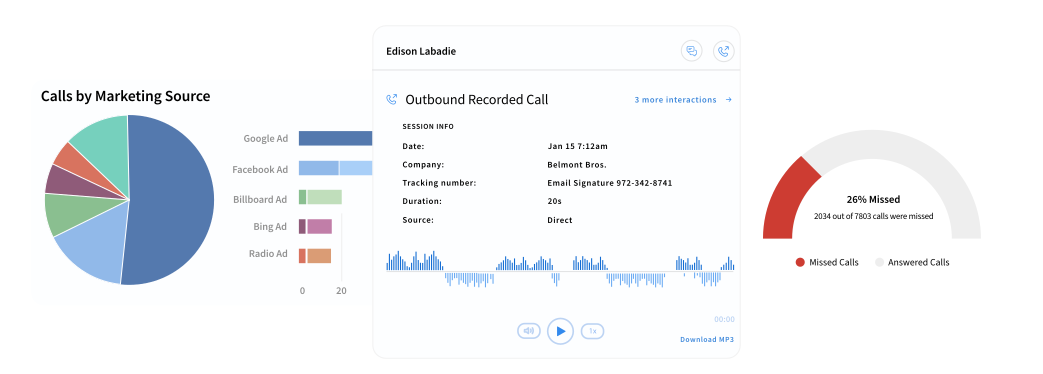
CallRail uses call recording to determine the types of calls coming in and whether they’re from qualified leads. It also uses dynamic number insertion to assign a unique tracking number to each online source, so the number displayed on the site changes depending on how the visitor found it — telling you exactly where incoming calls originate. Dynamic number insertion works for email campaigns too. Finally, CallRail’s Google Ads and Google Analytics integrations send call data straight into your dashboard next to your other marketing data, so you can compare results across campaigns.
Source is the first thing any decent call tracking service should give you. Sources will include Facebook, Google, Bing, Direct, Twitter, and more, and some tools let you drill down to the specific keywords used in paid search. Segmenting calls by source gives you a complete view of the customer journey and shows which channels lead to the most offline calls, and data visualization best practices make it easy to present in a digestible way.

CallTrackingMetrics

CallTrackingMetrics uses keyword-level attribution and mobile click-to-call tracking so you can optimize campaigns for ROI. It works across both online and offline campaigns and shows which keywords are driving calls. It also has text messaging capabilities and works with form submissions, giving website visitors the option to fill out a form and connect with a member of the sales team.
WhatConverts

WhatConverts offers instant call tracking and the ability to track all leads, not just calls. It displays numbers based on your campaigns, handles recording and reporting, and identifies the online and offline channels generating calls. With voice search and marketing automation everywhere, it’s a strong all-in-one option with good reviews if you want the total package.
Avanser

Avanser is an Asia Pacific call tracking business — probably the most basic on this list, but a great fit for small businesses on a smaller budget. You still get online tracking with dynamic numbers to maximize ROI, instant missed-call notifications, and more. Some of the biggest brands in the Pacific use it, so it’s worth a look if you’re thinking of going international.
Marchex

Marchex is another international call tracking company, but call tracking is just a small part of what it offers — omnichannel, speech, leads, marketplace, you name it. If you choose Marchex, AgencyAnalytics will come in handy for organizing and analyzing the data.
CallSource

CallSource is a call tracking and analytics company that provides data-driven insights to improve marketing and sales. Its platform tracks over 100 million calls annually across industries including automotive, healthcare, home services, and insurance. Beyond call tracking, it offers lead management, CRM integration, campaign management, and reporting. AgencyAnalytics makes it easy to delight clients with automated CallSource reports and live dashboards.
HighLevel

HighLevel’s call tracking is a powerful tool for agencies. It tracks call data across channels, providing call intelligence that helps evaluate campaign success, streamline marketing spend, and improve performance. Go a step further and transform a client’s lead pipeline by integrating their HighLevel data into AgencyAnalytics.
HubSpot

HubSpot’s call tracking software offers a deep toolset for insight into customer interactions. As part of the wider HubSpot ecosystem, it includes call recording, data on missed calls, caller information, and metrics on call durations and peak times. Monitor and share HubSpot analytics, marketing, and CRM data alongside your agency’s other channels with the HubSpot reporting integration.
Delacon

Delacon is an essential tool for businesses that rely on inbound calls for leads and sales. By tracking phone calls, you can see which campaigns are generating the most interest and conversions, and it can even help track employee performance and identify where training is needed. Delacon’s system is one of the most comprehensive and user-friendly on the market. Track call performance and share essential metrics from over 85 other channels in an automated Delacon report or live dashboard.
Twilio

Twilio lets software developers programmatically make and receive calls, send and receive texts, and handle other communication functions through its web service APIs. It’s straightforward: sign up, get a phone number, and use the API to build calling or texting features into your app. Schedule automated Twilio reports in minutes with the AgencyAnalytics integration.
WildJar

WildJar is another dynamic call tracking platform that tells you where calls are coming from, who’s calling, and what’s being said, thanks to call recordings. That gives businesses the chance to improve customer service while letting agencies track campaign success. Track key call metrics and share data with clients through automated WildJar reports.
The call tracking metrics to follow
One thing the best call tracking apps share is the ability to analyze different metrics to see whether campaigns are working. The right metrics tell you where leads are coming from, which are quality leads, and which are converting. Here are the ones worth watching when you launch a call tracking campaign.
Call volume. Total call volume is simple but incredibly useful. You want to know exactly how many people are calling a client based on your marketing efforts, so you can confirm the volume is producing an adequate level of appointments and ROI.

Missed vs. answered calls. Comparing missed and answered calls keeps a client informed about opportunities they can easily follow up on. Calculate an estimated ROI value for each inbound call before starting a campaign — the opportunity cost drives home why missed calls matter. Comparing missed calls against the time and date also reveals hours that need phone support and currently don’t.

Call time and date. Reviewing call times and dates helps you identify peak interest in a client’s business, so you can allocate more ad spend to specific times and days to maximize call volume and minimize cost.

Call duration. Duration gauges customer engagement based on how long conversations run. Very short calls may mean a caller is asking something simple, like office hours; excessively long calls may signal a larger issue or that staff need more training. If you take the added step of reviewing calls, you can better assess how long it takes to book an appointment.

Beyond those, here are the top KPIs and metrics worth building into a call tracking program, and why each one matters.
KPI / metric | Why it matters |
|---|---|
Total calls | Measures overall call volume and the effectiveness of campaigns |
Missed calls | Flags lost opportunities and helps improve customer service |
Call duration | Indicates customer engagement and conversation quality |
Peak call times | Helps schedule staff efficiently during high-traffic periods |
First-time callers | Shows how many new leads marketing is generating |
Repeat callers | Indicates customer loyalty and satisfaction |
Source of call | Shows which campaign or platform is generating the most calls |
Location of callers | Provides geographical insight for localized marketing |
Caller demographics | Helps you understand the target audience better |
Cost per call | Measures the efficiency of ad spend in generating calls |
Conversion rate | Shows the percentage of calls that lead to a sale or desired action |
Call recordings | Provides qualitative data for training and understanding needs |
Average time before answer | Helps assess customer service responsiveness |
Call outcome | Offers insight into the effectiveness of call agents |
Keyword tracking | Identifies which keywords lead to calls, optimizing SEO and PPC |
How to use call tracking in email campaigns
Call tracking is especially helpful when you’re trying to bridge online and offline behavior — and few marketers aren’t interested in that. Since a key performance indicator (KPI) exists to guide decisions and optimization, adding call tracking to email lets you measure exactly how many calls an email campaign generated, then analyze the leads and conversions behind them.
Implementing it is straightforward:
Create a unique call tracking toll-free number to include in your emails. If you’re running multiple campaigns, use a different number for each one so you can tell them apart.
Add the number to every email in the campaign — inserting it into your template means it appears in all emails and to anyone who clicks through to the site.
Use call tracking software to see how many people called as a result. With AgencyAnalytics, you can see what behavior stemmed from those calls: did they help generate leads, and did any of those leads convert?
Once it’s running, a few email-specific metrics are worth watching:
Raw calls per email. The most basic data, and some of the most important — knowing exactly how many people call based on the emails you send tells you whether the strategy is worth continuing. If no one uses the number, that’s an important signal about offline behavior.
Which keywords drive the most calls. Knowing which keywords generate calls and conversions shows how well your PPC campaigns are performing, so you can fine-tune your keyword strategy around what’s working. It’s worth dedicating specific PPC phone numbers to certain campaigns to see exactly which ones make the phone ring.
Which campaigns drive calls that convert. Look at both online and offline campaigns to see which drive the most conversions and how phone calls factor in. Focus budget and resources on the winners. Tracking software can pull offline sources, like direct mail, into Google Analytics next to your online campaigns.
Which online channels lead to offline calls. Multi-channel call tracking matters here — without it, you only see the first channel a visitor came through and can miss an important piece of the puzzle.
Source-level reporting. This covers the location, day, and time calls originate. If most callers come from one area, consider location-based advertising in your emails; if certain days or times bring a higher volume, send more emails then.
Impress clients and save hours with custom, automated reporting.
Join 7,000+ agencies that create reports in under 30 minutes per client using AgencyAnalytics. Get started for free. No credit card required.

Already have an account?
Log inReporting call tracking data with AgencyAnalytics
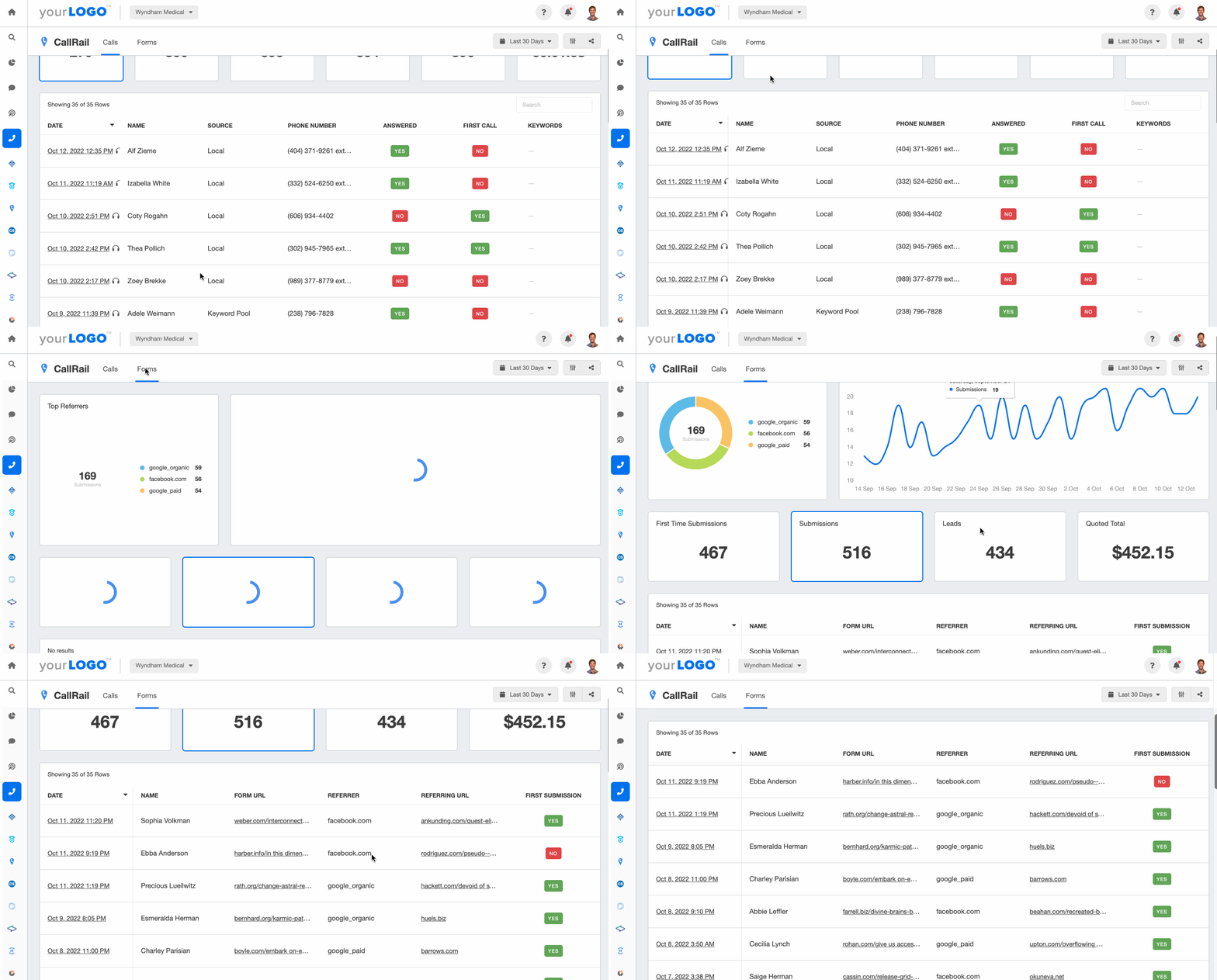
Once you have the data, the value comes from aggregating it into reports and dashboards you and your clients can act on. In AgencyAnalytics, you’ll find “Call Tracking” on the left-hand side, where you can choose your software and integrate it. From there your data gets pulled automatically, and you can export it into a report each month. In the example below, Facebook is bringing in the inquiries — a sign that adding a “call now” button on Facebook could be worthwhile. Scroll down and you’ll see exact phone numbers and locations.

A great call tracking report states clear, actionable progress toward a client’s short- and long-term goals. That’s especially important for any client who depends on people picking up the phone — they want to see how calls are performing and what they can do to improve. A strong report visually connects the dots between metrics like answered vs. missed calls, top channels, and contact details, and the steps a client can take to improve: the words and phrases used in calls, follow-up processes, routing calls to the right person, and lead segmentation. Include their PPC, social, email, and organic data alongside call data to paint a complete picture.
Here’s how to build a call tracking reporting process that scales as you grow.
1. Connect all their call tracking sources in one place
Switching between client accounts to find data is slow and won’t hold up as your agency grows. By automatically connecting a client’s organic and paid channels, you’ll see exactly where their phone leads come from, which lets you make proactive recommendations about where they should spend time and money. Whether you use Google Analytics for call tracking or dedicated software, AgencyAnalytics has 11 call tracking integrations to choose from — including CallRail, WildJar, and WhatConverts — so you can connect a range of tools without pulling data by hand.

2. Use an internal dashboard to keep your team aligned
A shared call tracking dashboard helps your team visualize a campaign’s performance and get the insights they need to act. Save your agency time by using an internal dashboard instead of pulling data manually. The most important metrics and KPIs to monitor include:
Total answered vs. missed calls
Contact details — name, phone number, location, and time of each call
Source attribution highlighting the top-performing channels
MP3 call recordings to measure the quality of each lead
Call duration
Calls per lead
Unique calls
Real-time data keeps the whole team in the loop without waiting for the next pull. Set up separate logins for staff and assign follow-up tasks to streamline everyone’s workflow.
3. Give clients their own live dashboard login
After building your dashboard, give clients customized access too. A separate login lets them view their live data and saves your agency time answering unnecessary calls and emails.
4. Use custom metrics to show your agency’s value
A custom metric gives you the flexibility to blend specific data points and add depth. For example, create a custom metric for a client’s PPC ad clicks-to-calls conversion rate to show exactly where conversions happen. Try this formula in your report: (Call tracking platform Calls / PPC Platform Clicks) * 100.

Custom metrics like this help you get granular and show clients the results you’re bringing them, while keeping the data simple enough to understand.
5. Use goals to communicate success at every stage
Clear communication drives client satisfaction and retention. Create goals and track metrics that keep everyone aligned on your team’s efforts, and show progress in a visual way using goals and annotations in your call tracking reports. Let clients know you’re on top of their unique KPIs and how their campaigns are stacking up.
6. Tell a story clients understand
Reporting call tracking data is one thing; extracting value from it is another. Show clients how their phone leads affect the bottom line with data storytelling, and use data visualization tools to help everyone spot patterns and trends that would otherwise be easy to miss.
Agency Tip: Incorporate visual elements in your reports, such as charts, graphs, and contact lists. This is the perfect opportunity for your agency to showcase what is happening, provide unique insights, and explain how your team plans to make the data actionable.
Your clients want to know exactly how many leads came by phone and where to focus, so let that shape how you present the data.
By using AgencyAnalytics, we can show our clients where all of their leads are coming from. We can say, ‘This month, you got five phone calls, five leads from Facebook, and five leads off your website. That’s 15 leads in total.’ This shows our value to our clients while also being a huge time-saver for us.
Adam Allen, Founder, LeaseMyMarketing
The AgencyAnalytics call tracking report template includes eight key metrics: answered vs. missed calls; top sources; calls (date range); calls (total); answered calls (total); missed calls (total); new callers; and contact details.

7. Automate reporting to free up agency time
As you win new clients and grow, you’ll need to create and send more reports. Keep clients up to date at scale with automated reports sent on a schedule of your choice, and decide whether to approve each report before it goes out so you can address any issues first. White-label marketing report templates featuring your agency’s logo, colors, and URL showcase how proactive and professional you are.
Sending a nice, clean, and professional report to our customers also reflects the image of our agency.
Deniz Doganay, Managing Director, Digital Debut
A few habits round out the process. Audit calls regularly — listening to phone leads helps you make suggestions, spot targeting mismatches, and see what’s working. Test the numbers themselves by calling them to confirm they’re routed to the right departments, that a receptionist is in place where needed, and that menu options are current. And make sure clients answer their calls when campaigns are active: if a client misses 90% of the calls in the last two hours before closing or on weekends, that should shape campaign settings to reduce spend when calls are less likely to be answered.
Conclusion
Call tracking helps you improve customer experience, sales, and client retention by connecting marketing spend to the phone actually ringing — automating lead nurturing, syncing marketing data, and strengthening support along the way. You’ve most likely set goals for a campaign before launch, and the steps you take to optimize are tied directly to those goals. But it doesn’t matter how lofty the goals are or how much work you put in if you have no reliable way to measure your efforts. That’s where good metrics and real-time analytics come in.
Create your own call tracking reports — multi-client call and web form reporting built for agencies — to track and improve campaign performance. Start your free trial today.
Joe is the co-founder and CEO of AgencyAnalytics, a marketing reporting platform used by more than 7,000 agencies. With experience creating multiple businesses, he thrives on tackling the challenges of sustainable growth and innovation.
Read more posts by Joe KindnessWhat other agency experts are reading

SEO KPIs: 8 most important KPIs for SEO you need to track in 2026
Learn the important SEO KPIs to track in 2026—definitions, the “why” and use case examples to report SEO performance to clients with clarity.

KPI reporting examples, templates & how-to guide
Learn how to create effective KPI reports in 2025 with templates, examples, and best practices for every KPI reporting scenario.

22 Share of Voice Tools Every Agency Needs
These are the top 22 Share of Voice (SOV) tools your agency needs to create and optimize successful marketing campaigns for your clients.